A sheep farmer in the rolling green valleys of Waikato wakes up at four in the morning. The air is crisp, biting, and smells of damp earth. Halfway across the planet, in the sweltering, neon-lit humidity of a Mumbai evening, a young tech consultant is navigating a grocery aisle, looking for something high-quality, something trusted, something that reminds them of a world beyond the concrete.
Until recently, these two individuals were separated by more than just geography. They were separated by a wall of paperwork, tariffs, and historical hesitation. Don't miss our previous article on this related article.
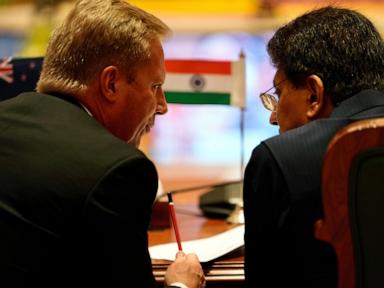
The signing of the free trade agreement between India and New Zealand is not just a collection of ink on parchment. It is the demolition of that wall. For decades, the economic relationship between the South Pacific and the Indian subcontinent was a story of missed connections. We traded cricket scores more often than we traded containers. We shared a colonial history and a love for tea, but when it came to the hard math of exports, the numbers remained stubbornly stagnant.
Now, that math is changing. To read more about the history here, The Motley Fool provides an in-depth summary.
The Friction of Distance
To understand why this deal matters, you have to feel the friction that existed before it. Imagine a vineyard owner in Marlborough trying to send a bottle of Sauvignon Blanc to a high-end restaurant in Delhi. Before this agreement, that bottle was burdened with a tax so heavy it often doubled the price before the cork was even pulled. It wasn't just about the money; it was about the message. High tariffs whispered a quiet "not welcome."
India is a behemoth. It is an economy that breathes fire, growing at rates that make Western nations look like they are standing still. By 2030, its middle class will be larger than the entire population of the United States. These are people with aspirations. They want organic produce, reliable tech services, and sustainable wood for their homes. New Zealand, a country that has mastered the art of "premium," sits on the other side of the ocean with exactly what India needs.
The logic was always there. The courage to sign was not.
Consider the hypothetical case of Arjun, a dairy processor in Punjab. For years, the narrative was that New Zealand’s efficient, large-scale dairy industry would crush local Indian farmers. This fear acted as a padlock on trade talks for a generation. But the reality of the new agreement is more nuanced. It’s not about replacement; it’s about integration. New Zealand isn't sending oceans of liquid milk to compete with Arjun; it’s sending specialized milk proteins, sophisticated farming technology, and the kind of high-value genetics that help Arjun’s own cows produce more.
A Bridge Built on Services
We often think of trade as heavy things moving on ships. We picture logs, wool, and coal. But the most profound shift in this new era of Indo-Kiwi relations is invisible. It’s the movement of minds.
The agreement slashes the red tape for professional services. This means a software architect in Auckland can collaborate with a fintech startup in Bengaluru without getting tangled in a three-month visa nightmare. It means educational exchanges that go beyond mere tuition fees, creating a circular flow of talent.
Education is, in many ways, New Zealand’s most quiet and powerful export. Tens of thousands of Indian students call Christchurch or Wellington home for three years. In the past, they were seen as "revenue." Under this new economic framework, they are seen as "infrastructure." They are the living tissue that connects the two economies. When a student learns sustainable engineering in New Zealand and returns to apply it to India’s massive infrastructure projects, the return on investment is infinite. It’s a trade deal that pays dividends in human capital.
The stakes are higher than the quarterly GDP reports suggest. We are living through a period of intense global fragmentation. Supply chains that we once thought were permanent have evaporated. Relying on a single large neighbor for trade is no longer a strategy; it’s a vulnerability. For New Zealand, India represents the ultimate diversification. For India, New Zealand represents a gold standard in food security and environmental tech.
The Logistics of Hope
Logistics is a cold word for a very human struggle. In the ports of Tauranga, dock workers handle crates destined for the world. Each crate is a paycheck. Each crate represents a business that stayed open.
Before this agreement, New Zealand's trade with India was roughly 1% of its total exports. That is a statistical absurdity given India’s scale. The reason wasn't a lack of demand. It was the sheer exhaustion of navigating the bureaucracy. A small business owner in Nelson simply didn't have the legal budget to fight through the customs complexities of the Indian market.
By streamlining these regulations, the agreement acts as a stabilizer. It gives the "little guy" a chance. It means a boutique skincare brand using Manuka honey can actually afford to list its products on an Indian e-commerce giant like Nykaa.
This isn't just "business." It’s the ability for a family-owned orchard to hire three more people because they’ve suddenly found 1.4 billion potential new customers.
The Green Pivot
Perhaps the most underrated aspect of this partnership is the climate component. India has set some of the most ambitious renewable energy targets on the planet. They are building solar farms that can be seen from space. New Zealand, meanwhile, is a world leader in geothermal energy and agricultural emissions reduction.
The agreement facilitates the transfer of this "green tech."
Imagine a New Zealand geothermal engineer working on a project in the Himalayas, helping a remote community transition away from diesel generators. The trade deal ensures that the specialized equipment she needs isn't sitting in a customs warehouse for six weeks. It turns a commercial agreement into a tool for planetary survival. We are no longer just trading goods; we are trading solutions to the same burning problems.
The skepticism remains, of course. Critics will point to the long road ahead and the implementation gaps that plague any international treaty. They will say that a piece of paper cannot change the gravity of global markets.
They are wrong.
History shows us that trade doesn't just follow the path of least resistance; it follows the path of most trust. This agreement is a formal declaration of trust between a Himalayan giant and a Pacific pioneer. It is a recognition that our futures are no longer separate.
The farmer in Waikato and the consultant in Mumbai are now part of the same story. The wall is gone. The handshake has been made. What happens next depends on the courage of those willing to cross the bridge.
As the sun sets over the Arabian Sea, it is just beginning to rise over the Southern Alps. For the first time in a long time, the light looks exactly the same in both places.