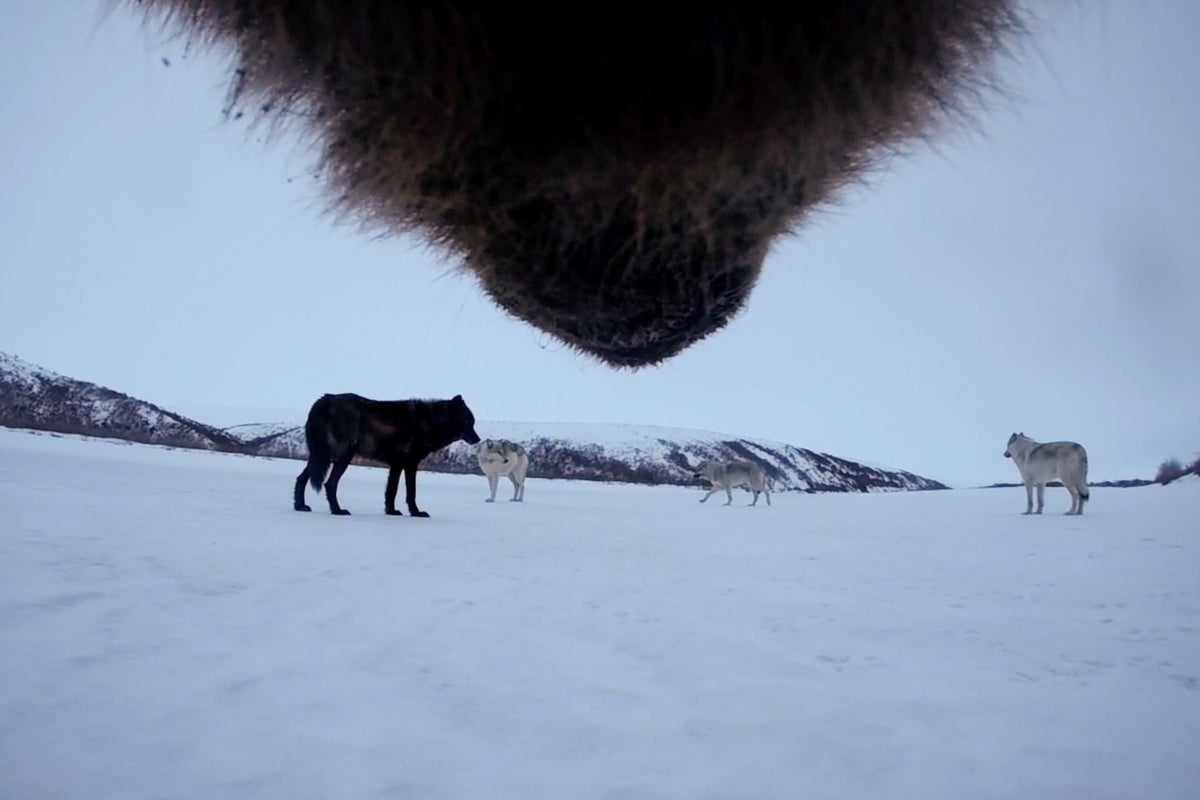
The Alaska Department of Fish and Game (ADF&G) has authorized a return to aerial gunning, allowing state-contracted shooters to hunt bears from helicopters. While the policy presents itself as a desperate measure to save the dwindling Mulchatna caribou herd, it exposes a brutal collision between wildlife management and ethical conservation. This is not sport hunting. It is a calculated, government-sanctioned extraction aimed at balancing an ecosystem that humans have already tipped out of alignment.
The Mulchatna herd once numbered around 200,000 animals in the late 1990s. Today, that population has cratered to roughly 12,000. For the Indigenous communities in Western Alaska who rely on these animals for food security and cultural continuity, the collapse is a catastrophe. State officials argue that by removing bears and wolves—the primary predators of vulnerable calves—they can give the herd the "breathing room" required to rebound. Critics, however, see a recurring pattern of aggressive predator control that ignores larger systemic issues like habitat loss and climate shifts.
The Brutality of Aerial Predator Control
The mechanics of the operation are clinical. State employees and contractors use helicopters to track and shoot black and grizzly bears in specific areas of Southwest Alaska. This method bypasses the traditional "fair chase" ethics that govern standard hunting regulations. In a typical season, hunters must follow strict rules regarding transport and spotting; here, the helicopter is the primary weapon.
Efficiency is the goal. By targeting bears during the spring calving season, the state aims to maximize the survival rate of newborn caribou. Data from previous intensive management programs suggests that when predator densities drop, calf survival often spikes in the short term. But the long-term efficacy of these programs remains a point of fierce debate among biologists. Removing a top-tier predator creates a vacuum. Other scavengers may move in, or the underlying cause of the caribou’s decline—such as disease or poor nutrition—may simply persist despite the absence of bears.
The state isn't just targeting wolves anymore. While wolf control has been a staple of Alaska's intensive management for decades, the inclusion of bears signals a more aggressive posture. Bears are notoriously difficult to manage through traditional hunting because of their low reproductive rates and the dense brush they inhabit. The helicopter levels the playing field, but at a significant cost to the state's public image and its treasury.
The Mulchatna Crisis and Food Security
To understand why the state would take such a controversial step, one must look at the empty freezers in the Bristol Bay and Yukon-Kuskokwim regions. For many Alaskans, caribou is not a luxury. It is a primary protein source in areas where grocery prices are triple the national average. When the Mulchatna herd vanished, it took a way of life with it.
The Nutritional Gap
When caribou populations fail, the pressure shifts to other species like moose or salmon. If those populations are also struggling, communities face a genuine crisis. State biologists argue that they have a constitutional mandate to manage wildlife for "sustained yield." If the caribou aren't producing a surplus for people to hunt, the state feels legally obligated to intervene.
The Disease Factor
Predators aren't the only ones killing caribou. The Mulchatna herd has been plagued by Brucella suis biovar 4, a bacteria that causes lameness and reproductive failure. Shooting bears from the air does nothing to stop a bacterial infection. This is where the state's logic faces its toughest scrutiny. If the herd is sick, reducing predation might keep a few more calves alive, but it doesn't address the health of the overall population. Some independent researchers argue that predators actually help by culling the sickest individuals, preventing the spread of disease within the herd.
The Political Mechanics of Intensive Management
Alaska’s Board of Game is often dominated by interests that favor high yields of huntable big game. This political tilt leads to policies that treat the wilderness like a farm. In this framework, caribou and moose are the "crops," and bears and wolves are the "weeds" to be pulled.
This "farming" mentality creates a friction point with federal land managers. Large swaths of Alaska are controlled by the U.S. Fish and Wildlife Service or the National Park Service, agencies that often prioritize natural processes over human-centric yields. When the state wants to fly helicopters over federal lands to kill bears, the legal battles become as intense as the hunts themselves.
The current operation primarily targets state and private lands, but the ripple effects are felt across the entire map. Predators do not recognize property lines. A bear killed on state land this spring is a bear that won't be wandering into a national wildlife refuge this summer.
The Economic Burden of the Helicopter War
Running a helicopter-based culling program is a massive financial undertaking. Fuel, pilot hours, and specialized personnel costs add up to hundreds of thousands of dollars. Taxpayers are essentially subsidizing the deaths of predators in hopes of a future payoff in caribou numbers.
Critics point out that this money could be spent on habitat restoration or more robust disease research. The state counters that those measures take decades to show results, and the Mulchatna herd doesn't have decades. They are at a tipping point. If the population drops much further, it may never recover, regardless of how many predators are left.
Ethical Fault Lines and Public Perception
For the casual observer, the idea of shooting a bear from a helicopter is abhorrent. It violates the "fair chase" principle that is central to American hunting identity. Even within the hunting community, there is a divide. Some see it as a necessary evil to protect a vital resource; others see it as a stain on the reputation of all hunters.
The ADF&G is careful to label these actions as "management" rather than "hunting." This semantic distinction is crucial for legal and PR reasons. By classifying the shooters as state agents performing a job, they bypass the ethical requirements of a sport hunter.
The Biological Uncertainty of Predator Removal
Nature is rarely as simple as a subtraction problem. When you remove a significant portion of the bear population, the ecosystem reacts in unpredictable ways.
- Mesopredator Release: Smaller predators like coyotes or wolverines may increase in number, filling the gap left by the bears.
- Vegetation Shifts: A sudden surge in caribou (if the program works) could lead to overgrazing, which then leads to a crash in caribou health due to lack of forage.
- Genetic Diversity: Removing bears indiscriminately can impact the genetic health of the local bear population, especially if the most "successful" or dominant bears are the ones easily spotted from the air.
The state’s data on bear populations in these remote areas is often based on estimates rather than hard counts. Conducting an accurate census of grizzly bears in the Alaskan bush is a logistical nightmare. This means the state is essentially flying blind, guessing at how many bears reside in the area and how many they can afford to kill without causing a local extinction.
The Long Road to Recovery
Even if the aerial gunning program is a resounding success, the Mulchatna herd is years away from being huntable again. The herd needs multiple seasons of high calf survival, low disease prevalence, and mild winters to see a meaningful increase.
The reliance on aerial gunning reveals a deeper truth about modern wildlife management. We have reached a stage where we are no longer just "managing" nature; we are micro-managing it with high-tech machinery. The helicopter is a tool of desperation. It is an admission that the natural balance has failed—or more accurately, that we have failed to maintain a system where nature can balance itself.
Alaska remains one of the few places on earth where large-scale predator-prey dynamics still function. Yet, even here, the pressure to provide for human consumption leads to the deployment of shooters in the sky. The state is betting that the public will accept the sight of dead bears if it eventually means caribou on the dinner table.
The operation continues under a shroud of northern mist and political controversy. State officials monitor the numbers, hoping for a statistical win that justifies the moral and financial cost. Meanwhile, the bears on the ground have no defense against a predator that can fly, and the caribou remain caught in the middle of a war they didn't start.
The success of this program will not be measured by the number of bears killed, but by whether the caribou can actually thrive in a landscape that is increasingly managed by the barrel of a gun from a hovering cockpit.