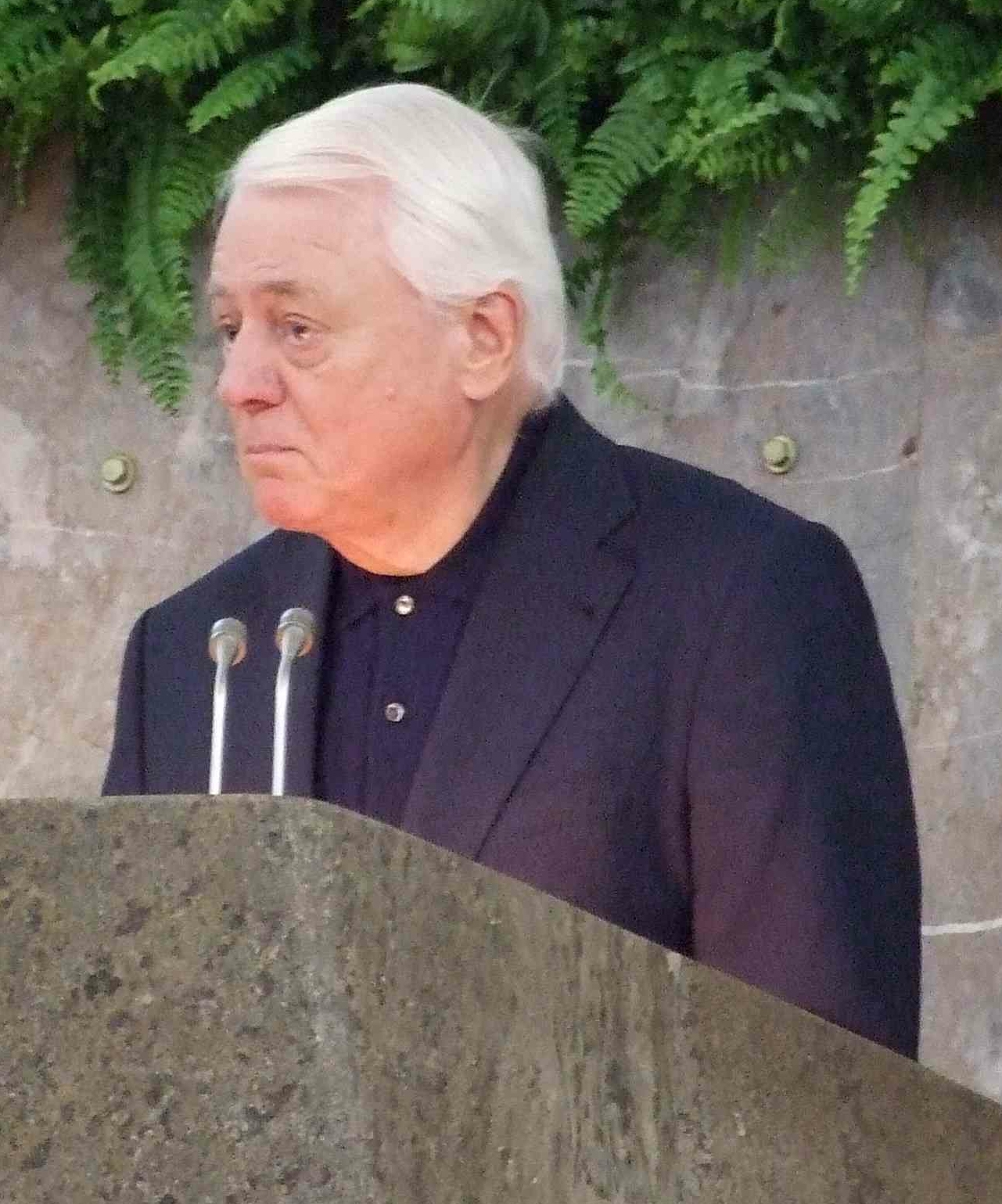
The obituary writers have already failed. Since the news of Alexander Kluge’s passing at 94, the press has been churning out the same tired eulogies: he was the "last of the Frankfurt School," a "giant of New German Cinema," and a "polymath of the old world." They treat his death as the closing of a museum. They are mourning a legacy they never actually bothered to understand while he was alive.
If you think Kluge was a relic of 20th-century Marxism or a filmmaker who simply liked "difficult" art, you’ve been sold a sanitized version of a radical. Kluge wasn't a guardian of the past. He was the architect of a psychological survival manual for the digital chaos we are currently drowning in. Also making waves recently: The New Geopolitics of Necessity and the Reality Behind the US India Alliance.
To eulogize him as a "distinguished intellectual" is to insult him. Kluge was a provocateur who believed that the human senses were being colonized by industrial interests. He didn't want your respect; he wanted to give you the tools to reclaim your own attention.
The Fraud of the "Linear Narrative"
Most critics look at Kluge’s films, like Yesterday Girl (1966) or The Assault of the Present on the Rest of Time (1985), and complain about the lack of structure. They call it "fragmented." They call it "alienating." Additional insights regarding the matter are explored by Associated Press.
They are wrong. Reality is fragmented. The "smooth" storytelling of Hollywood and modern streaming platforms is the actual lie.
Kluge’s "constellation" method was a direct attack on the idea that history is a straight line. I’ve seen filmmakers spend millions trying to create "immersion," only to realize they’ve created a sedative. Kluge did the opposite. He used montage to create friction. He believed that if you don't leave gaps in the story, you aren't leaving room for the spectator to think.
In a world of TikTok loops and 15-second dopamine hits, Kluge’s "difficulty" isn't a bug—it’s the only remaining feature worth keeping. He understood that when an image is too easy to digest, it’s already been pre-masticated by a marketing department.
The Misunderstanding of "Public Sphere"
The "People Also Ask" sections of the internet will tell you Kluge was obsessed with "the public sphere." This sounds like a boring civics lesson. In reality, Kluge’s concept of the Offentlichkeit (public sphere) was a battlefield.
He and Oskar Negt argued that there is a "proletarian public sphere" that exists beneath the surface of official news and corporate media. This isn't about "working-class vibes." It’s about the raw, unorganized experience of everyday life that doesn't fit into a spreadsheet.
The industry insiders who claim we live in a "connected world" are lying to you. We live in a world of private silos that mimic public spaces. Kluge saw this coming decades ago. He knew that the more "connected" we became, the more our actual lived experience would be discarded in favor of data points.
Why the "Frankfurt School" Label is a Trap
Stop calling him the last of the Adorno disciples. It’s a lazy shorthand used by academics who haven't read anything since the 90s.
While Adorno was famously pessimistic about mass culture—famously hating jazz and thinking the "culture industry" had already won—Kluge was a scavenger. He loved the trash. He loved opera, sci-fi, garden shows, and obscure legal texts. He didn't look down on the "masses." He looked for the "stubbornness" (Eigensinn) within them.
Imagine a scenario where a technician is told to follow a manual to the letter, but they find a "wrong" way to fix a machine that works better. That is Eigensinn. Kluge’s entire body of work—thousands of hours of television, dozens of books—is a tribute to that specific human glitch.
He didn't want to "enlighten" the public from a high tower. He wanted to highlight the ways the public was already resisting, even if they didn't know it. If you’re looking for a "leader" or a "final word" from Kluge, you’re looking for a ghost. He offered a methodology, not a manifesto.
The Television Saboteur
In the late 80s, when private television was deregulated in Germany, most intellectuals retreated to their libraries to complain. Kluge did the opposite. He used a legal loophole to seize airtime.
He created DCTP (Development Company for Television Programs). He didn't make "good TV." He made "anti-TV." He interviewed directors, scientists, and philosophers with a camera that barely moved and a narrator (himself) who often cut off the guests.
I’ve watched executives at major networks lose their minds over his format. "It’s not professional," they say. "The lighting is bad," they scream.
Exactly.
By refusing the polish of "professional" broadcasting, Kluge forced the viewer to confront the medium itself. He turned the television set into a telescope for looking at the world, rather than a mirror for vanity.
- The Content: Deep dives into the history of the Stalingrad battle or the physics of black holes.
- The Format: Raw, unedited, and intentionally jarring.
- The Result: A decade of programming that exists as a massive, digital archive of human thought that refuses to be "content."
Labor and Emotion: The Raw Data
Kluge’s most significant contribution, which the mainstream press ignores because it's too radical, is his theory of "living labor."
He argued that our emotions, our memories, and our senses are forms of labor. When you watch an ad and feel a pang of nostalgia, your history is being harvested. When you scroll through a feed and feel anger, your nervous system is being put to work for someone else's profit.
This isn't "theory." This is the fundamental business model of the 21st century. Kluge was the first to map the "raw materials" of the human soul.
The downside to this perspective? It’s exhausting. It means you can never truly "log off." It means every moment of your life is a potential site of extraction. But the upside is agency. If your feelings are labor, you have the right to strike. You have the right to withhold your attention. You have the right to be "unproductive."
The Brutal Truth About the "Polymath" Praise
Calling Kluge a polymath is a way to dismiss him as an outlier—a freak of nature whose productivity can't be replicated.
The truth is much more uncomfortable: Kluge was productive because he refused to specialize. He understood that specialization is a form of blindness. If you only look at the world through the lens of "film" or "law" or "literature," you are missing 90% of the data.
His books, like Chronicle of Feelings, are thousands of pages long because the world is thousands of pages long. He didn't believe in "editing for clarity" if that clarity came at the expense of truth.
Stop Archiving Him
The impulse now will be to "preserve" Kluge. To put his films in Criterion boxes and his books on university syllabi. This is the surest way to kill his ideas.
Kluge’s work was meant to be used, not worshipped. It was designed to be a "construction site."
If you want to honor him, stop reading the obituaries. Stop looking for a "summary" of his life.
Pick up a camera and record something that doesn't make sense. Write a story where the ending is missing. Interrupt a "smooth" conversation with a question that feels out of place.
Alexander Kluge didn't die in 2026; he just finally stopped providing the "interim reports." The rest of the construction is up to you.
Do not look for the "legacy." Look for the resistance.