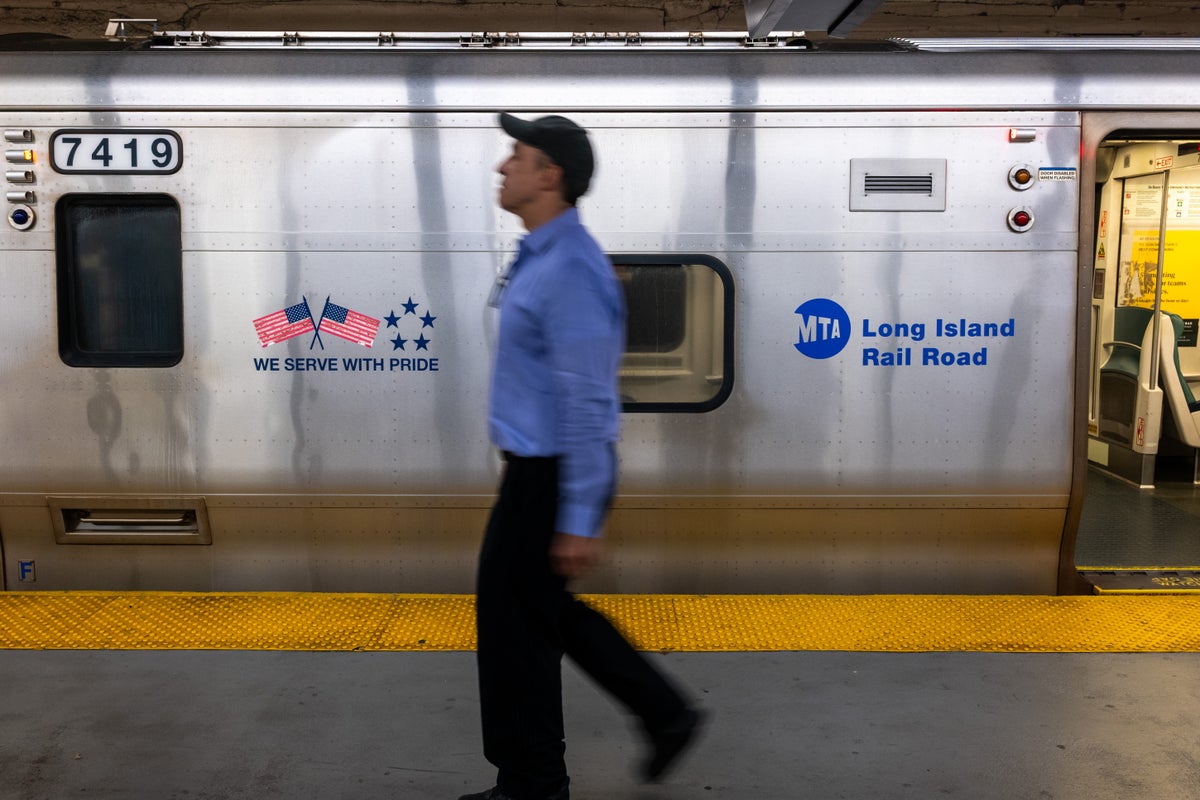
The looming service disruption across North America’s busiest commuter rail network highlights a structural vulnerability inherent to regional transit models: the asymmetrical leverage held by essential labor over zero-elasticity economic corridors. When 3,500 unionized workers at the Long Island Rail Road (LIRR) reach a legal strike deadline, the potential 100% capacity reduction of a system carrying 250,000 to 300,000 daily passengers exposes the fragility of localized economic ecosystems. Rather than a simple dispute over compensation, this friction represents a fundamental clash between public sector fiscal constraints and organized labor’s strategic optimization of timing.
To evaluate the systemic risk of an infrastructure shutdown, the issue must be deconstructed into its distinct operational, economic, and strategic components.
The Asymmetrical Wage Arbitrage
The core tension in current negotiations centers on divergent valuation structures for a multi-year labor contract. A direct comparison of the two competing financial frameworks reveals an optimization problem where the Metropolitan Transportation Authority (MTA) seeks long-term fiscal stabilization while the labor coalition acts to maximize structural baseline wages against inflationary pressure.
MTA Initial Position:  [9.5% Cumulative Increase] over 3 Years
Union Initial Position: [16.0% Cumulative Increase] over 4 Years (Holding out for 6.5% in Year 4)
MTA Modified Offer:     [9.5% over 3 Years] + [4.5% Lump-Sum Payment] in Year 4
Union Current Counter:  [9.5% over 3 Years] + [5.0% Baseline Wage Increase] in Year 4
The primary operational difference lies not in the nominal capital outlay but in the compounding structural debt. The MTA's pivot to a $4.5%$ lump-sum payment for the fourth year is an attempt to limit compounding base salary baselines. A lump sum does not alter the underlying wage architecture; subsequent contract negotiations would therefore benchmark from a lower baseline. Conversely, the union's demand for a permanent $5.0%$ baseline wage increase permanently shifts the agency’s long-term fixed cost structure upward, altering pension liabilities and future overtime cost calculations.
This structural divergence is driven by the real-wage erosion caused by macroeconomic inflationary cycles. Labor representatives cite a direct correlation between regional cost-of-living indices and employee retention metrics. From an enterprise risk perspective, the union's leverage peaks at the transition point to the high-demand summer seasonal cycle, where alternative transit modalities experience immediate capacity saturation.
The Elasticity Bottleneck: Infrastructure Capacity Constraints
A total cessation of rail operations forces an immediate reallocation of passenger volume onto secondary and tertiary transit infrastructure. The fiction of a seamless transition via emergency contingency plans is quickly disproven by a basic volume-capacity analysis.
The MTA’s stated mitigation strategy relies on an expanded network of weekday, peak-hour shuttle buses operating from six regional hubs toward arterial subway lines in Queens. The physical limits of this strategy can be quantified through a standard throughput calculation:
- System Demand: 250,000 daily passenger trips, concentrated heavily during morning and evening peak windows.
- The Commuter Bus Capacity Limit: A standard articulated transit bus accommodates a maximum of approximately 60 to 115 passengers (seated and standing).
- The Throughput Deficit: Moving even 20% of the daily rail volume (50,000 passengers) via regional highways would require roughly 500 to 800 dedicated bus trips during a compressed three-hour morning window.
The secondary constraint is the highway infrastructure itself. Reallocating rail passengers to rubber-tire vehicles—whether via state-provided shuttles, private regional bus carriers like the Hampton Jitney, or single-occupancy vehicles—creates an exponential congestion multiplier. The Long Island-to-New York City highway corridors operate near saturation levels during peak hours under normal conditions. Introducing thousands of additional vehicle trips creates an immediate bottleneck, slowing transit speeds and rendering travel-time predictability non-existent.
Enterprise adaptations, such as personal trainers shifting clients to virtual platforms, demonstrate that a subset of the service economy can transition to remote workflows. However, for physical-presence essential workers, the substitution elasticity of commuter rail is near zero. The alternative is a highly inefficient choices matrix: absorb prohibitive highway parking costs, endure multi-hour traffic delays, or cancel economic activity entirely.
The Regional Economic Velocity Degradation
A prolonged rail shutdown creates a two-pronged economic shock, characterized by immediate demand destruction at transit destination hubs and escalating operational friction for small businesses.
Localized Demand Destruction
Businesses situated adjacent to transit nodes rely entirely on the foot traffic generated by predictable commuter flows. When a station closes, the immediate catchment area experiences a sharp drop in consumer density. Hospitality and retail entities operating near suburban outer stations face dual supply-and-demand shocks: their customer base vanishes, and their secondary labor force faces severe commuting barriers.
The Seasonal Travel Surcharge
The timing of the strike deadline intersects directly with the ramp-up of the regional summer tourism cycle, a critical revenue window for eastern Long Island. When the primary high-capacity transit link is removed, secondary providers face extreme demand inelasticity. While private coach operators can scale up frequencies to capture overflow volume, the total supply remains capped by vehicle availability and driver hours-of-service regulations. The resulting supply deficit drives up the shadow price of travel, either through explicit fare increases or through the implicit time-cost of extended delays, threatening seasonal revenue targets for regional businesses.
Strategic Framework for System Stabilization
Resolving the immediate labor impasse while mitigating long-term structural vulnerabilities requires an approach that balances fiscal management with operational realities.
The short-term resolution depends on modifying the structure of the fourth-year compensation package. The gap between the MTA’s $4.5%$ lump-sum offer and the union’s $5.0%$ baseline wage increase is financially narrow but structurally wide. A viable compromise requires shifting from a simple cash payout to a performance-tied or productivity-indexed mechanism. For example, linking a portion of the fourth-year wage increase to verified reductions in system-wide unscheduled absenteeism or overtime inefficiencies would allow the MTA to offset permanent baseline wage increases with clear operational cost savings.
Over the longer term, regional planning authorities must acknowledge that "work from home" is an incomplete resiliency strategy. True infrastructure redundancy requires the development of peripheral park-and-ride facilities outside the immediate urban core and the formal integration of private regional bus networks into municipal emergency frameworks. Until these secondary networks can match a meaningful percentage of rail throughput, the vulnerability of the regional economy to targeted labor actions will remain an structural challenge.
The final strategic move rests with the state executive and transit leadership. They must pivot away from public rhetorical pushback regarding "greedy asks" and focus instead on a structured buy-out of outdated work rules. Trading a higher baseline wage increase for structural work-rule modernizations—such as split-shift flexibility or revised scheduling rules—is the only mechanism that can resolve the immediate labor dispute while simultaneously improving the long-term fiscal health of North America's largest commuter rail network.
The following broadcast analysis provides an on-the-ground look at the MTA's expanded bus contingency plans and the direct feedback from regional business owners prepping for the impending transit shutdown: MTA expands bus plan as LIRR strike looms; Commuters urged to prepare