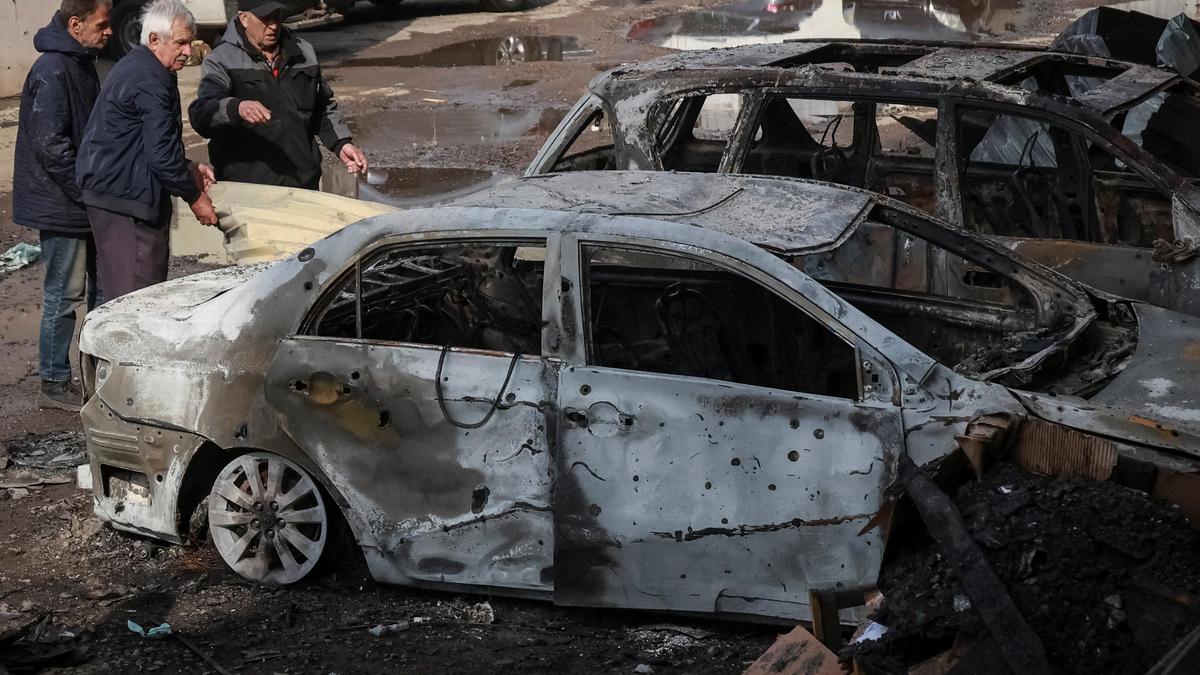
The air in Jakarta smells of clove cigarettes and exhaust, a thick humidity that clings to the skin like a damp wool coat. In a glass-walled office overlooking the sprawl, a diplomat stares at a television screen. The feed shows the jagged, orange glow of a missile battery firing in the Middle East. It is thousands of miles away. It feels like it is happening in the room.
For the nations of Southeast Asia, the math of survival has always been a geometry of distance. They are the crossroads of the world. They sit on the arteries of global trade—the Malacca Strait, the South China Sea—where trillions of dollars in cargo pulse through narrow channels every single day. But when the United States finds itself pulled into the gravity of a conflict with Iran, a cold shiver runs through the tropical heat of Asean. The question is never just about who is winning a war in the desert. The question is whether the superpower that anchors the Pacific is about to pull up its stakes and leave. In similar news, read about: The UN Human Rights Trap and the Myth of Danish Benevolence.
The Ghost of 1975
There is a specific kind of trauma that haunts the halls of power in Hanoi, Manila, and Bangkok. It is the memory of the empty rooftop and the departing helicopter.
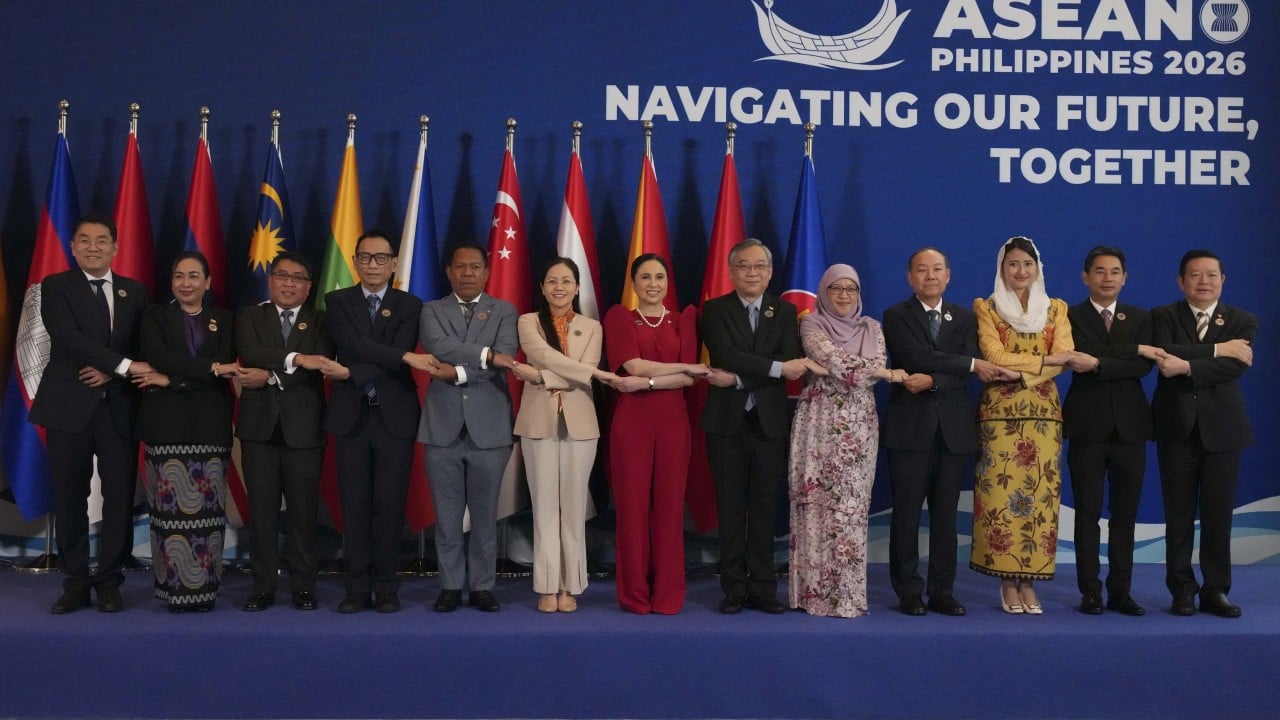
When American diplomats sit across from their Asean counterparts today, they aren't just discussing trade quotas or maritime law. They are fighting a ghost. They are trying to prove that the U.S. can walk and chew gum at the same time—that it can counter Tehran’s influence without dropping the ball in the South China Sea. NPR has analyzed this important topic in great detail.
Consider a hypothetical official named Somsak. He represents a mid-sized Asean nation. He knows that his country’s fishing boats are being harassed by giant steel-hulled vessels from the north. He relies on the presence of the U.S. Navy to ensure those waters remain a commons rather than a private lake. But when he sees the U.S. carrier groups diverted to the Gulf of Oman, Somsak’s stomach drops. He has to wonder: if the fire in the Middle East grows too hot, will we be left in the dark?
This is the "pivot" that everyone talks about but few actually feel. For a decade, Washington has promised to rebalance its soul toward Asia. Then, like a recurring fever, a crisis in the Levant or the Persian Gulf breaks out, and the focus shifts. The diplomat's job this week wasn't just to deliver a memo; it was to perform an act of emotional reassurance.
The Price of a Barrel
Geopolitics is often viewed through the lens of ideology, but for the grandmother running a noodle stall in Kuala Lumpur, it is a matter of the price of oil.
A war involving Iran isn't a distant spectacle for Asean. It is a direct hit to the wallet. Southeast Asia is a massive net importer of energy. When the Strait of Hormuz becomes a shooting gallery, the cost of transporting a container of electronics from Ho Chi Minh City to Los Angeles skyrockets.
The U.S. diplomat’s message—that the alliance remains "key"—is a desperate attempt to decouple security from the volatile swings of the energy market. The Americans are essentially saying: Trust us. We have enough ships for both. We have enough money for both. Our heart isn't just where the fire is; it’s where the future is.
But credibility is a finite resource. It is like a battery that drains every time a promise is made and then delayed. The Asean bloc sees the U.S. domestic political theater—the bickering over budgets, the isolationist whispers in Congress—and they wonder if the diplomat’s words have the weight of the Pentagon behind them or if they are just elegant smoke.
The Silent Competitor
While the U.S. is busy putting out fires, its primary rival is playing a much quieter, much longer game.
Beijing does not have to worry about a "pivot." They are already there. They are the neighbor who never leaves. They offer high-speed rail lines and massive infrastructure loans. They don't lecture on human rights or democratic norms. They simply present a reality: We are here, and the Americans are busy.
For an Asean leader, the choice is excruciating. You want the security and the values that come with an American partnership, but you need the stability of the guy who isn't distracted by a war six time zones away.
The U.S. strategy to remain a "key ally" despite the Iran fallout relies on a specific type of military architecture known as "distributed lethality." It’s a fancy way of saying they are trying to be everywhere at once by using smaller, faster, and more integrated forces. But you cannot use a metaphor to stop a coast guard vessel from ramming a wooden trawler. You need hulls in the water.
The Invisible Stakes
Why should a farmer in Iowa or a coder in Seattle care about whether Asean feels "abandoned" during an Iran crisis?
Because the world is a series of interconnected gears. If the U.S. loses its grip as the primary security guarantor in Southeast Asia, the rules of the ocean change. The "Freedom of Navigation" operations that keep the sea lanes open for your iPhone, your grain, and your medical supplies will cease to be a given. They will become a privilege granted by whoever holds the keys to the South China Sea.
The diplomat’s reassurance is a thin line of defense against a massive shift in the global order. It is an admission that the U.S. is overextended, yet an insistence that it is still indispensable.
The Weight of the Word
Trust is not built in a press release. It is built in the moments when it is inconvenient to stay.
Every time a U.S. Secretary of State skips an Asean summit because there is a meeting in Geneva or a crisis in the West Bank, a little bit of that trust erodes. The "fallout" from an Iran war isn't just about missiles; it's about the oxygen of attention. Asean leaders are masters of reading the room. They watch the flight paths of the tankers. They count the days between port calls.
The U.S. is currently trying to prove that its alliance with Southeast Asia is a marriage of necessity, not a casual fling. They are pointing to the "Integrated Country Strategies" and the "Indo-Pacific Economic Framework" as proof of their long-term lease.
But as the sun sets over the South China Sea, the orange hue on the horizon looks a little too much like the fires in the Middle East. The diplomat packs his briefcase. He has given the speech. He has shaken the hands. He has looked his counterparts in the eye and told them that America is a Pacific power, first and foremost.
Outside, the traffic in Jakarta continues its slow, rhythmic crawl. The people on the scooters aren't thinking about Iran, and they aren't thinking about the U.S. Navy. They are thinking about the next hour, the next meal, the next day. They are the ones who will live with the consequences if the anchors of the distant shore finally begin to drag.
The diplomat reaches the door, pauses, and looks back at the empty screen. The orange glow is gone, replaced by the scrolling ticker of the stock market. For now, the alliance holds. But the silence in the room feels heavy, like the air just before a monsoon breaks.