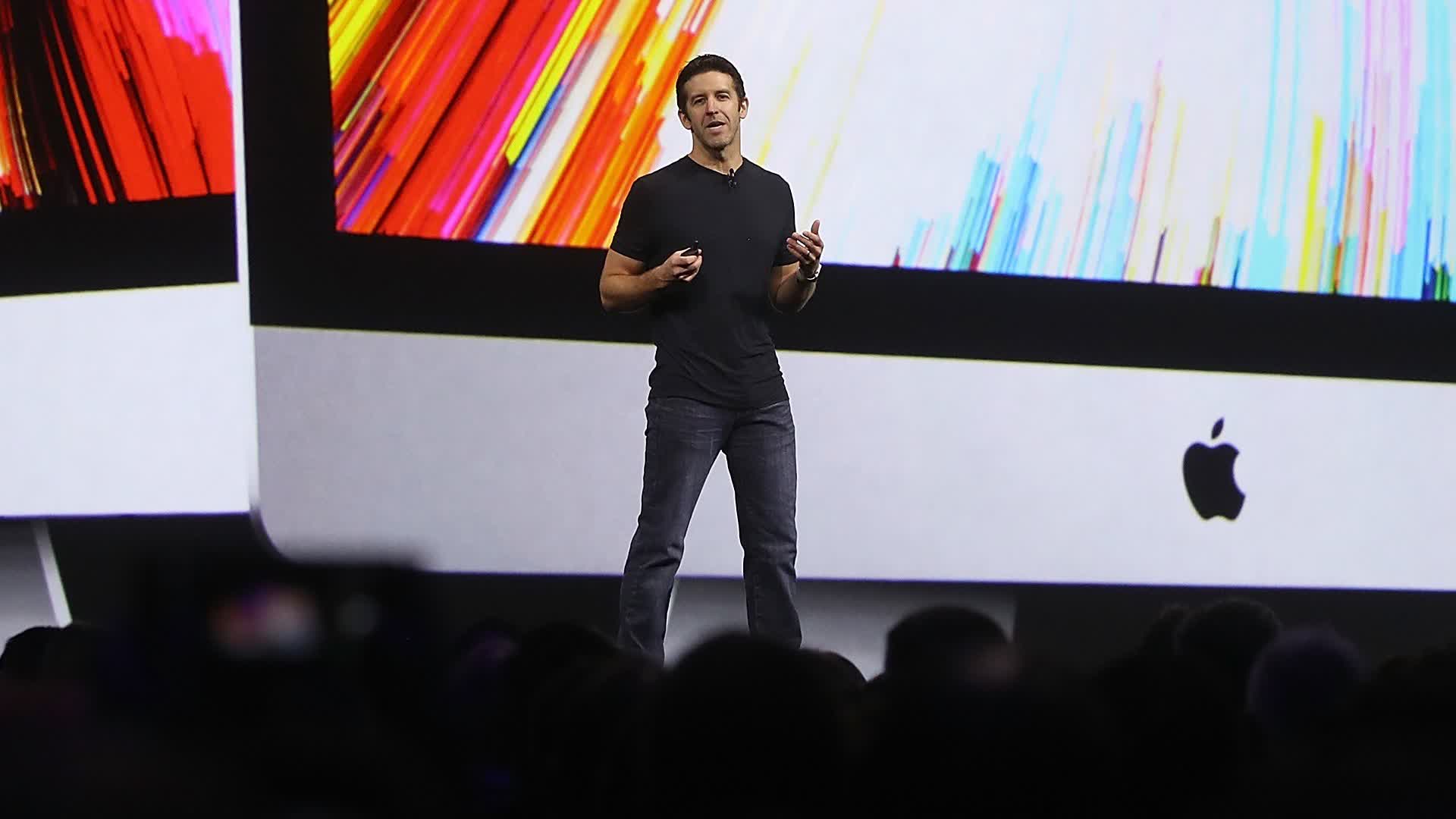
The business press is currently obsessed with a fiction: that John Ternus is inheriting a burning house.
Commentators look at Apple and see a company "falling behind" in the generative AI arms race. They point at ChatGPT’s velocity, Google’s Gemini integration, and Microsoft’s frantic Copilot rollout. They scream that Apple is late to the party.
They are wrong.
Apple isn't late. Apple is waiting for the adults to finish their tantrums so it can walk in and own the room. The "problem" Ternus needs to fix isn't Apple’s AI strategy; it’s the tech industry’s collective delusion that a chatbot is a product.
The LLM Trap: Why Being First is for Losers
The tech world suffers from a recency bias that borders on clinical. Because OpenAI released a shiny interface in late 2022, every legacy player felt the need to shove a half-baked, hallucinating text box into their operating systems.
Microsoft did it. Google did it. The result? A UI disaster where users are constantly nagged by "assistants" that can't actually touch their data or perform cross-app tasks reliably.
Apple’s purported "delay" is actually a masterclass in hardware-software verticality. While others are burning billions on massive, centralized server farms to process your "What is a good recipe for chicken?" query, Apple has been quietly building the world’s most efficient inference engines directly into the silicon.
The Silicon Secret
Every iPhone since the A11 Bionic has shipped with a Neural Engine. At the time, critics called it marketing fluff. Today, it’s the reason Apple can run sophisticated on-device models while competitors are tethered to the cloud like 1990s mainframe terminals.
The industry consensus says Ternus needs to "catch up" to GPT-4. Logic says that’s a fool’s errand. Why would Apple want to host a $100,000-a-day server bill to tell you who the 14th President was? They want to own the action layer.
Privacy is Not a Marketing Slogan, It’s a Moat
Most analysts treat Apple’s privacy stance as a noble but inconvenient hurdle to AI development. They argue that because Apple won't scrape your personal emails and photos to train a giant model, they are at a disadvantage.
This is the most dangerous misconception in tech.
The "data disadvantage" is a myth born of laziness. You don't need a trillion parameters to understand that when a user says "Send the photo of the dog to Mom," they mean the specific JPEG in their library tagged with "dog" and the contact labeled "Mom."
- Competitor Approach: Upload your entire life to the cloud, hope the encryption holds, and let a massive model guess your intent.
- Apple Approach: Run a small, hyper-efficient model locally that has context without connectivity.
Ternus isn't inheriting a deficit; he’s inheriting the only platform where users actually trust the AI with their intimate data. If you’re an enterprise executive, do you want your employees' proprietary data fed into a public LLM? Or do you want it processed on an M4 chip that never leaves the building?
The Fallacy of the "Feature"
The loudest critics want Apple to release an "iBot." They want a standalone AI app that does magic tricks.
This misses the point of Apple entirely. Apple doesn't sell features; it sells workflows.
The genius of Apple Intelligence isn't the model itself—it’s the App Intents framework. For a decade, Apple has been forcing developers to define what their apps do in a structured way through SiriKit and Shortcuts. This wasn't for voice commands. It was the groundwork for a semantic index of your digital life.
When Ternus takes the stage, he isn't trying to build a better chatbot. He’s trying to build a better Operating System. An OS that understands that "the flight" refers to the United Airlines confirmation in your Mail app and that "the hotel" is the reservation in your Calendar.
Google and Microsoft are trying to bolt AI onto their software. Apple is weaving it into the file system.
The Cost of the "Move Fast and Break Things" Ego
I have seen companies blow millions trying to "disrupt" their own core products with AI, only to realize they’ve broken the user experience.
Microsoft’s "Recall" feature is the perfect example of the industry’s current sickness. It was a privacy nightmare designed by engineers who forgot that humans use computers, not data-harvesting bots. It was pulled, ridiculed, and remains a stain on their AI reputation.
Apple’s "slow" approach avoids this brand suicide. Ternus’s challenge isn't technical; it’s communicative. He has to explain to a caffeinated Wall Street why a 10% improvement in battery life via AI-managed background tasks is more valuable than a chatbot that can write mediocre poetry.
Reality Check: The Compute Tax
Let's talk about the math that the "Fix the AI strategy" crowd ignores.
$$Cost_{AI} = (Compute \times Energy) / User$$
For Google, every AI search costs significantly more than a traditional indexed search. They are cannibalizing their own margins to stay relevant. For Apple, the compute is paid for by the user at the point of sale. When you buy an iPhone 16, you are buying the server.
Apple’s "strategy" is the only one that is financially sustainable in a world where GPU time is more expensive than oil.
The Ternus Factor: Hardware as the Ultimate Software
The reason John Ternus—a hardware guy—is the right person for this moment is that AI is no longer a software problem.
We have reached the point of diminishing returns for model size. The next frontier is inference efficiency.
If you want to run a 7-billion parameter model on a device you carry in your pocket without it melting through your leg, you need hardware-level optimization. You need to design the transistors and the transformer blocks in tandem.
Ternus understands the physical constraints of silicon. He isn't a philosopher-CEO chasing AGI (Artificial General Intelligence); he’s a pragmatist who knows that AI is only useful if it’s available 100% of the time, offline, without latency.
Stop Asking About the "Missing" Products
The most common "People Also Ask" query regarding Apple is: "When will Apple release a competitor to ChatGPT?"
This is the wrong question. It’s like asking in 2007, "When will Apple release a competitor to the Blackberry keyboard?"
They didn't. They deleted the keyboard.
Apple isn't going to give you a better chatbot. They are going to make the concept of "interacting with a chatbot" feel as antiquated as using a command-line interface. If the AI is doing its job, you shouldn't know it's there. It should be the invisible hand that organizes your photos, summarizes your notifications, and predicts your next action.
The Invisible Threat to the Status Quo
The real "Defining Challenge" for Ternus isn't catching up to OpenAI. It’s resisting the urge to follow the herd.
The pressure to conform is immense. Shareholders want "AI" mentioned 50 times in every earnings call. They want a "Pro" subscription for features that used to be free.
The contrarian move—and the winning move—is to keep AI as a utility.
Imagine a scenario where Apple refuses to charge a monthly fee for Apple Intelligence. While every other tech giant is trying to squeeze $20 a month out of your pocket for "Advanced" AI, Apple gives it away as part of the hardware. They use AI to make the iPhone so indispensable that you wouldn't dream of switching to an Android device that charges you for the privilege of its "Assistant."
That isn't a strategy in need of fixing. That’s a trap for the rest of the industry.
The Hybrid Model is the Only Way Out
The industry thinks the future is the Cloud. They are wrong.
The industry thinks the future is the Edge. They are also wrong.
The future is a seamless, dynamic handoff between the two, and Apple is the only company positioned to execute it. With Private Cloud Compute (PCC), Apple has created a way to use cloud resources without sacrificing the privacy of the local device. This isn't just a technical achievement; it’s a legal and ethical shield that their competitors cannot replicate without blowing up their business models.
Google’s business model is built on knowing who you are. Apple’s is built on making sure only your device knows who you are.
If Ternus doubles down on this, he doesn't just fix Apple’s AI strategy—he makes everyone else’s strategy look like a massive liability.
The End of the AI Hype Cycle
We are currently at the "Peak of Inflated Expectations." The trough of disillusionment is coming.
When people realize that LLMs are mostly just fancy autocomplete engines that lie to them 15% of the time, they will stop caring about the biggest model. They will start caring about the most reliable tool.
Apple has spent 40 years building the most reliable tools on the planet.
They aren't pivoting to AI. They are absorbing AI into the Mac, the iPad, and the iPhone. It’s just another set of instructions for the silicon.
The idea that Ternus needs to "save" Apple from an AI disaster is a fantasy designed to sell newsletters. The reality is much more boring for the critics, and much more dangerous for the competition: Apple is exactly where it wants to be.
Stop looking for a revolution. Start looking at the hardware in your hand. The AI war isn't going to be won by the company with the loudest chatbot. It’s going to be won by the company that makes the chatbot irrelevant.
Apple isn't losing. They are just the only ones not sprinting toward a cliff.