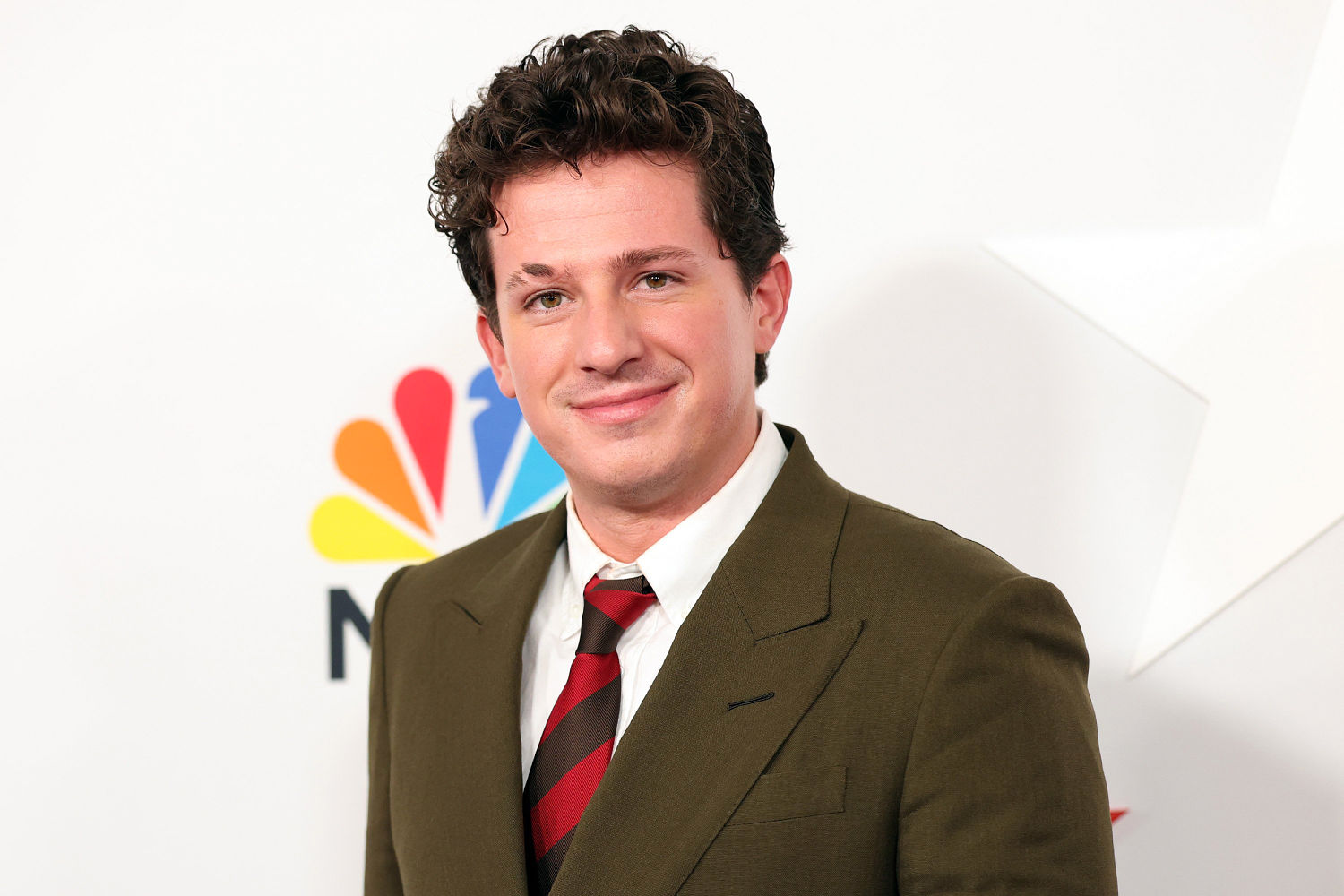
The appointment of Charlie Puth as "Chief Music Officer" (CMO) at an AI-driven creation platform signifies a structural shift in the music industry’s labor economy rather than a mere celebrity endorsement. This role transitions the artist from a product to a system architect. By integrating a high-fidelity musical ear into the model’s feedback loop, the platform seeks to solve the "alignment problem" in generative audio—the gap between mathematically probable note sequences and human-perceived melodic value. The strategy relies on three distinct pillars: the validation of synthetic output, the codification of professional intuition, and the mitigation of the "uncanny valley" in automated composition.
The Mechanistic Role of the Chief Music Officer
The traditional CMO (Chief Marketing Officer) drives brand awareness; the Chief Music Officer drives model weights. In a generative AI context, Puth’s utility is centered on Reinforcement Learning from Human Feedback (RLHF). An AI model trained on raw MIDI data or waveform audio can identify patterns but cannot differentiate between a "technically correct" chord progression and one that triggers a dopamine response.
The CMO functions as the lead annotator and objective-setter. In this structural hierarchy, the artist provides a qualitative filter for the quantitative output of the neural network. This process addresses the primary bottleneck in generative music: high entropy. Without a structured aesthetic constraint, AI models often produce "musical word salad"—sequences that follow basic music theory but lack the micro-tensions (rubato, syncopation, timbral shifts) that define professional production.
The Three Pillars of Algorithmic Value
To understand why a platform requires an artist of this specific caliber, one must break down the value proposition into technical categories:
- Harmonic Complexity Mapping: Puth’s public-facing brand is built on perfect pitch and a granular understanding of functional harmony. For an AI platform, this expertise is a data labeling asset. He identifies which synthetic textures contain "digital artifacts" or "phase issues" that a standard engineer might miss, allowing developers to fine-tune the noise-reduction layers of their diffusion models.
- The Feedback Loop of Proprietary Samples: The platform gains more than a face; it gains a specific "sonic signature." By analyzing Puth’s composition style, the AI can be fine-tuned via Low-Rank Adaptation (LoRA) or similar techniques to mimic the specific harmonic densities he favors. This creates a proprietary "sound" that distinguishes the platform from open-source models like Stable Audio or MusicLM.
- User Friction Reduction: Non-musician users face a "blank page" problem. By having a CMO curate "starter states" or "seed prompts," the platform lowers the barrier to entry. The artist’s role is to define the "guardrails" of the latent space, ensuring that even random user inputs yield results that remain within the bounds of Western pop aesthetics.
The Cost Function of Human-AI Interoperability
The integration of a professional musician into a software development lifecycle introduces specific friction points. The "Cost Function" in this partnership isn't just financial; it is a measure of the loss in creative fidelity during the translation from human intuition to binary code.
- Codification Loss: When Puth describes a sound as "bright" or "punchy," those subjective descriptors must be mapped to specific frequency ranges (e.g., a boost at 3-5 kHz) and transient shapes.
- Computational Constraints: A human can imagine a complex, multi-layered arrangement instantaneously. An AI model, however, is limited by its context window and its ability to maintain long-range temporal coherence. The CMO’s task is to help the model maintain a "hook" over a 3-minute duration—a task currently difficult for Transformer-based audio architectures.
The Problem of Temporal Coherence in Generative Audio
Most generative audio models excel at 5-to-10-second loops but fail at "song structure" (Verse-Chorus-Bridge transitions). This is a memory bottleneck. The CMO’s presence suggests a move toward "Hierarchical Generation," where the AI first generates a structural skeleton (the "map") and then populates it with textures.
Economic Implications for the Intellectual Property Landscape
The appointment of a high-profile artist to an AI leadership role creates a precedent for "Opt-in Training." This is a defensive strategic move against the mounting litigation regarding AI training sets. By hiring a CMO, the platform builds a narrative of collaboration rather than extraction.
The economic model shifts from Direct Sales (selling a song) to Infrastructural Licensing (selling the ability to make songs). This creates a bifurcated market:
- Tier 1: Premium, human-composed works that retain "scarcity value."
- Tier 2: High-volume, AI-assisted content used for social media, gaming, and background environments.
Puth’s role is to ensure Tier 2 content approaches the quality of Tier 1, effectively cannibalizing the lower end of the session musician and "type beat" producer market. The risk here is "Stochastic Parity"—where the AI becomes so good at mimicking the CMO’s style that it devalues the CMO’s own future releases.
Structural Bottlenecks in AI-Human Creative Systems
Despite the high-profile nature of the partnership, several technical and market realities limit the immediate impact of such a role.
First, Latency in the Feedback Loop. A CMO can provide high-level direction, but the iterative cycle of retraining a model to reflect that direction is slow and expensive. This is not "real-time" collaboration; it is a series of slow deployments.
Second, The Subjectivity of Technical Accuracy. What Puth considers a "hit" is informed by current Billboard trends, which are ephemeral. An AI model trained on Puth’s 2024 preferences may be obsolete by 2026. This necessitates a "Dynamic Tuning" infrastructure where the artist must constantly update the model's reward functions to stay relevant to the cultural zeitgeist.
Third, Data Saturation. There is a limit to how much a single human’s input can shift a model trained on billions of audio hours. The CMO's influence is likely localized to the "Top-K" sampling parameters or the final mastering chain of the platform, rather than the foundational architecture of the neural network itself.
Quantifying the "Puth Effect" on Platform Adoption
The success of this partnership can be measured through three Key Performance Indicators (KPIs) that go beyond standard vanity metrics:
- Prompt-to-Export Ratio: Does the CMO’s influence lead to a higher percentage of generated clips being "kept" and exported by users? A higher ratio indicates better alignment between AI output and user expectation.
- Harmonic Density Variance: A technical measure of whether the AI’s output becomes more sophisticated (using a wider variety of chord extensions and non-diatonic notes) under the CMO’s guidance.
- Retention of "Power Users": Professional producers are typically skeptical of AI. If the CMO can bridge the gap by introducing "Pro-Tools-level" controls into a simplified AI interface, the platform gains a more lucrative subscriber base.
The Strategic Shift to "Curated Latent Spaces"
The long-term play for platforms like this is the creation of "walled gardens" of creativity. By using a CMO to prune the infinite possibilities of an AI model into a curated "latent space," the company provides a specific aesthetic experience.
In this model, the artist is no longer just a performer; they are a Curator of Probability. They are deciding which sounds are allowed to exist within the platform's ecosystem. This is a move toward "Algorithm as Aesthetic," where the software itself becomes the recognizable artist.
The move signifies that we are exiting the era of "General Purpose AI" and entering the era of "Domain-Specific Creative Engines." The winner of this race will not be the company with the largest dataset, but the company with the most refined "filter"—the human expert who can steer the machine toward the specific 1% of generated content that humans actually want to hear.
Tactical Play: The Integration of Predictive Melodic Curves
The immediate technical objective for the platform, under Puth’s direction, should be the implementation of "Predictive Melodic Curves." This involves training the model to recognize the "tension and release" patterns prevalent in Western pop.
Instead of generating audio sample by sample, the CMO guides the development of a "Macro-Controller" that understands the narrative arc of a song. The goal is to move the AI from "generating sound" to "composing intent."
For the professional artist, the move into the C-suite of an AI firm is a hedge against the inevitable commoditization of melody. By becoming the architect of the machine, the artist ensures their influence persists even as the individual "unit of music" loses its market price. The strategy is clear: if you cannot compete with the infinite scale of AI, you must become the standard by which that infinity is judged.