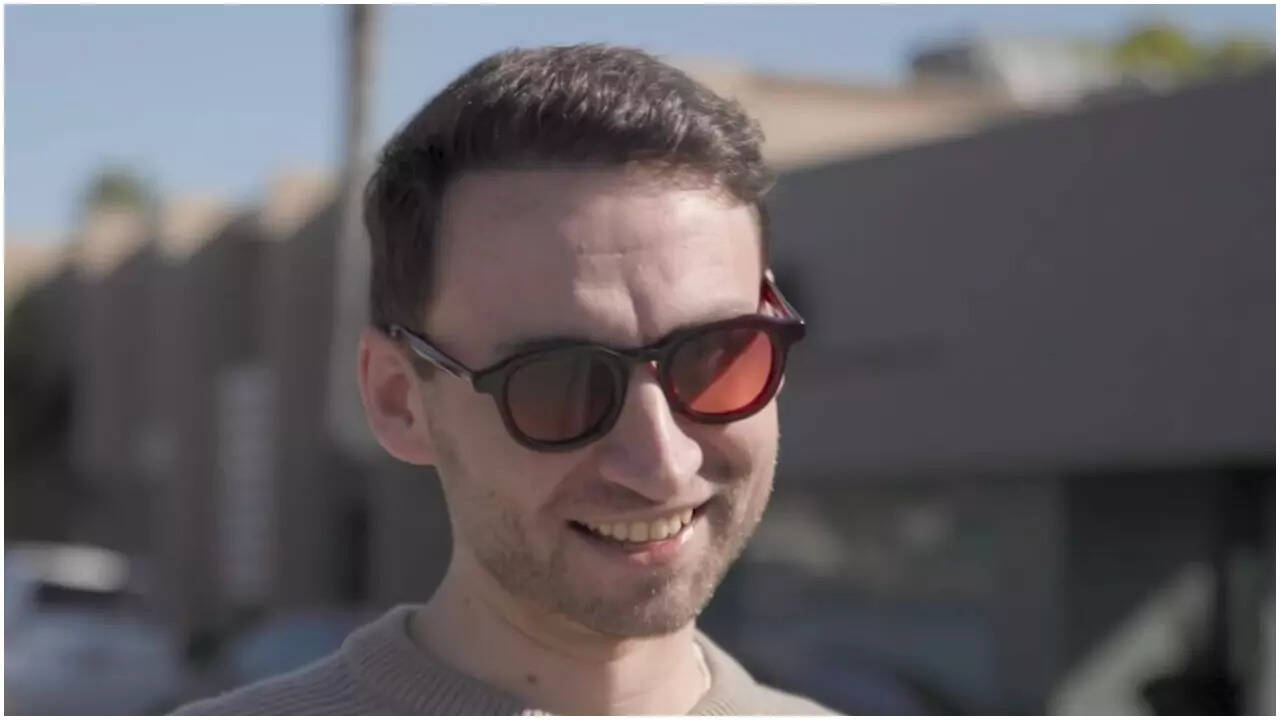
A network of 31 high-profile X accounts recently fell like dominos, hijacked to pump out hyper-realistic AI-generated war footage. This was not a simple password leak. It was a calculated demonstration of how easily the machinery of a major social platform can be turned against the public's perception of reality. When Nikita Bier, a veteran product builder and current advisor at X, flagged this operation, he didn't just find a few bots. He uncovered a sophisticated pipeline where stolen digital identity meets synthetic warfare. The objective was clear: use the inherent credibility of established accounts to bypass the skepticism users typically apply to unknown sources.
The operation functioned as a bridge between two worlds. On one side, you have the "hacked handle" market—a thriving underground economy where accounts with high follower counts and long histories are traded like commodities. On the other, you have generative AI tools capable of churning out visceral, emotionally charged video content of combat zones that never existed. By merging the two, the attackers bypassed the "new account" filters that usually catch spam. They spoke with the voices of trusted users, but they showed the world a fiction designed to incite panic and engagement.
The Mechanics of a Hijacked Narrative
To understand how 31 accounts can cause a systemic tremor, you have to look at the math of virality. An account with 100,000 followers carries a specific weight in the platform's recommendation engine. When that account posts a video, the algorithm treats it as a high-signal event. If that video depicts a burning city or a frontline explosion, the engagement—likes, shares, and horrified comments—compounds the reach.
The attackers utilized compromised accounts that had been dormant or whose security had been eroded through credential stuffing. Credential stuffing involves taking usernames and passwords leaked from other site breaches and testing them against X. Once inside, the bad actors scrubbed the old identity and replaced it with a veneer of "breaking news" or "conflict journalism."
This is the new front of information warfare. It is no longer about convincing someone that a lie is true through repetition. It is about overwhelming the senses with high-fidelity visual evidence before the brain has time to check the blue checkmark or the account history. By the time a moderator flags the content, the video has been ripped and re-uploaded across a dozen other platforms. The bell cannot be un-rung.
Why the Current Defense is Failing
Current moderation systems are largely reactive. They look for patterns of behavior or specific keywords. However, when a legitimate, aged account suddenly starts posting AI-generated war footage, it creates a blind spot. The "reputation" of the account acts as a shield.
Standard AI detection tools are also struggling to keep pace. While researchers point to "tells" like inconsistent shadows or blurred textures in synthetic video, these details are often lost in the compression of a social media upload. A grainy, shaky-cam video of a tank explosion looks "real" precisely because it looks low-quality. The attackers lean into this aesthetic. They know that a raw, unpolished clip feels more authentic to a scroller than a high-definition broadcast.
The problem is compounded by the sheer volume of data. X handles hundreds of millions of posts a day. Monitoring 31 accounts might seem easy in hindsight, but identifying them in real-time amidst the noise of a global news cycle requires a level of proactive forensic analysis that most platforms are not yet equipped to handle at scale.
The Underground Marketplace for Identity
Behind every hacked handle is a financial incentive. There are entire forums dedicated to the sale of "OG" handles and high-follower accounts. Prices vary based on the age of the account and its historical engagement. For an influence operation, these accounts are the equivalent of "clean" passports. They allow the operator to cross the border of the user's distrust without being stopped for questioning.
The 31-account operation highlighted by Bier suggests a coordinated buyer. This wasn't a group of teenagers looking for clout; it was an organized cell with a specific content strategy. They weren't selling crypto scams or diet pills. They were distributing geopolitically sensitive misinformation. This shifts the threat model from simple cybercrime to something closer to state-sponsored or high-level mercenary influence work.
The Illusion of Proximity
One of the most dangerous aspects of AI-generated war videos is the "proximity effect." Humans are biologically wired to react to visual threats. When we see a video of an explosion, our nervous system responds before our logical mind can ask if the physics of the smoke look correct.
In the 31-account operation, the videos often featured captions that suggested the footage was "just leaked" or "happening now." This creates a sense of urgency that discourages fact-checking. The goal is to move the user into a state of emotional contagion. You see the video, you feel the fear, and you share it to warn others. In that moment, you become an unpaid distribution node for the attacker.
The Technological Arms Race
We are entering an era where the cost of creating a convincing lie is dropping to zero, while the cost of verifying the truth is skyrocketing.
$$C_{lie} \to 0 \quad \text{vs} \quad C_{truth} \uparrow \infty$$
This imbalance is unsustainable for a public square. If every video of a global conflict must be treated as a potential deepfake, the result isn't that people believe the lie—it's that they stop believing anything at all. This "liar's dividend" benefits the chaotic actor. When the public is paralyzed by skepticism, they become cynical and disengaged.
Nikita Bier’s intervention served as a temporary firebreak. By identifying the cluster, he allowed X to purge the immediate threat. But the underlying vulnerability remains. As long as accounts can be bought, sold, or stolen, and as long as AI can generate visceral content in seconds, the platform will remain a laboratory for psychological operations.
Verification Beyond the Checkmark
The old ways of signaling trust are dead. A blue checkmark was once a symbol of identity; then it became a subscription service; now it is often a target for hackers who want to use that perceived status to mask their activities.
Future defenses must look at the "behavioral DNA" of an account. If a user who has spent ten years tweeting about gardening suddenly starts posting professional-grade war footage from a foreign IP address, the system should trigger an immediate "circuit breaker." This isn't about censorship; it's about account integrity.
The Responsibility of the User
While the platform carries the burden of security, the end-user is the final line of defense. The 31-account operation succeeded because it exploited human curiosity and the desire for "breaking" news.
We have to cultivate a "digital distance." This means pausing when a video evokes a strong emotional reaction. It means looking for corroboration from multiple, independent sources before hitting the share button. If a video exists only on a handful of accounts—even "verified" ones—and isn't being reported by established news agencies with feet on the ground, it is likely a fabrication.
The era of passive consumption is over. Every scroll is a walk through a minefield of manufactured reality. The 31 accounts caught by Bier are just one cluster in a much larger, ongoing effort to map the vulnerabilities of our collective attention. The next operation will be larger, the videos will be more convincing, and the hijacked accounts will be even more trusted.
Turn on two-factor authentication, not just to save your own data, but to prevent your digital ghost from being used to start a fake war.