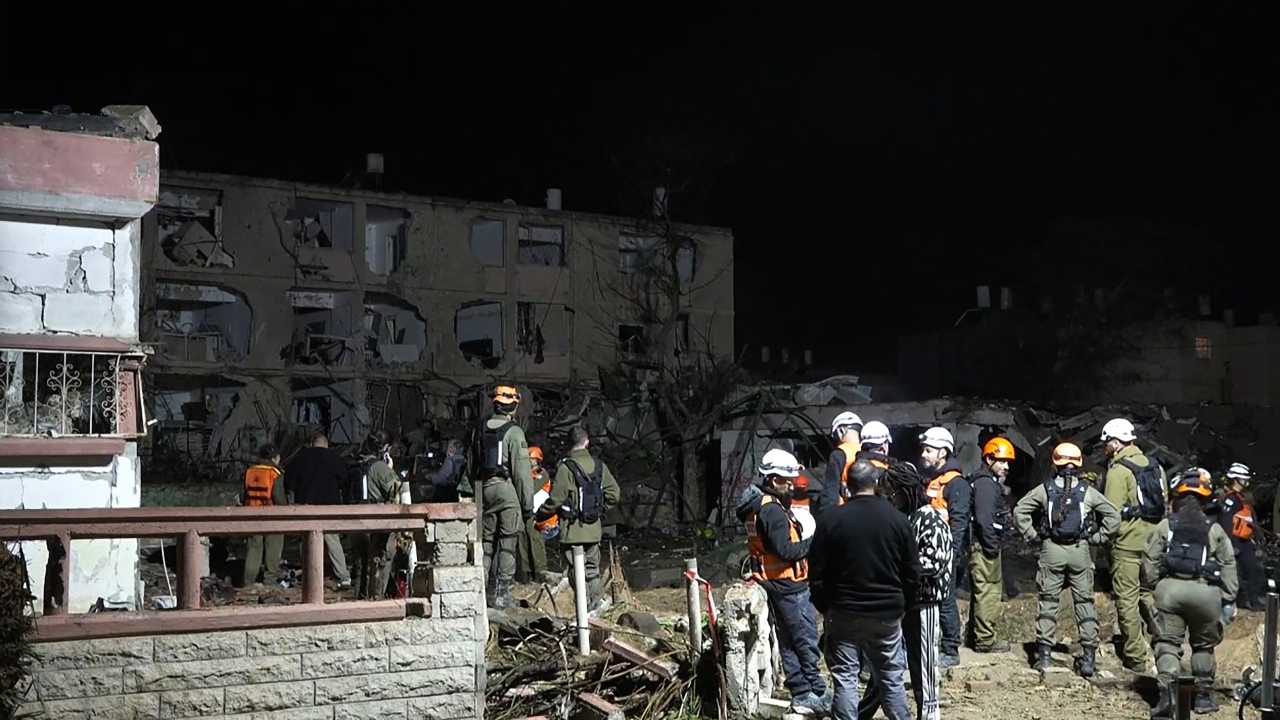
The headlines are predictable. They focus on the smoke, the charred frames of ambulances, and the immediate, visceral reaction of a community under siege. When four vehicles belonging to a Jewish ambulance service are torched in London, the media cycle defaults to a standard script: shock, condemnation, and a call for "community cohesion."
They are missing the point.
Focusing solely on the motive—while emotionally satisfying—is a strategic dead end. It treats the symptom while the systemic infection rots the bone. We are looking at a catastrophic failure of urban security infrastructure and a misunderstanding of how modern targeted violence operates. If you think more "awareness" or "tolerance" prevents a midnight petrol bomb, you haven't been paying attention to how security actually works in a high-tension metropolis.
The Myth of the Unpreventable Attack
The lazy consensus suggests that these incidents are "senseless." That is a lie. Every act of arson is tactical. It requires reconnaissance, timing, and an understanding of patrol gaps. To call it senseless is to grant the perpetrator a shield of irrationality that makes them harder to catch.
In a city like London, arguably the most surveyed patch of dirt on the planet, four vehicles do not just spontaneously combust without a trail. The failure here isn't a lack of cameras; it’s the data-siloing of private vs. public security. We have thousands of eyes, but they are all blinking at different times.
I have spent years looking at how private security firms interface with local law enforcement. Usually, they don't. They operate in bubbles. A religious-affiliated service like this one often relies on its own internal vigilance, while the Metropolitan Police are stretched thin across a dozen different high-priority mandates. When these two entities don't share real-time risk assessments, the "blind spot" isn't a mistake—it’s a design flaw.
Stop Asking About Motive and Start Asking About Access
The public and the press are obsessed with the why. Was it anti-Semitism? Was it a localized dispute? While the motive matters for a courtroom, it is irrelevant for prevention.
The hard truth? The "why" doesn't matter if the "how" is impossible.
We treat ambulances—critical life-saving infrastructure—as if they are parked sedans. They aren't. In any other high-stakes industry, assets of this value and symbolic weight would be protected by tiered access and thermal-trigger alerts. Instead, we see them left in vulnerable positions because we assume the "sanctity" of an ambulance provides a moral shield.
It doesn't. Morality is not a perimeter fence.
The Problem With Symbolic Security
Most organizations invest in "symbolic security." This includes:
- High-visibility vests that do nothing against a concealed accelerant.
- CCTV cameras that only serve to provide a grainy video for the evening news after the damage is done.
- Signs that warn of prosecution—a joke to someone willing to commit a felony.
Real security is proactive and technical. It’s about interdiction. If your security posture doesn't involve detecting a perimeter breach before the first match is struck, you don't have security; you have a glorified documentary crew.
The Intelligence Gap: Why We Keep Losing
The mainstream narrative suggests that these attacks are "lone wolf" or "random." I’ve analyzed enough threat patterns to know that randomness is rare. There is almost always a "digital shadow" preceding physical violence.
Before those ambulances were set on fire, someone looked up the address. Someone checked the street view. Someone likely bragged or vented in a niche corner of the internet.
The failure isn't just physical; it's an intelligence failure. We are still using 20th-century policing methods to fight 21st-century radicalization and targeted vandalism. We wait for the fire, then we investigate. In a world where predictive analytics can tell a retailer what you’re going to buy before you know it, why are we unable to flag high-risk surges around sensitive community assets?
The Cost of Being "Reactive"
The financial hit to a non-profit ambulance service is massive, but the psychological tax on the community is higher. Every time a vehicle burns, the "cost of doing business" for Jewish organizations in Europe rises. Insurance premiums spike. Security budgets drain resources away from actual medical care.
By refusing to acknowledge that certain services require a military-grade approach to asset protection, we are essentially subsidizing the arsonist’s goals. We are making it too easy for them to achieve a high-impact result with a £5 bottle of petrol.
The Counter-Intuitive Fix
If we want to stop this, we have to stop treating these incidents as isolated hate crimes and start treating them as high-value asset protection failures.
- De-silo Private Intelligence: Private community watch groups and the police need a unified data stream. If a suspicious vehicle is spotted by a synagogue’s camera, that data should trigger a localized alert for every Jewish-affiliated asset within a five-mile radius instantly.
- Hardened Perimeters: Stop parking ambulances on the street or in low-fenced lots. If an asset is essential for life-saving, it belongs in a hardened, monitored facility. The "openness" of community services is a vulnerability, not a virtue.
- Active Deterrence: We need to move toward autonomous monitoring. Thermal sensors that detect a human heat signature near a vehicle after 2:00 AM should trigger an immediate, non-lethal deterrent—high-intensity strobes, auditory warnings, and instant dispatcher intervention.
The Uncomfortable Reality of Urban Friction
Critics will say this turns a city into a fortress. They’ll argue that we shouldn't have to live like this.
They are right. We shouldn't. But we do.
Ignoring the reality of the threat landscape in favor of an idealized version of "London life" is how vehicles end up as charred husks. You can't "community-outreach" your way out of a targeted arson campaign. You can only out-think and out-engineer the perpetrator.
The "Jewish ambulance service" isn't just a religious charity; it's a critical component of the city's emergency response grid. When it is attacked, the entire city’s resilience drops. Yet, we treat the security of these units as a "private matter" for the community to handle.
Moving Past the "Outrage" Phase
Every time this happens, the cycle is the same:
- Fire occurs.
- Social media explodes with "thoughts and prayers."
- Politicians issue a boilerplate statement about "no place for hate."
- The news moves on to a celebrity scandal or a weather report.
This cycle is useless. It offers no protection. It provides no justice.
We need to stop being surprised when hate manifests as heat. We know the sentiment exists. We know the targets are identified. The only variable is our level of preparation.
If you are a director of an organization that serves a high-risk community, your job isn't just to provide a service. Your job is to ensure that service survives the night. If you haven't audited your physical security through the lens of a hostile actor, you are part of the problem.
The arsonists in London didn't just burn metal and rubber. They exposed the fact that our "sophisticated" urban security is a paper tiger. They showed that with a bit of planning and a basic incendiary, they can paralyze a vital service and terrorize a population while the "most watched" city in the world watches nothing.
Stop looking for "unity" in the ashes. Start building perimeters that don't burn.
Quit waiting for the police to save you; they are busy filing the paperwork for the last fire.