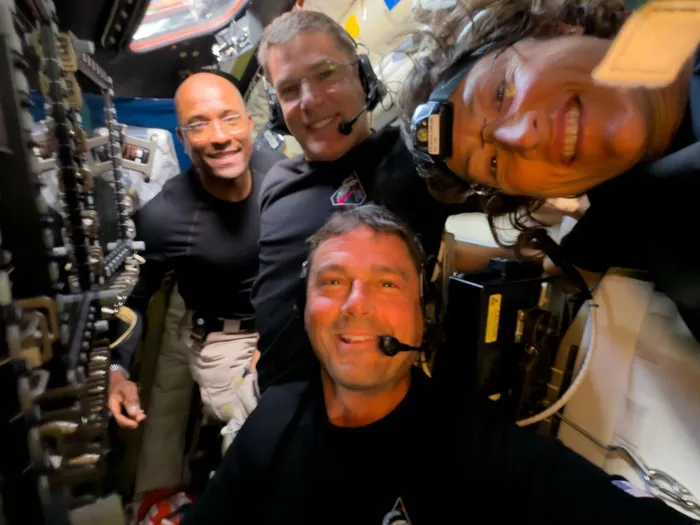
The successful splashdown of the Artemis II Orion capsule marks a transition from theoretical deep-space architecture to validated kinetic performance. While public discourse focuses on the safe return of the four-person crew, the strategic significance lies in the empirical verification of the Heat Shield Performance Envelope and the Cislunar Communication Mesh. This mission was never a mere orbital flight; it was a stress test of the integrated flight hardware required for the sustained human presence on the lunar surface. The recovery of the crew provides the final data point in a 10-day telemetry set that defines the margin of safety for all subsequent Artemis milestones.
The Triad of Mission Criticality
The Artemis II mission architecture functions through three interdependent technical pillars. Failure or underperformance in any single pillar creates a cascading risk profile that renders the lunar landing objectives of Artemis III impossible.
1. Thermal Protection System (TPS) Integrity
The Orion spacecraft encountered reentry velocities of approximately 11 kilometers per second ($11 \text{ km/s}$). At these speeds, the friction between the capsule and the atmospheric gases generates temperatures reaching $2,760^\circ\text{C}$ ($5,000^\circ\text{F}$). The TPS is not a passive shield but a sacrificial ablative system.
- Ablative Degradation Rates: The Avcoat material must char and erode at a predictable rate to dissipate heat. Artemis II data provides the first human-rated confirmation that the charring layer remains uniform under actual reentry conditions rather than simulated wind tunnel environments.
- Thermal Soak Management: Beyond the outer shield, the internal structure must maintain a life-sustaining temperature. Any breach in the thermal barrier would lead to localized structural weakening, a risk factor that scales exponentially with the duration of high-velocity atmospheric friction.
2. High-Elliptical Earth Orbit (HEEO) Propulsion Validation
Before committing to a Trans-Lunar Injection (TLI), Artemis II utilized a high-elliptical orbit to test the Interim Cryogenic Propulsion Stage (ICPS). This phase served as the functional gate for the mission. The spacecraft’s ability to execute precision burns at the perigee (closest point to Earth) to raise its apogee (farthest point) validated the orbital mechanics required for complex maneuvering in the lunar vicinity.
The logic here is purely mathematical: the delta-v ($\Delta v$)—the change in velocity—required to break Earth's gravitational influence must be achieved with extreme fuel efficiency to preserve the Service Module’s consumables for the return leg. Artemis II proved that the SLS Block 1 configuration provides the necessary thrust-to-weight ratio to insert a crewed vehicle into a trajectory that uses lunar gravity as a natural brake.
3. Life Support and Environmental Control (ECLSS) Benchmarking
A 10-day mission duration represents the minimum viable window for a lunar round trip. The Artemis II ECLSS had to manage carbon dioxide scrubbing, humidity control, and oxygen partial pressure for four occupants in a volume significantly smaller than the International Space Station.
- Metabolic Load Balancing: Four humans generate a specific thermal and chemical load. The system’s ability to stabilize the internal atmosphere during the high-stress phases of launch and reentry—where metabolic rates spike—determines the capacity for the longer 30-day stays planned for the Gateway station.
- Radiation Shielding: Outside the protection of the Van Allen belts, the crew was exposed to solar particle events and galactic cosmic rays. Artemis II serves as a longitudinal study on the efficacy of the Orion’s internal shielding "storm shelters."
Quantifying the Reentry Dynamics
The recovery of the Orion capsule in the Pacific Ocean is the result of a precise "skip reentry" maneuver. This technique is fundamentally different from the ballistic reentries of the Apollo era.
- The Initial Dip: The capsule enters the upper atmosphere to generate lift, effectively "bouncing" off the denser layers.
- Thermal Shedding: This skip allows the spacecraft to shed a significant portion of its kinetic energy and heat before the final descent.
- Targeting Precision: By modulating the lift-to-drag ratio, NASA navigators can move the splashdown point by hundreds of miles, ensuring the recovery fleet is positioned within an optimal window.
The success of this maneuver on Artemis II reduces the landing ellipse for future missions. This precision is not a luxury; it is a requirement for recovering crews who may be suffering from the physiological effects of long-duration microgravity or radiation exposure.
The Bottleneck of Human Physiology in Cislunar Space
While the hardware performed within its design parameters, the Artemis II mission highlights the biological constraints of deep space exploration. The "Return to Earth" is not merely a mechanical feat but a biological recovery process.
- Neurovestibular Readjustment: Upon splashdown, the transition from microgravity to $1g$ causes immediate disorientation. For Artemis II, the 10-day duration is short enough that bone density loss is minimal, but the vestibular system—responsible for balance—requires significant recalibration.
- The Fluid Shift Phenomenon: In space, fluids shift toward the head, increasing intracranial pressure. Reentry reverses this process rapidly. The data harvested from the Artemis II crew regarding their blood pressure stabilization during the high-G loads of reentry ($4$ to $7\text{ Gs}$) will dictate the seating geometry and medical protocols for the Artemis III lunar landing crew.
Technical Limitations and Known Unknowns
Despite the mission’s success, two significant variables remain insufficiently characterized for a permanent lunar presence.
The Lunar Dust Interface
Artemis II was a flyby mission; it did not interact with the lunar regolith. Lunar dust is jagged, electrostatic, and highly abrasive. The Orion capsule’s seals and the crew's EVA suits (which were not tested in a lunar environment during this mission) remain the highest risk factors for Artemis III. The return of the capsule allows engineers to inspect the exterior for micrometeoroid impacts, but it offers no data on the chemical reactivity of lunar dust with spacecraft alloys.
Communication Latency and Autonomy
During the far-side transit of the moon, the Artemis II crew was in a total communication blackout. This period required the onboard flight computers to execute autonomous navigation. While the hardware functioned, the reliance on Earth-based Deep Space Network (DSN) assets remains a single point of failure. The mission confirmed that while we can fly to the moon, we cannot yet "live" there without near-constant telemetry from Earth.
Strategic Forecast for the Cislunar Economy
The safe return of the Artemis II astronauts validates the Space Launch System (SLS) as a reliable heavy-lift platform. However, the cost function of this architecture remains a barrier to scalability.
The SLS is an expendable launch vehicle. Each mission consumes billions of dollars in hardware that ends up in the ocean. The success of Artemis II creates a mandate for the transition to the SLS Block 1B and eventually reusable components. If the mission had failed, the political and financial capital for lunar exploration would have evaporated. Because it succeeded, the focus now shifts from "Can we get there?" to "How do we stay there affordably?"
The next phase involves the integration of the Human Landing System (HLS). Artemis II proved the "taxi" (Orion) works. Now, the industry must deliver the "elevator" (Starship HLS) that connects the Orion's high lunar orbit to the surface. The data from this return flight confirms that the Orion can loiter in orbit for the duration required for a surface sortie, provided the docking interfaces and fuel transfer protocols—which are yet to be flight-tested—meet the same rigorous standards as the Artemis II reentry.
The strategic play is no longer about the moon as a destination; it is about the moon as a laboratory for Mars. Every joule of heat dissipated by the Artemis II heat shield is a data point for the much more aggressive reentry required at the Martian atmosphere. The mission is closed, but the longitudinal analysis of its hardware will dictate the next twenty years of aerospace engineering.