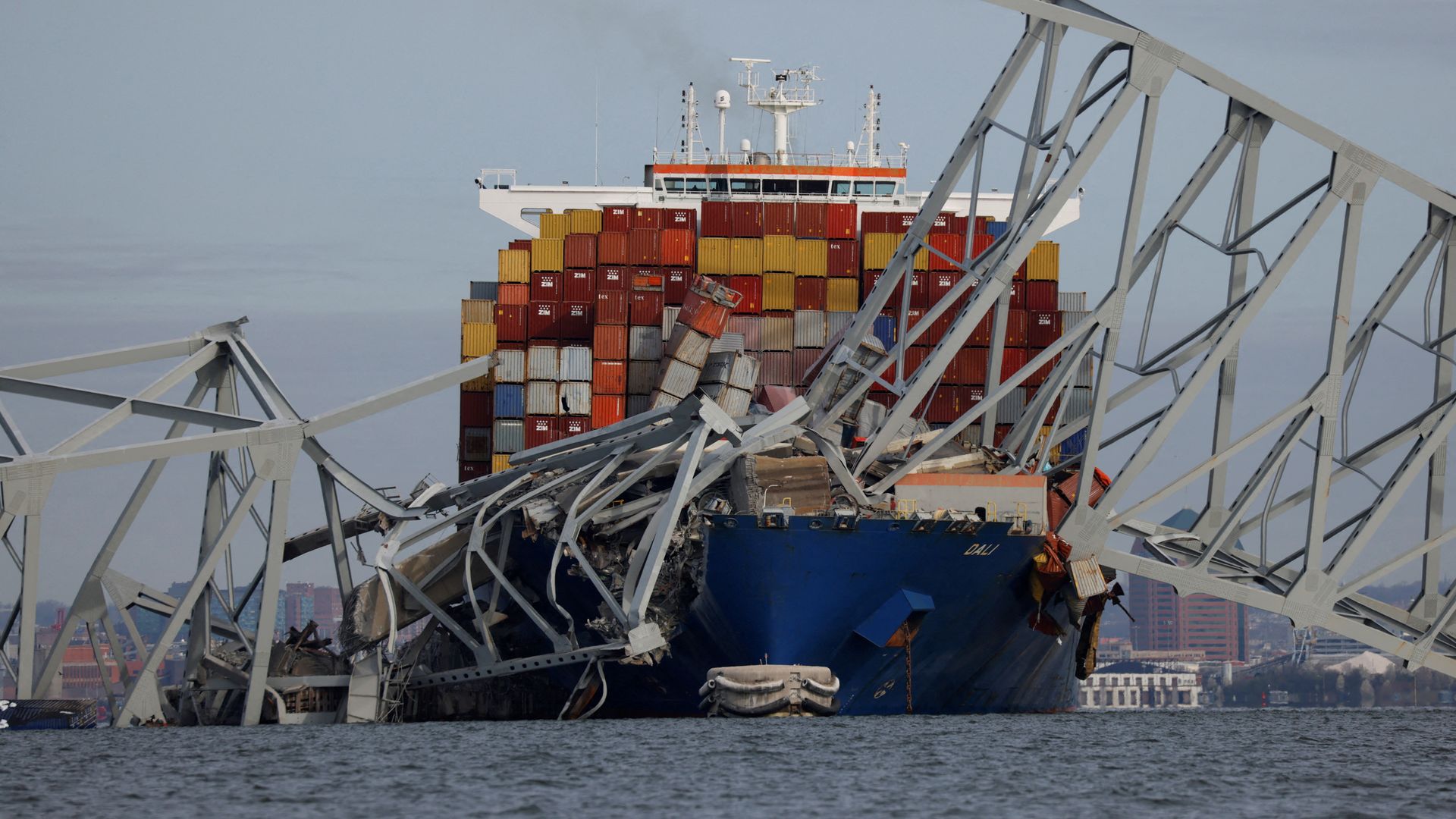
Justice finally arrived at the Port of Baltimore, but it didn't come with an apology. It came with a criminal indictment. Federal prosecutors just charged the operators of the Dali, the massive container ship that leveled the Francis Scott Key Bridge and took six lives with it. This isn't just about a broken bridge. It’s about a massive failure in basic corporate responsibility that’s going to ripple through global shipping for decades.
If you followed the news when the bridge collapsed on March 26, 2024, you saw the footage. A 948-foot vessel lost power, drifted, and slammed into a support pillar like it was made of toothpicks. The bridge fell in seconds. It was horrific. But what we’re learning now through the Department of Justice (DOJ) filings is that this wasn't some "act of God" or an unavoidable freak accident. It was the result of a ship that was, frankly, a ticking time bomb.
The DOJ isn't playing around. They’re seeking over $100 million in damages. They're going after Grace Ocean Private Ltd. and Synergy Marine Private Ltd., the Singapore-based companies behind the ship. The goal? To make sure they, not the taxpayers, foot the bill for the massive cleanup and the lives destroyed.
The Mechanical Failures Nobody Wanted to Talk About
The big secret is that the Dali had been choking on its own mechanical issues long before it hit that pillar. You don't just lose all power on a ship that size because of bad luck. The indictment paints a picture of a crew and a management team that knew the ship’s electrical system was unstable.
Reports show the vessel had experienced multiple power blackouts in the days leading up to the disaster. Think about that. You’re navigating one of the most vital shipping lanes on the East Coast with a ship that can’t keep the lights on. It’s negligence, plain and simple. The DOJ alleges the defendants "jury-rigged" the ship. Instead of fixing the root cause of the electrical vibrations and power failures, they patched it together and kept pushing for profit.
Shipping companies operate on razor-thin schedules. Every hour a ship sits in port for repairs is money burning. But when that "efficiency" leads to the death of six construction workers—Alejandro Hernandez Fuentes, Dorlian Castillo Cabrera, Maynor Yasir Suazo-Sandoval, Jose Mynor Lopez, Hernandez, and Carlos Daniel Hernandez—the "cost of doing business" becomes a criminal matter.
Why the $100 Million Figure Matters
The United States government is suing to recover the costs of the federal response. We’re talking about the Coast Guard, the Army Corps of Engineers, and the Navy. Clearing the Patapsco River wasn't just a cleanup job; it was a massive engineering feat that required moving 50,000 tons of steel and concrete.
The $100 million doesn't even cover the cost of rebuilding the bridge itself. That’s a separate, multibillion-dollar mountain of paperwork. This specific lawsuit is about the immediate chaos. It’s about the fact that the Port of Baltimore—one of the busiest in the country—was effectively choked off for months.
For years, ship owners have used an 1851 law called the Limitation of Liability Act to cap their financial responsibility at the value of the ship after the crash. In this case, the owners tried to cap their liability at about $43 million. The DOJ is essentially telling them to take that 170-year-old law and throw it overboard. They argue that because the owners knew the ship was unseaworthy, they lose the right to limit their liability.
The Human Cost of Corporate Cutting Corners
We get caught up in the logistics, the supply chain issues, and the massive civil engineering challenges. But six families lost their primary earners. These were men working the night shift, fixing potholes so you and I could have a smoother commute. They didn't have a chance.
The investigation reveals that the Dali’s crew lacked the proper training to handle the specific emergency that unfolded. When the power went out, the backup systems didn't kick in correctly because they hadn't been maintained. It’s a cascading failure. One small shortcut leads to a dead engine, which leads to a loss of steering, which leads to a national tragedy.
I’ve seen this pattern before in industrial accidents. It’s rarely one big mistake. It’s a hundred small "it'll be fine" moments that eventually stack up. The DOJ’s move to bring criminal charges sends a signal that "it'll be fine" is no longer an acceptable maintenance strategy for vessels carrying thousands of tons of hazardous materials and cargo through populated areas.
What This Means for Global Shipping
If you think this only affects Baltimore, you're wrong. Every major port city in the world is watching this case. If the DOJ successfully breaks the Limitation of Liability Act, it sets a massive precedent. It means ship operators can’t hide behind archaic laws when their negligence causes catastrophic damage to modern infrastructure.
Expect to see:
- Stricter inspections for vessels entering U.S. waters.
- Massive increases in insurance premiums for older or poorly maintained container ships.
- A complete overhaul of how "unseaworthiness" is defined in maritime law.
We’re moving into an era where the scale of these ships—some carrying over 10,000 containers—outpaces the infrastructure built decades ago. The Key Bridge was finished in 1977. The ships back then were tiny compared to the Dali. We’ve built a world where the margins for error have shrunk to almost nothing, yet the corporate culture of "keep it moving" hasn't changed.
The Road to Rebuilding
Rebuilding the Francis Scott Key Bridge is going to take years. The current estimate is around $1.7 billion to $1.9 billion, with a completion date somewhere in 2028. The Maryland Department of Transportation is already working on designs that include much stronger "dolphins"—those concrete barriers in the water—to protect the piers from ships even larger than the Dali.
The legal battle will likely outlast the construction. Grace Ocean and Synergy Marine will fight this tooth and nail. They have to. If they lose here, they're exposed to thousands of secondary lawsuits from businesses that lost money while the port was closed.
Honestly, the shipping industry needs this wake-up call. We rely on these steel giants for everything from our sneakers to our cars, but that reliance shouldn't come at the cost of basic safety. The DOJ is finally holding the mirror up to the industry.
If you're a business owner in Baltimore or someone who relies on the port, stay updated on the Maryland Port Administration's recovery bulletins. The channel is open, but the scars are still there. For everyone else, keep an eye on the maritime court rulings coming out of Maryland. They'll dictate how the next generation of global trade is regulated. The era of "fixing it on the way" is officially over.
Pay attention to the NTSB's final report when it drops later this year. That document will be the final nail in the coffin for the "unavoidable accident" narrative. It'll provide the technical roadmap for the lawsuits that follow. Follow the money and the maintenance logs; that's where the truth usually hides.