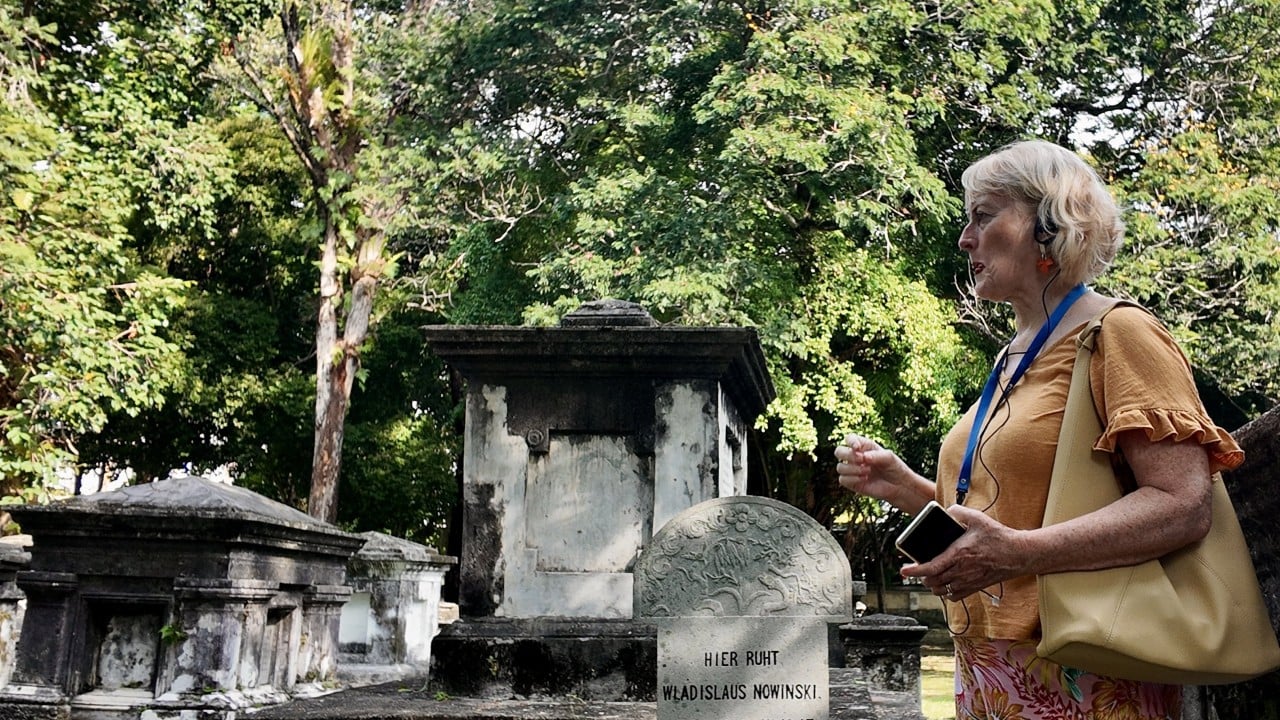
The crumbling masonry of the Protestant Cemetery in George Town isn't just a collection of graves. It is a ledger of colonial ambition and the brutal cost of building a trading empire. While local tourism boards have recently leaned into "cemetery tours" to diversify their cultural offerings, the reality on the ground is far grittier than the polished brochures suggest. These tours are not merely a leisure activity. They represent a desperate, last-ditch effort to fund the preservation of sites that are literally dissolving under the tropical sun.
Penang’s historical graveyards—ranging from the iconic Northam Road Protestant Cemetery to the sprawling hills of the Chinese clan plots—are facing a dual crisis of environmental decay and urban encroachment. For years, these spaces were ignored by everyone except heritage buffs and stray dogs. Now, they are being rebranded as "open-air museums." But the transition from a forgotten ruin to a viable tourist attraction is fraught with ethical and financial landmines that most observers are happy to overlook.
The High Price of Neglect
Walking through the Protestant Cemetery, the first thing you notice is the mold. It’s a thick, black velvet that eats into the porous lime plaster of the 18th-century tombs. This is where Francis Light, the founder of the British colony in Penang, lies buried alongside hundreds of young men and women who didn't survive their first year in the "White Man's Grave."
Maintaining these sites requires specialized knowledge. You cannot simply blast these structures with a pressure washer or slap on a coat of modern acrylic paint. Using the wrong materials traps moisture inside the stone, causing the facade to explode from the inside out. True restoration involves traditional lime putty and a pace of work that is incompatible with the fast-moving budgets of municipal government.
Tour fees are currently the primary engine for this upkeep. However, the math rarely adds up. A few dozen visitors a week paying a modest entry fee or tip to a guide cannot cover the five-figure sums required for structural stabilization. What we are seeing is a gap between the marketing of "heritage" and the actual funding of its survival. The tours generate interest, but interest doesn't fix a sagging vault.
Beyond the Colonial Lens
Most cemetery tours focus heavily on the East India Company elite. It’s an easy sell. There are stories of duels, tropical fevers, and the heavy burden of the British Raj. But this narrow focus does a disservice to the actual history of Penang.
The real story of the island is found in the less manicured spaces. Take the Jewish Cemetery on Jalan Zainal Abidin, the oldest of its kind in Southeast Asia. It is a quiet, modest strip of land that tells the story of a once-thriving mercantile community that has all but vanished from the island. Or consider the sprawling Chinese cemeteries like Batu Lanchang. These are not static monuments; they are active sites of ancestor worship where the "tours" often clash with the private grief or traditional rituals of local families.
Investigative curiosity forces us to ask who these tours are actually for. If they are designed solely for international tourists looking for a "gothic" photo-op, they risk turning sacred spaces into theme parks. There is a tension between the need for revenue and the respect owed to the dead. Some community leaders have expressed quiet resentment over the commodification of their ancestors' resting places, arguing that the government should provide direct heritage grants rather than forcing cemeteries to "earn their keep" through foot traffic.
The Urban Squeeze
Penang is an island with a land scarcity problem. In the eyes of a property developer, a three-acre cemetery is often seen as "wasted" space. This is the silent war happening behind the scenes of every heritage tour.
In the past, various graveyards have been cleared to make way for roads and high-rises. The dead do not vote and they do not pay taxes. When a cemetery is no longer used for new burials, it becomes vulnerable. By turning these sites into tourist destinations, heritage advocates are essentially creating a human shield. If a site is a recognized "attraction" that brings in foreign currency, it is much harder for a developer to justify its demolition.
This is a cynical but necessary strategy. The "interest" spurred by these tours is a form of political currency. Every visitor who posts a photo of a colonial-era tomb is inadvertently lobbying for that tomb’s right to exist.
The Guide Problem
Not all tours are created equal. The rise in popularity of dark tourism has led to a surge in freelance guides who prioritize ghost stories over historical accuracy.
During my time on the ground, I witnessed several "night tours" where the narrative leaned heavily into local superstitions and sensationalized accounts of the "plague years." While this might sell tickets, it erodes the educational value of the site. True investigative journalism requires us to distinguish between the preservation of history and the production of entertainment.
The Penang Heritage Trust has made efforts to train certified guides who understand the nuances of the architecture and the socio-political history of the era. These professionals explain the symbolism of the carvings—the broken pillars representing a life cut short, the weeping willows, the intricate Chinese calligraphy that tracks a family's migration from Fujian to the Straits. This is the level of detail that justifies the presence of tourists in a graveyard.
The Logistics of Decay
- Climate Stress: High humidity and heavy rainfall accelerate the growth of lichen and biological films.
- Acid Rain: Increasing urbanization leads to air pollution that chemically reacts with the limestone tombs.
- Root Damage: Large banyan trees, while picturesque, have root systems that can lift a three-ton sarcophagus off its foundation.
The cost of managing these three factors alone is staggering. When you add the need for 24-hour security to prevent vandalism and the theft of ornate cast-iron railings—often sold for scrap—the "cemetery tour" starts to look like a very small band-aid on a very large wound.
A Global Trend with Local Stakes
Penang is not alone in this. From Highgate in London to Père Lachaise in Paris, the world is rediscovering the value of "necropolis tourism." But those cities have massive municipal budgets and well-established philanthropic networks. Penang is working with a fraction of those resources.
The success of these tours shouldn't be measured by how many people show up. It should be measured by the percentage of that revenue that actually reaches the hands of the stone masons and conservators. Currently, that pipeline is opaque. Much of the money stays with the private tour operators, leaving the actual cemetery trusts to rely on donations and volunteer labor.
The Ethics of the Grave
We must also confront the uncomfortable reality of what we are looking at. Many of those buried in the colonial plots were the architects of a system that extracted wealth from the region while disenfranchising the local population. To romanticize these graves without acknowledging the systemic inequality of the era is a failure of historical integrity.
Superior tours are now starting to integrate these perspectives. They talk about the laborers who built the tombs, the servants who died of the same diseases as their masters but were buried in unmarked pits, and the complex racial hierarchies that dictated even the layout of the graveyards. This isn't just about "pioneers"; it’s about the messy, often violent process of globalization.
The Actionable Future
If these sites are to survive the next fifty years, the "tour" model must evolve.
First, there needs to be a transparent "conservation tax" attached to every ticket, similar to the heritage fees charged by hotels in George Town. This money should be ring-fenced specifically for structural repairs, not marketing.
Second, the state needs to formalize the protection of these sites. Being part of a UNESCO World Heritage zone provides some cover, but many significant cemeteries lie just outside those boundaries. They need individual landmark status that prevents any future "repurposing" of the land.
Finally, we as visitors need to change our mindset. A visit to a cemetery is not a trip to a museum. It is an act of witnessing. When you walk through the Protestant Cemetery or the clan graveyards of Air Itam, you are stepping into a fragile archive of human ambition and failure.
The gravestones are screaming for help. The tours have finally allowed us to hear them, but listening is only the first step. The real work begins when the tour ends and the visitors go home, leaving the stones to fight their slow battle against the jungle and the bulldozer.
Support the organizations that employ certified conservators. Demand to know where your tour fee is going. Look past the moss and the mystery to see the urgent, physical need for intervention. History is only permanent if we pay for its upkeep.