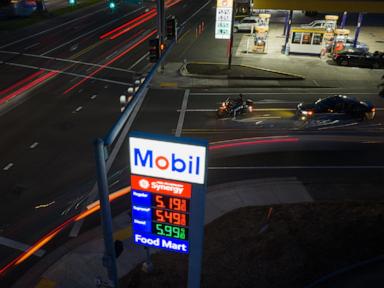
The headlines suggest a slump, but the ledger tells a different story. While initial reports for the first quarter indicate a dip in net income for US energy titans like ExxonMobil and Chevron compared to last year's historic peaks, viewing this as a genuine decline is a fundamental misreading of the modern energy market. The "drop" is a statistical hangover from an era of unprecedented price spikes. In reality, these companies are printing cash at rates that would have been unthinkable five years ago, fueled by record-setting domestic production and a strategic pivot toward high-margin exports.
Investors who see red on the quarterly balance sheet are missing the structural shift in how American oil companies operate. We are no longer in an era of reckless expansion and wildcatting. Today, the industry is defined by "capital discipline," a polite term for prioritizing shareholder buybacks and dividends over new drilling. The result is a lean, highly profitable machine that thrives even when crude prices moderate.
The Mirage of Diminishing Returns
To understand why a 28% drop in Exxon’s profit or a smaller slide at Chevron isn't a crisis, you have to look at the baseline. The previous year was an anomaly driven by global supply shocks and the immediate aftermath of geopolitical upheavals. Comparing current performance to those historic highs is like complaining that a sprinter is "slowing down" because they didn't break a world record in their second heat.
The underlying numbers remain staggering. ExxonMobil reported billions in earnings for a single quarter. This isn't a company in retreat. It is a company optimizing. By focusing on the Permian Basin and lucrative offshore assets in Guyana, these firms have lowered their "break-even" price—the cost of oil required to remain profitable. Most major US producers can now stay in the black even if oil prices were to fall significantly below current market rates.
The decline "on paper" is largely a function of natural gas prices, which cratered during a mild winter. This masked the fact that liquid hydrocarbon production—the real money maker—is hitting all-time highs in the United States. We are witnessing the most efficient extraction phase in industrial history.
Capital Discipline as a Defensive Wall
In the past, high oil prices triggered a drilling frenzy. Companies would take on massive debt to put more rigs in the ground, eventually creating a supply glut that crashed the market. This boom-bust cycle nearly destroyed the sector during the 2010s.
The industry learned its lesson. Instead of pouring every cent of profit back into the ground, executives are funneling that capital back to Wall Street.
- Share Buybacks: By reducing the number of outstanding shares, companies increase the value of each remaining share, essentially engineering "growth" even when total profit stays flat.
- Dividends: Consistent, rising payouts have turned oil stocks into "bond-proxies" for investors seeking reliable income.
- Debt Reduction: The balance sheets of the Big Five are cleaner than they have been in decades.
This shift changes the social contract between energy companies and the public. When prices at the pump rise, the public expects that "windfall" to be used to increase supply and lower costs. Instead, that money is often used to enrich institutional investors and pension funds. This creates a political friction point that the industry hasn't fully reconciled, yet from a purely analytical standpoint, it makes the companies far more resilient to market volatility.
The Permian Power Play
The heart of this sustained profitability lies in the Permian Basin, a geological marvel stretching across West Texas and Southeastern New Mexico. It is the engine of American energy independence. The technical advancements here—longer horizontal wells, more efficient fracking fluids, and automated drilling rigs—have turned oil extraction into something resembling a factory process rather than a speculative gamble.
These aren't just holes in the ground. They are complex engineering projects that can be turned on or off with remarkable speed. This "short-cycle" production allows US companies to respond to global price shifts much faster than traditional state-owned oil giants in the Middle East.
However, this dominance comes with a hidden cost: depletion. The "sweet spots" of the Permian are being drained at an incredible pace. While current production is soaring, the industry is quietly grappling with the reality that the next decade will require drilling in more expensive, less productive rock. This is the real reason we see a wave of massive consolidations, such as Exxon's acquisition of Pioneer Natural Resources. It isn't just about getting bigger; it’s about securing the remaining prime inventory before it’s gone.
The Refining Margin Trap
While crude oil gets the headlines, the real story of the first quarter dip lies in the "crack spread"—the difference between the price of crude and the price of the refined products like gasoline and diesel.
Refining margins have tightened. During the post-pandemic recovery, refining capacity was stretched to its limit, allowing companies to charge a massive premium for processing fuel. That premium is normalizing. As new refineries come online globally and demand patterns shift, the "easy money" in the downstream sector is evaporating.
For a vertically integrated giant, a dip in refining margins can offset gains in drilling. This is exactly what we saw in the recent earnings reports. The "decline" wasn't a lack of oil; it was a cooling of the frantic refining market. It is a return to a more sustainable, albeit less explosive, profit environment.
Geopolitics and the Export Engine
The United States is now a net exporter of petroleum products. This is a seismic shift in global power dynamics. When European markets were cut off from Russian supply, American firms stepped in to fill the void, particularly with Liquefied Natural Gas (LNG) and light sweet crude.
This export capability acts as a floor for prices. Even if US domestic demand softens due to the adoption of electric vehicles or increased efficiency, the global market remains hungry. The infrastructure built along the Gulf Coast—the terminals, pipelines, and storage facilities—ensures that American oil can always find the highest bidder.
This globalized reach complicates the domestic political narrative. Politicians often demand that oil companies lower prices for American consumers, but in a global market, an oil executive’s primary loyalty is to the global price index. They aren't just American companies anymore; they are global energy brokers headquartered in Texas and California.
The Decarbonization Paradox
Every major oil company now has a "Low Carbon" division. They talk about carbon capture, hydrogen, and biofuels. On the surface, this looks like a transition. Under the hood, it looks like a hedge.
The capital allocated to these green initiatives is a fraction of what is still being spent on fossil fuel infrastructure. For now, "green energy" is a marketing necessity and a long-term insurance policy, not a primary driver of the quarterly profit engine. The industry's strategy is clear: maximize the value of every remaining drop of oil while using a portion of those profits to buy a seat at the table for whatever comes next.
There is a profound irony here. The very profits being criticized as "excessive" are the funds that will theoretically bankroll the energy transition. If you starve the oil companies of capital now, you potentially slow the development of the carbon-capture technologies they are uniquely positioned to build. Yet, if they are allowed to continue their current path without stricter oversight, the incentive to truly transition remains minimal as long as the Permian remains profitable.
The Myth of the "Struggling" Oil Giant
The narrative of declining profits is a tool used by different groups for different ends. For the companies, it’s a way to argue against new taxes or regulations. "See? Our margins are thinning," they suggest. For political critics, it’s a sign that the "fossil fuel era" is ending.
Both are wrong.
The industry is not struggling; it is maturing. It has transitioned from a high-growth, high-risk sector into a high-yield, low-growth utility-like sector. The volatility is being smoothed out by sophisticated financial engineering and unmatched geological dominance in the Permian.
We are not seeing the beginning of the end. We are seeing the beginning of the "Harvest Phase." The big players are no longer chasing the next big find; they are harvesting the massive assets they already control with surgical precision.
The true test for these companies won't be a quarterly dip in net income. It will be their ability to maintain this "paper decline" while keeping the actual cash flowing to shareholders. As long as the dividends keep rising and the buybacks continue, the industry is exactly where it wants to be: quietly making a fortune while the world looks the other way.
Keep your eyes on the free cash flow, not the headline net income. That is where the truth of the industry lives.


