Tech giants are losing the war against silicon imposters. As generative artificial intelligence floods the internet with deepfakes and automated bots, companies like Tinder and Zoom are retreating to the only biological fortress left: your eyeballs. The recent push toward iris scanning and mandatory video verification is not a feature upgrade. It is an admission of total systemic failure.
The premise is simple enough for a marketing slide. By requiring users to submit high-resolution biometric scans, platforms claim they can distinguish a human being from a sophisticated script. They call it proof of humanity. In practice, it is a desperate attempt to shore up collapsing user trust in ecosystems where "identity" has become a cheap commodity. When you can no longer trust that the person on the other side of a screen is made of flesh and bone, the value of the platform evaporates.
The High Cost of Verifying a Pulse
The pivot toward biometric verification represents a massive shift in the social contract of the internet. For years, the industry thrived on low-friction entry. You needed an email address and a password to join the global conversation. That era is over. The rise of Large Language Models (LLMs) has made it possible for a single bad actor to manage thousands of convincing, autonomous profiles that can flirt, negotiate, or spread propaganda with terrifying efficiency.
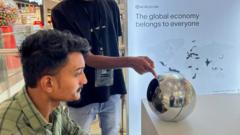
To stop this, platforms are turning to iris recognition technology. This involves capturing the intricate, unique patterns of the iris—the colored part of the eye. Unlike a fingerprint, which can be lifted from a glass, or a face scan, which can often be fooled by high-resolution masks or video injections, the iris is incredibly difficult to spoof. It contains more data points than almost any other biometric marker.
But this security comes at a steep price for the user. We are moving toward a world where you must trade your most intimate biological data just to join a conference call or swipe right on a date. It is a digital border crossing that never closes.
Why Software Alone Can No Longer Save Us
Engineers have spent the last three years trying to build AI that detects other AI. It has been a disaster. Every time a detection tool gets better, the generative models evolve to bypass it. This "cat and mouse" game has reached a stalemate where the only winning move for companies is to step outside the software layer entirely.
By forcing a physical, biological check, Tinder and Zoom are attempting to anchor a digital identity to a physical body. This is a hardware solution to a software problem. If the platform can verify that a specific set of human eyes is looking at a camera in real-time, the cost of running a bot farm skyrockets. You can’t automate a million irises without a million humans.
The Infrastructure of Surveillance
The hardware required for this is already in your pocket. Modern smartphones have reached a level of optical clarity where high-resolution iris and facial mapping are possible without specialized equipment. However, the data isn't just staying on your phone. To be effective for "proof of humanity," these hashes must often be compared against a centralized or encrypted database to ensure that one person isn't operating fifty "verified" accounts.
This creates a massive honeypot. We are seeing the creation of the world’s most sensitive database—a map of the human species’ unique identifiers. History shows us that if a database exists, it will eventually be breached, subpoenaed, or sold.
The Fraudulent Arms Race
The tech industry wants you to believe this is a "set it and forget it" solution. That is a dangerous lie. Even as we move toward iris scans, the underground market for biometric bypasses is already thriving.
Hypothetically, if a hacker gains access to the high-resolution "master" image of a user’s iris, they could potentially project that data onto a specialized contact lens or a high-definition screen to fool standard sensors. This isn't science fiction; it’s the natural evolution of identity theft. When the key to your digital life is your eye, you cannot simply change your password if that key is stolen. You only have two eyes. Once that biometric signature is compromised, it is compromised for life.
The Social Stratification of the Internet
There is a darker, less discussed side to this biometric push. It creates a tiered internet. Those who are willing to surrender their biological data get access to the "clean" zones—the verified rooms where bots are supposedly absent. Those who value their privacy are left in the "unverified" wild west, a digital ghetto filled with scams, AI-generated noise, and bad actors.
This effectively puts a tax on privacy. If you want a safe dating experience or a professional environment where you know your colleagues are real, you have to pay with your body. We are witnessing the end of the anonymous internet and the birth of a mandatory digital ID system, managed not by governments, but by private corporations with very little oversight.
Zoom and the Corporate Panopticon
While Tinder focuses on safety, Zoom’s move toward human verification is about accountability and productivity. In the remote work era, companies are terrified of "ghost employees"—people who use AI voice changers or deepfakes to attend meetings while they work three other jobs or let a bot take notes.
Mandatory eye-scanning during a call ensures that the person being paid is the person in the chair. It is the ultimate digital punch-clock. It turns the home office into a high-security facility. The psychological impact of being constantly "biometrically challenged" by your own software is yet to be measured, but it signals a profound lack of trust between the platform, the employer, and the individual.
Technical Vulnerabilities in the Loop
No system is perfect. Biometric verification relies on a chain of trust:
- The sensor must be genuine and untampered.
- The transmission of data must be encrypted and secure.
- The storage must be immune to internal leaks or external hacks.
If any link in that chain breaks, the "proof of humanity" becomes a weapon for identity thieves. We have seen time and again that tech companies prioritize rapid deployment over long-term security. They are rushing to implement these features to save their stock prices from the "AI-bloat" narrative, but they are doing so without a clear legal framework for what happens when your eye-scan ends up on the dark web.
The Illusion of Consent
You will be asked to "opt-in." You will be told it's for your own safety. But when every major platform adopts the same standard, the ability to say "no" disappears. Consent is a hollow concept when the alternative is social and professional isolation.
We are being nudged into a reality where our bodies are the only currency left that AI can't easily print. This isn't a victory for humanity; it’s a desperate retreat. We are building a world where your eyes are your passport, your credit card, and your social standing.
If you value the thin veil of privacy that remains, look closely at the next update prompt. The camera is already looking back at you.
Demand that these companies provide third-party audits of their biometric storage protocols before you click "agree." Verify the data retention policies. Ask what happens to your iris hash if you delete your account. If they can't give you a straight answer, you aren't the customer—you are the data point.