The headlines are predictable. A US envoy refuses to rule out strikes. The pundits nod. The markets jitter. The "lazy consensus" in Washington and Brussels suggests that a few well-placed munitions could simply delete Iran’s nuclear ambitions like a corrupted file.
They are wrong.
If you think a kinetic strike on Iranian nuclear infrastructure is a "solution," you aren't paying attention to the physics, the geography, or the history of failed containment. Most analysts treat this like a game of Battleship. In reality, it is a game of Go played in a room full of gasoline. The obsession with "ruling out strikes" is a relic of 1990s military doctrine that has no place in a world of hardened subterranean engineering and decentralized knowledge.
The Concrete Delusion
The first myth to dismantle is the idea that these facilities are vulnerable. We aren't talking about the Osirak reactor in Iraq in 1981. That was a localized, above-ground target. Iran learned that lesson better than we did.
Fordow is buried under hundreds of feet of rock and reinforced concrete. It is a mountain, not a building. To even reach the centrifuges, you need specialized bunker-busters like the GBU-57 Massive Ordnance Penetrator (MOP). Even then, the success rate is a coin flip.
But here is the nuance the "hawk" articles miss: even if you collapse the tunnels, you haven't destroyed the program. You have only delayed it.
I have seen intelligence assessments that treat a two-year delay as a "victory." It isn't. It is a temporary pause that guarantees the eventual outcome will be more aggressive and less transparent. You cannot bomb knowledge. The scientists don't die with the centrifuges. The blueprints are digital. The expertise is baked into the Iranian academic and military infrastructure. A strike doesn't end the program; it validates the necessity of the bomb in the eyes of every Iranian official who was previously on the fence.
The Enrichment Trap
People ask, "Can we stop them from getting enough U-235?"
This is the wrong question. The focus on the hardware—the physical centrifuges—is a distraction from the reality of breakout capacity. Iran has already mastered the fuel cycle. They have already enriched uranium to 60%. Moving from 60% to 90% (weapons grade) is mathematically a much smaller leap than moving from 3% to 20%.
$SWU = V(x_p)F + V(x_t)T - V(x_f)F$
The physics of Separative Work Units (SWU) proves that the heavy lifting is already done. When a diplomat "refuses to rule out strikes," they are threatening to break the thermometer to cure the fever.
The Sovereignty of the Underground
Let’s talk about the Fordow Fuel Enrichment Plant. It’s located inside a limestone mountain. It’s shielded against most conventional aerial bombardment. If the US or an ally strikes it, they aren't just hitting a factory; they are attempting to re-engineer geology.
The "lazy consensus" ignores the second-order effects. A strike on Bushehr, for instance, isn't just a military action. It is a potential environmental catastrophe. Bushehr is a light-water reactor. Striking an active reactor is a breach of international norms that would make the current global instability look like a Sunday picnic.
Imagine a scenario where a strike leads to a radiological release in the Persian Gulf. You aren't just stopping a bomb; you are poisoning the water supply for the very allies—the UAE, Kuwait, Qatar—you claim to be protecting. The "tough talk" from envoys never accounts for the desalination plants that would have to shut down within hours of a botched strike.
The Myth of the "Surgical" Strike
There is no such thing as a surgical strike on a nuclear program of this scale.
To actually degrade the capability, you would need a sustained campaign involving hundreds of sorties. You would need to take out the air defenses (S-300s and indigenous Khordad systems), the command and control nodes, and the retaliatory assets.
This isn't a "strike." It’s an act of total war.
The media loves the word "surgical" because it sounds clean. It sounds like a laser-guided scalpel removing a tumor. In reality, it’s a chainsaw in a dark room. You will hit things you didn't mean to hit, and you will miss the things that matter most.
Why Diplomacy is Failing (And It’s Not Why You Think)
The standard narrative is that diplomacy fails because Iran is "untrustworthy."
That’s a kindergarten-level take. Diplomacy fails because the West treats the nuclear program as an isolated technical problem. It isn't. It’s a leverage play.
The Iranian leadership knows that as long as they are "ten minutes from a bomb," they are relevant. They watched what happened to Gaddafi in Libya. He gave up his program and ended up in a ditch. They watched what happened to North Korea. They kept their program and got a summit with a US President.
The incentive structure is skewed toward nuclearization. Threatening strikes only increases the value of the deterrent. If you want to actually stop the program, you have to make the bomb a liability rather than an insurance policy. Dropping 30,000-pound bombs does the exact opposite.
The Economic Backfire
Let’s look at the "People Also Ask" favorite: "Will a strike on Iran lower oil prices by stabilizing the region?"
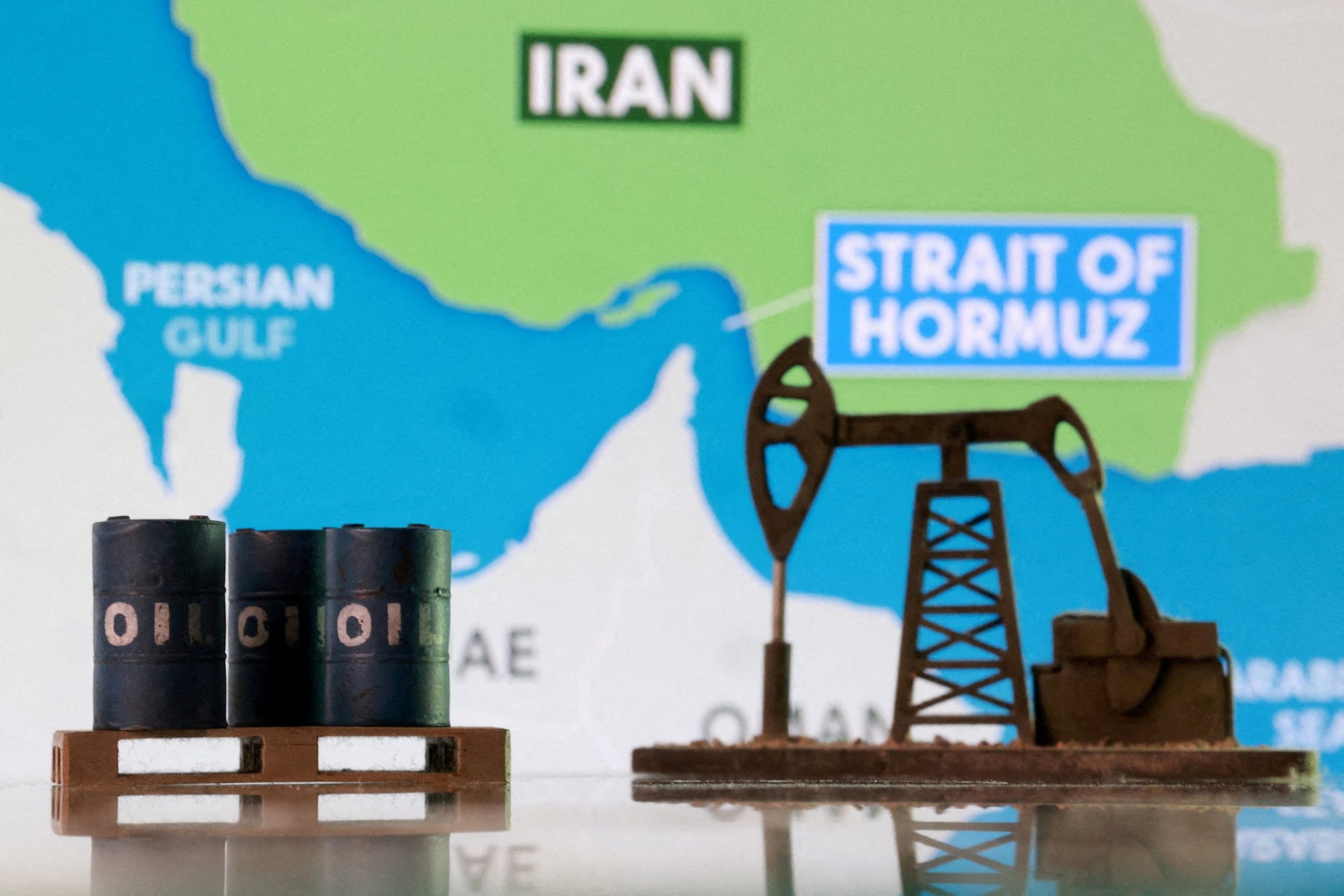
This is pure fantasy. Iran sits on the Strait of Hormuz. Roughly 20% of the world's oil passes through that choke point. If a single missile hits an Iranian facility, the Strait closes. Insurance premiums for tankers would skyrocket overnight. Global supply chains, already fragile, would snap.
The cost of "ruling out nothing" is a global recession. Every time a diplomat plays the tough guy for a domestic audience, they are gambling with the price of gas in Ohio and the price of grain in Cairo.
The Intelligence Gap
I’ve spent enough time around defense contractors and intelligence analysts to know the dirty secret: we don't know what we don't know.
We assume we have mapped every site. We assumed that in 2003 with Iraq’s "WMDs." We assumed that with the Natanz facility before it was revealed by dissidents in 2002.
The risk of a strike is that you hit the sites you know about, declare "mission accomplished," and provide the perfect cover for the program to move entirely into "black" sites we haven't discovered yet. By striking the declared, monitored IAEA sites, you effectively kick the inspectors out and give Iran the moral high ground to bar any future oversight.
You trade visibility for a few months of rubble. That is a loser’s bargain.
The Cyber Alternative is Also a Pipe Dream
Some "insiders" suggest that if we don't bomb them, we can just "Stuxnet" them again.
This is the height of hubris. Stuxnet worked because it was a first-of-its-kind digital weapon. It targeted specific Siemens PLCs (Programmable Logic Controllers). Since then, Iran has built one of the most formidable cyber-defense and offensive capabilities in the world.
They aren't running unpatched Windows XP anymore. They have air-gapped their critical systems and developed their own indigenous software stacks. The window for a "bloodless" digital strike has closed. Any cyberattack now is likely to be met with a symmetrical response against the Western financial grid or regional power plants.
The Strategy of Ghosting
The status quo is obsessed with "red lines."
The problem with red lines is that once they are crossed, you are forced to act, even if acting is stupid. We have spent twenty years drawing lines that Iran treats as hurdles.
The unconventional truth? We need to stop reacting to every centrifuge spin.
The most effective way to neutralize the Iranian threat isn't to bomb the mountain; it’s to make the mountain irrelevant. That means aggressive regional integration, building a missile defense shield that renders their delivery systems moot, and focusing on the internal pressures within Iran that are far more likely to change the regime's behavior than a GBU-57 ever will.
Stop Asking the Wrong Questions
Is Iran seeking a nuclear weapon? Probably.
Can we stop them with a "strike"? No.
The envoy refuses to rule out strikes because it’s the only card left in a very thin deck. It’s a posture of weakness, not strength. It signals that we have run out of ideas.
If you are waiting for a "surgical strike" to save the day, you are waiting for a miracle that isn't coming. The real world is messier. It involves messy compromises, frustrating stalemates, and the realization that sometimes, the "military option" is just a fancy way of saying "total strategic failure."
Stop falling for the rhetoric of the "inevitable strike." It’s a ghost story we tell ourselves to avoid admitting we’ve lost control of the narrative.
The mountain is still there. The centrifuges are still spinning. And your "kinetic solution" is nothing but a expensive way to make a dangerous situation permanent.