The Invisible Frontier
The air inside a closed room feels different when you know what might be hiding in the dust. In the gilded halls of Matignon, the wood-paneled silence of the French Prime Minister’s residence is usually reserved for budget disputes or pension reforms. But today, the atmosphere is heavy with something smaller, more primal, and infinitely more unpredictable. They are meeting to discuss Hantavirus.
It starts with a mouse. Or rather, it starts with what a mouse leaves behind. Imagine a hiker in the Ardennes, kicking up dry soil in an old shed, or a gardener clearing out a summer cottage that has been shuttered since the first frost. A single, deep breath is all it takes. The virus isn't a predator that hunts you; it is an accidental traveler, hitching a ride on microscopic particles of dust, waiting for a pair of human lungs to provide a landing strip.
While the politicians in Paris check their dossiers and tighten their silk ties, the stakes are being measured in fever dreams and labored breaths. Hantavirus doesn't care about borders or political mandates. It exists in the quiet spaces between the wild and the suburban. We call it a "situation point" in official briefings. To the person shivering under a duvet while their oxygen levels dip, it is a silent invasion.
The Ghost Ship in the Atlantic
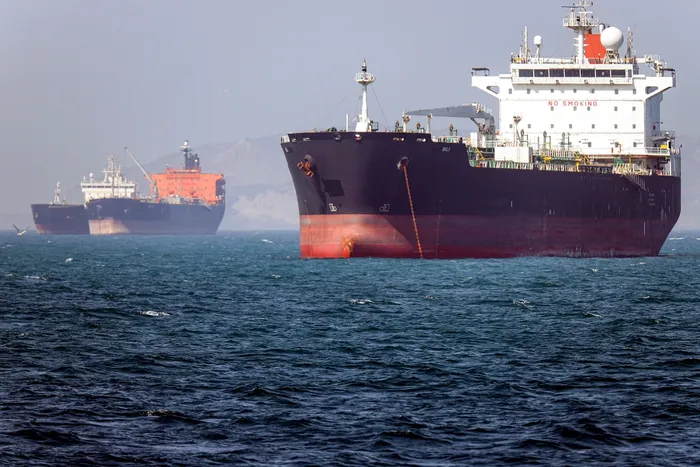
Three thousand miles away, the Atlantic Ocean is reclaiming its reputation for being vast and unforgiving. The MV Hondius, a vessel built to withstand the crushing ice of the polar regions, is currently a floating island of anxiety. Onboard, the luxury of an expedition cruise has been replaced by the sterile reality of a medical emergency.
Tedros Adhanom Ghebreyesus, the man who steered the world through the darkest days of the 2020s, isn't sitting in a Geneva office today. He is in the Canary Islands. He is there because the Hondius is coming in, and the world is watching to see how we handle the intersection of global travel and sudden, viral outbreaks.
Consider the irony of the modern traveler. We spend thousands of dollars to reach the most remote, untouched corners of the globe—the places where the air is supposed to be the purest. We seek the "sublime" of the Antarctic or the raw beauty of the deep Atlantic. Yet, we bring our biology with us. We are closed systems of flesh and bone, moving through environments that have their own ancient, viral histories. When a ship like the Hondius is forced to divert, the holiday ends and the logistics of survival begin.
The Geography of Fear
Why does a meeting at Matignon happen at the same time a ship is being evacuated in the Atlantic? Because we have realized, perhaps too late, that geography is no longer a shield.
In France, the concern over Hantavirus is a reminder that nature is reclaiming its territory. As our suburbs push further into forests and our climate shifts, the rodents that carry these pathogens are moving closer to our kitchens. It isn't a "plague" in the medieval sense. It is a misalignment. We are stepping into their world, and they are bringing their microscopic hitchhikers into ours.
The experts sitting around the table at Matignon aren't just looking at infection rates. They are looking at the fragility of the "normal." They know that public trust is a finite resource. If you tell people the woods are dangerous, they stop walking in them. If you tell them the air in their shed is a biohazard, the world starts to feel like a cage.
But the real problem lies elsewhere. It’s in the lag time. The moment between the breath and the fever. The moment between the ship’s first SOS and the moment the gangplank drops in the Canaries.
The Human Toll of Logistics
On the Hondius, the "human element" isn't a statistic. It’s the sound of a ventilation system humming in a quiet cabin. It’s the sight of a crew member in a mask, delivering a tray of food to a door that stays shut. For those on the ship, the presence of the WHO chief on the shore is both a comfort and a terrifying signal of the gravity of their situation.
We often think of global health as a series of graphs. We see lines go up, and we see lines go down. But the reality is a series of phone calls. A doctor on a ship calling a coastal authority. A minister calling a scientist. A scientist looking at a slide and realizing that the "point de situation" is no longer a routine update.
The Hantavirus, specifically the strains found in Europe like the Puumala virus, is a master of disguise. It mimics the flu. It starts with a headache, a muscle ache, a feeling that you’ve perhaps just worked too hard in the garden. But then the kidneys begin to struggle. The body starts to fight itself. It is a reminder that we are not the masters of our environment; we are merely guests who have forgotten the house rules.
The Canary in the Coal Mine
The choice of the Canary Islands as the staging ground for the Hondius evacuation is a geographic quirk that feels like a metaphor. For centuries, these islands were the last stop before the unknown. Today, they are the first line of defense.
The evacuation is a choreographed dance of bio-containment. There is no room for error. Every person leaving that ship represents a potential chain of transmission that must be broken before it begins. The WHO’s involvement isn't just about oversight; it’s about signaling to the world that we are still capable of coordinated action. It is an attempt to prove that the lessons of the past decade haven't been scrubbed from our collective memory.
But consider the psychological weight on those passengers. You go to sea to find freedom. You end up in a harbor, surrounded by people in yellow suits, while the head of the World Health Organization watches from the pier. The transition from "tourist" to "patient" is a violent one. It strips away the agency we think we have over our lives.
The Dust That Remains
Back in Paris, the meeting concludes. The ministers emerge, the statements are drafted, and the "point de situation" is filed away. The news cycle will move on to the next crisis, the next political scandal, or the next market dip.
But the virus remains in the dust. It remains in the lungs of the few who were unlucky enough to breathe in at the wrong moment. And the Hondius will eventually be scrubbed, sanitized, and sent back out to the blue water.
We live in a world where we have mapped the entire surface of the planet, yet we are still surprised by what lives in a handful of dirt or the hold of a ship. We have built high-speed rails and hyper-connected digital networks, but we are still vulnerable to a biological process that hasn't changed in ten thousand years.
The true stakes aren't found in the Matignon press release or the WHO's logistics plan. They are found in the quiet realization that our safety is a thin veneer. We are constantly breathing in the world around us, and sometimes, the world breathes back.
The sun sets over the Canary Islands, casting long shadows across the deck of the Hondius. The water is calm, a deceptive mirror reflecting a sky that looks the same as it did a century ago. On the shore, the white tents of the medical teams glow under the pier lights. It is a scene of profound order being applied to a situation of profound chaos. We are small. We are fragile. And we are never as alone as we think we are.