The rumors of a UFC event hosted at the White House are no longer just social media chatter or offhand remarks made on a podcast. They represent a collision of political theater and the fastest-growing spectator sport on earth. When Donald Trump floated the idea of bringing a "cage match" to the most famous lawn in Washington, he wasn't just talking about a photo op. He was signaling a total merger of the populist sports world and executive power.
But moving the Octagon from the glimmering neon of the T-Mobile Arena in Las Vegas to the South Lawn of the White House is a logistical nightmare that standard sports reporting hasn't even begun to unpack. This isn't about setting up a few chairs. It involves a massive intersection of Secret Service security protocols, federal preservation laws, and the complex mechanics of pay-per-view broadcasting.
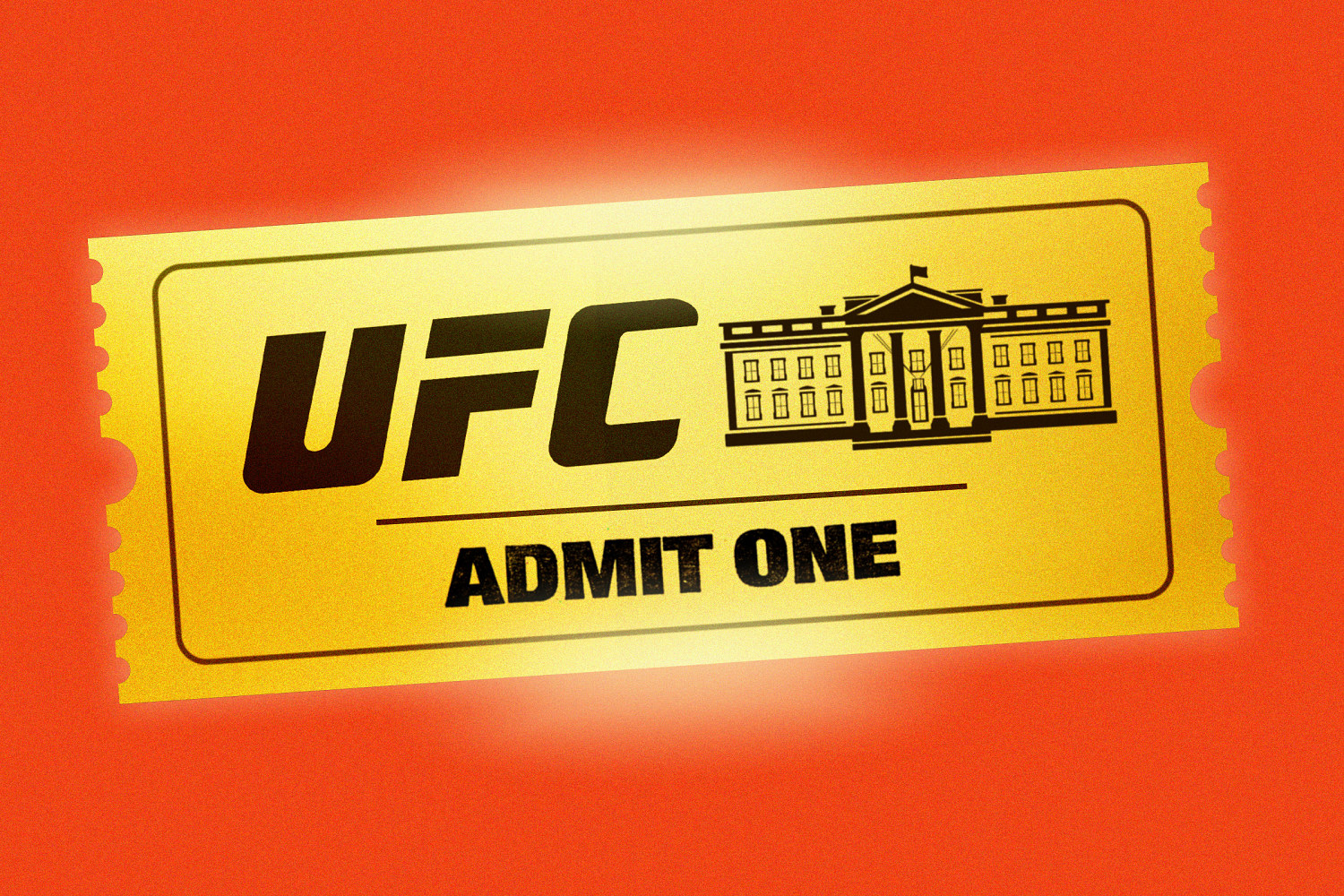
The fight for a seat at this event is already becoming the most exclusive ticket in the history of combat sports. We are looking at a crowd capacity limited to roughly 500 to 1,000 invited guests, consisting of high-level donors, political allies, and the elite inner circle of the MMA world. It is the ultimate flex of cultural and political capital.
The Secret Service Wall and the Octagon
Every UFC event requires a massive footprint. You have the cage itself, the heavy lighting rigs, the camera cranes, and the miles of cabling required for a global broadcast. When you move that operation to 1600 Pennsylvania Avenue, you aren't just dealing with a venue manager; you are dealing with a security apparatus designed to protect the Commander-in-Chief.
Standard UFC production involves hundreds of crew members. Every single one of those individuals—from the person mopping the canvas to the high-paid color commentators—must undergo federal background checks months in advance. The Secret Service doesn't care about broadcast deadlines. If a piece of equipment doesn't clear a sweep, it doesn't enter the grounds.
There is also the physical impact on the grounds themselves. The South Lawn is historical soil. Digging footings for a massive outdoor lighting truss or bringing in heavy generators could cause permanent damage to the irrigation and historical landscape. Sources familiar with White House event planning suggest that any "fight night" would likely require a temporary, elevated flooring system to protect the turf, similar to what is used for the annual Easter Egg Roll but on a much more industrial scale.
Dana White and the Politics of Combat
The relationship between Dana White and Donald Trump is the engine driving this concept. White has been a vocal supporter for decades, creditng Trump with helping the UFC survive its "human cockfighting" era by hosting events at the Trump Taj Mahal when no one else would. This event would be the ultimate repayment of that debt.
For the UFC, this is about more than just a unique venue. It is about total cultural saturation. By placing a fight at the White House, the sport sheds the last vestiges of its fringe reputation. It becomes the "official" sport of the administration. This isn't just business. It is a branding exercise that positions the UFC as the definitive American pastime for a new generation of voters and viewers.
The fighters themselves are already jockeying for position on the card. Winning a fight at the White House is a legacy-defining moment that transcends a championship belt. However, this creates a headache for matchmakers. How do you select a card that satisfies the hardcore fans while maintaining the "dignity" of the office? You can't have a fighter shouting profanities into a microphone with the Oval Office in the background—or perhaps, in this new era of political communication, that is exactly what they want.
The Pay Per View Revenue Model in a Public Space
One of the biggest hurdles is the legality of profiting from an event held on federal property. The White House belongs to the taxpayers. If Endeavor (the parent company of the UFC) and ESPN charge $79.99 for a pay-per-view held on the South Lawn, where does that money go?
Ethics lawyers are already pointing to the potential for significant blowback. Typically, events at the White House are not commercial enterprises. To make this work, the UFC would likely have to structure the event as a "tribute" or a charitable exhibition, with proceeds going to veterans' organizations or first responders.
Even then, the optics of a private corporation generating millions in brand value from a government backdrop are thorny. It’s a gamble. The administration is betting that the spectacle will outweigh the procedural complaints, while the UFC is betting that the "White House Fight Night" branding will result in their highest buy-rate in history.
The Crowd of Five Hundred
Forget about Ticketmaster. There will be no public sale for this event. The "cage match" for tickets is happening in the boardrooms of defense contractors and the private offices of Super PACs.
To secure a seat, you don't need a credit card; you need a connection. The guest list is being curated to serve as a microcosm of the new political establishment. Expect to see tech moguls from Silicon Valley who have recently pivoted right, alongside traditional Republican heavyweights and a smattering of Hollywood's remaining conservatives.
Technical Challenges of an Outdoor Octagon
Fighting outdoors is a nightmare for professional athletes. Humidity, wind, and temperature can all affect a fighter's performance and the grip on the mat.
- Mat Temperature: Direct sunlight can turn a gray or black MMA mat into a frying pan. The event would likely have to take place after sundown to avoid burning the fighters' feet.
- Lighting: Traditional UFC lighting rigs are massive "grids" hung from the ceiling. Without a stadium roof, the UFC will have to build a self-supporting "ground-supported" truss system, which is much more intrusive and visually dominant.
- Audio: Capturing the sound of the fight—the thud of a leg kick, the instructions from the corners—is harder in an open-air environment without the acoustics of an arena.
The Counter Argument
Critics argue that hosting a violent bloodsport at the seat of American democracy is a bridge too far. They claim it cheapens the office and turns the presidency into a reality TV spectacle. But this perspective misses the current cultural shift. The "cheapening" of the office is a subjective complaint in an era where attention is the only currency that matters.
The proponents see it differently. They see it as a return to a "muscular" presidency. They point to Teddy Roosevelt, who used to box in the White House and once lost sight in one eye during a sparring session. For this camp, the UFC isn't a distraction; it is a manifestation of the American spirit—raw, competitive, and unapologetic.
Broadcasters in the Crosshairs
ESPN and Disney find themselves in a precarious position. As the primary broadcast partners for the UFC, they are obligated to cover the event. However, Disney has traditionally tried to stay out of the direct line of political fire.
If they broadcast a fight from the South Lawn, they are effectively producing a three-hour commercial for the administration. If they refuse, they lose out on what could be the biggest sporting event of the year and risk alienating the UFC leadership. Sources inside the network suggest the production will likely be handled by a neutral third party to provide a layer of separation, though the "ESPN+" logo will be unavoidable.
The logistical planning is already reaching a fever pitch. Secret Service "advance teams" have reportedly been seen at recent UFC events in Las Vegas, not to watch the fights, but to shadow the production crews and understand the flow of movement around the Octagon. They are measuring everything from the width of the "fighter walkout" tunnels to the power draw of the 4K cameras.
The Risk of the Moment
What happens if a fighter is seriously injured on the White House lawn? What happens if a brawl breaks out in the crowd, as we saw at UFC 229?
The White House is a controlled environment, but MMA is inherently uncontrollable. That tension is exactly why people will tune in. The risk isn't a bug; it's the feature. The possibility of something going "wrong" in such a prestigious setting is what creates the "must-see" factor that Dana White has built his empire on.
This is the new reality of the intersection between sports and statecraft. The traditional boundaries have been dissolved. We are no longer talking about the president throwing out a ceremonial first pitch at a baseball game. We are talking about the president sitting cageside while two men or women attempt to knock each other unconscious in his backyard.
The final hurdles are almost entirely bureaucratic. Once the "Historical Preservation" permits are signed and the security clearances are finalized, the only thing left will be the weigh-ins. When that first bell rings on the South Lawn, it will signal a permanent change in how the American presidency interacts with popular culture. The cage is being built, the guests are being vetted, and the world will be watching to see if the institution can handle the impact of a four-ounce glove.
Ensure your security clearances are in order. The guest list is closing.