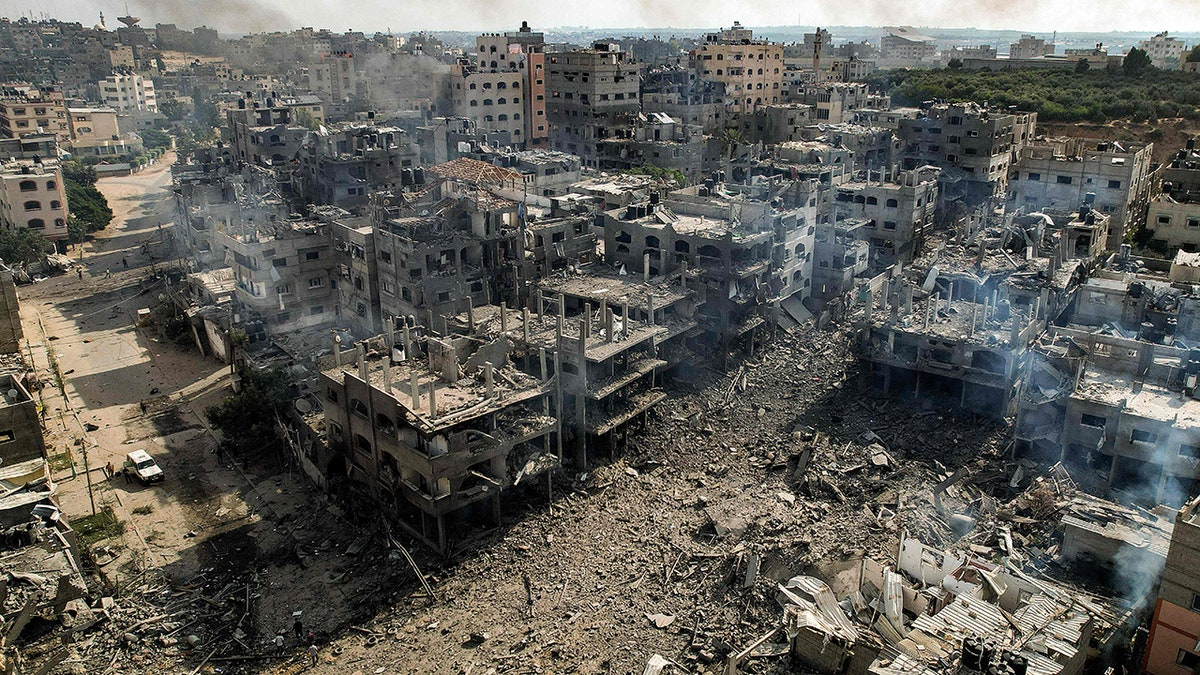
Software developers in Gaza are currently attempting to maintain global supply chains while the physical infrastructure around them ceases to exist. This is not a feel-good story about innovation overcoming adversity. It is a cold, calculated effort to keep a digital economy alive when the electrical grid, the fiber optic lines, and the very buildings housing the workstations have been leveled. While headlines often focus on the novelty of "war-solving apps," the deeper investigative reality reveals a desperate pivot toward survivalist engineering. Programmers are no longer just building commercial products; they are rewriting the fundamental architecture of how data moves in a total blackout.
The "why" is simple: the tech sector was one of the few avenues for professional growth in a region with 45% unemployment before the current escalation. Now, it is a lifeline. But the "how" is a nightmare of improvised hardware and fragmented code.
Engineering in a Total Blackout
Standard web development relies on a constant handshake between a local machine and a remote server. When the power goes out, the handshake breaks. Gaza's developers have had to abandon the luxury of continuous cloud integration. Instead, they have moved toward asynchronous development workflows that seem archaic to a Silicon Valley engineer but are essential in a war zone.
They write code in short, frantic bursts. They use local-first software patterns, where data is stored on the physical device and only attempts to sync when a rare, unstable connection is found. This isn't just a minor adjustment. It requires a complete overhaul of application logic. You have to build systems that assume the internet does not exist 90% of the time.
The hardware solutions are equally fragmented. With a lack of fuel for generators, solar panels have become the most valuable assets in the tech ecosystem. But panels are fragile and easily destroyed. This has led to the rise of "micro-hubbing," where developers cluster around single, surviving power sources, daisy-chaining batteries to keep laptops running just long enough to push a commit to GitHub.
The Myth of the Problem Solving App
There is a tendency in external media to romanticize apps that help people find water or track missing persons. While these tools exist, their efficacy is often hampered by the same infrastructure failures they aim to mitigate. If the cell towers are down, an app is just an icon on a screen.
The real technical breakthroughs are happening at the lower levels of the stack. We are seeing the deployment of mesh networking protocols—systems where phones talk directly to each other via Bluetooth or Wi-Fi radio waves without needing a central provider. This creates a localized "dark net" that can transmit text-based information across a few city blocks. It is slow. It is buggy. But in an environment of total censorship or infrastructure collapse, it is the only thing that works.
The Economic Survival Pact
Business continuity is the silent driver of this movement. Gaza has long served as an outsourcing hub for firms in Europe and the Middle East because of its high concentration of engineering talent and relatively low labor costs. Those contracts didn't simply vanish when the war started.
- Remote Work as Resistance: Developers are terrified of losing their international clients. If the client leaves, the income stops, and the family doesn't eat.
- The VPN Gauntlet: Accessing the global internet often requires routing through multiple layers of VPNs to bypass local restrictions or monitored lines, further slowing down the development process.
- Payment Workarounds: With the traditional banking system in ruins, the shift toward cryptocurrency and digital wallets has moved from a niche interest to a primary financial necessity.
This is a high-stakes game of professional reputation. A developer in a tent in Rafah is trying to prove to a project manager in London that they can still hit a Friday deadline. The psychological toll of maintaining "business as usual" while shells land nearby is a factor that no "competitor article" can properly quantify.
The Fragility of the Digital Corridor
The idea that technology provides a "borderless" escape is a half-truth. Every byte of data leaving Gaza eventually hits a physical switch controlled by an external power. The digital corridor is just as prone to blockades as the physical ones.
We are seeing a shift in how these engineers approach security. In a normal environment, you worry about hackers. In Gaza, you worry about your physical device being seized or destroyed. Encryption is no longer just about protecting company IP; it is about personal safety. Developers are increasingly using "deniable encryption" and "dead man's switches" to ensure that if their hardware is compromised, the data vanishes.
The Talent Drain and the Future Gap
Even if the physical conflict ended tomorrow, the tech sector faces a "brain drain" that may be irreversible. The most talented engineers—those with the skills to build these complex, resilient systems—are the ones most likely to find paths out of the territory. This leaves a vacuum.
The education of the next generation has stopped. Universities are gone. The informal "bootcamps" that fueled the tech boom of the 2010s are impossible to run in current conditions. We are witnessing the systematic de-skilling of a population. While the current crop of veterans is performing miracles with solar batteries and mesh nets, there is no one behind them to take up the mantle.
Hardware Cannibalization
One of the most overlooked aspects of this tech survivalism is the "scrap metal" approach to hardware. Since new laptops or components cannot be imported, the local market has turned into a massive repair and salvage operation.
- Screen Harvesting: Taking working LCDs from smashed laptops to fix others.
- Battery Re-celling: Opening up dead power packs to find the few lithium cells that still hold a charge.
- Signal Boosting: Using literal scrap metal to create directional antennas to catch a faint signal from a distant, surviving cell tower.
This is not "innovation" in the way a venture capitalist understands it. It is desperation disguised as engineering. It is the absolute floor of the technological experience.
The Reality of Remote Management
International firms that continue to employ Gaza-based developers are often praised for their "social responsibility." But the reality is more complicated. The power dynamics are skewed. A developer who cannot guarantee their uptime is in a weak negotiating position. Some firms have been supportive, offering flexible deadlines and advance payments. Others have quietly cut ties, citing "security risks" or "unreliability."
The market is cold. It does not care if your neighborhood was evacuated; it cares if the API is integrated. This pressure creates a unique form of "war-time burnout" where the line between survival and professional obligation is completely blurred.
A System Under Total Stress
The Gaza tech story is not a narrative of digital triumph. It is a case study in the limits of human and technical endurance. You can optimize your code, you can build a mesh network, and you can harvest solar power, but you cannot code your way out of a kinetic war.
The software being written in these conditions is some of the most resilient ever created, out of sheer necessity. It is lean, it is offline-capable, and it is built to survive. But the people writing it are being pushed past the point of reasonable recovery. The tech sector in Gaza is currently a ghost in the machine—a digital pulse in a body that is being systematically dismantled.
Stop looking for the "app that saves the day." Look instead at the engineer who spent twelve hours charging a phone just to send a single line of code. That is where the real story lies.