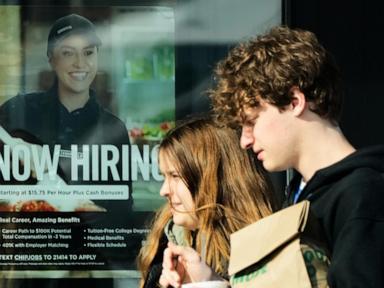
The American labor market is currently operating under a "low-hire, low-fire" regime that defies traditional economic gravity. On Thursday, the Department of Labor reported that initial jobless claims rose by 10,000 to a seasonally adjusted 200,000 for the week ending May 2. While a 5% weekly increase usually triggers alarms in newsrooms, the reality is that these figures remain tethered to historic lows.
To understand why 200,000 is the new magic number, one must look past the headline volatility. The four-week moving average, a far more reliable metric for spotting tectonic shifts, actually fell by 4,500 to 203,250. This is the lowest level in over two years. Businesses are not liquidating their workforces; they are hoarding them. Even as geopolitical tensions in the Middle East and domestic inflationary pressures squeeze margins, the institutional memory of the post-pandemic labor shortage has created a psychological barrier against mass layoffs. Meanwhile, you can explore similar stories here: Stop Panicking Over Russian Refineries Because The Jet Fuel Crisis Is A Math Error.
The Productivity Paradox
There is a jarring disconnect between the stability of the workforce and the output they produce. Preliminary data for the first quarter of 2026 shows that labor productivity in the nonfarm business sector rose at a meager 0.8% annualized rate. In simpler terms, companies are keeping their employees but struggling to get more out of them.
Manufacturing is the lone outlier here, posting a 3.6% productivity gain. However, the service sector is dragging the anchor. We are seeing a labor market that is wide but shallow. Employers are terrified of the "recruitment cliff"—the high cost and extreme difficulty of replacing a skilled worker if the economy rebounds suddenly. Consequently, they are swallowing higher labor costs and accepting lower productivity just to keep the lights on and the seats filled. To explore the bigger picture, we recommend the excellent report by Bloomberg.
The Geography of Joblessness
National averages are frequently used to mask regional hemorrhaging. While the aggregate number suggests a calm sea, specific states are seeing choppy water. New Jersey and Washington currently lead the nation with the highest insured unemployment rates at 2.3% and 2.2% respectively.
The most significant weekly spikes occurred in:
- Rhode Island: +2,037 claims
- Arkansas: +1,137 claims
- Vermont: +348 claims
Conversely, New York and California saw massive drops in claims. This internal migration of job loss suggests that the "Great Reshuffle" hasn't ended; it has merely evolved. We are no longer seeing a nationwide economic contraction, but rather a series of localized shocks as specific industries—particularly mid-market professional services—begin to trim the fat that large-cap firms and small businesses are still clinging to.
The Hidden Softness in the Middle
ADP’s recent report, which showed private sector employment increasing by 109,000 in April, highlighted a specific vulnerability. Dr. Nela Richardson of ADP noted that while small firms are nimble and large corporations have deep pockets, there is a distinct "softness in the middle."
Mid-sized companies lack the capital reserves to weather prolonged high-interest rates and the agility to pivot their business models overnight. This is where the 200,000 claims are coming from. It isn't a wave of tech layoffs or a retail apocalypse. It is the slow, steady erosion of mid-tier firms that are finally being forced to choose between payroll and solvency.
Why the Fed is Trapped
The Federal Reserve finds itself in a precarious position as we move toward the mid-year mark. Traditionally, a rise in jobless claims would signal that the "heat" is leaving the economy, providing a green light for rate cuts. But with claims stuck at 200,000 and the unemployment rate projected to edge down to 4.2%, the labor market is still too tight for the Fed's comfort.
The "labor share of output" has fallen to 54.1%, the lowest level since 1947. This means that while workers are keeping their jobs, they are capturing a smaller slice of the economic pie than at any point in the last 80 years. This dynamic keeps consumer spending high enough to prevent a recession but low enough to keep inflation sticky.
The Looming Iran Factor
The elephant in the room is the ongoing conflict in Iran. Supply chain disruptions and energy costs are beginning to bleed into corporate spreadsheets. While we haven't seen this reflected in mass layoffs yet, the spike in "unemployment insurance inquiries"—which doubled throughout 2025—suggests that worker anxiety is at an all-time high. People are sensing a storm that the data hasn't fully captured.
If energy prices remain elevated through the summer, the 200,000 floor will likely shatter. Companies can only hoard labor for so long when the cost of moving goods and powering factories becomes unsustainable. The current "stability" is a brittle one, held together by a fear of the past rather than a confidence in the future.
Watch the moving average. If it crosses the 225,000 threshold without a corresponding drop in interest rates, the "low-fire" era will end abruptly, replaced by a correction that many mid-market firms are currently unprepared to survive.