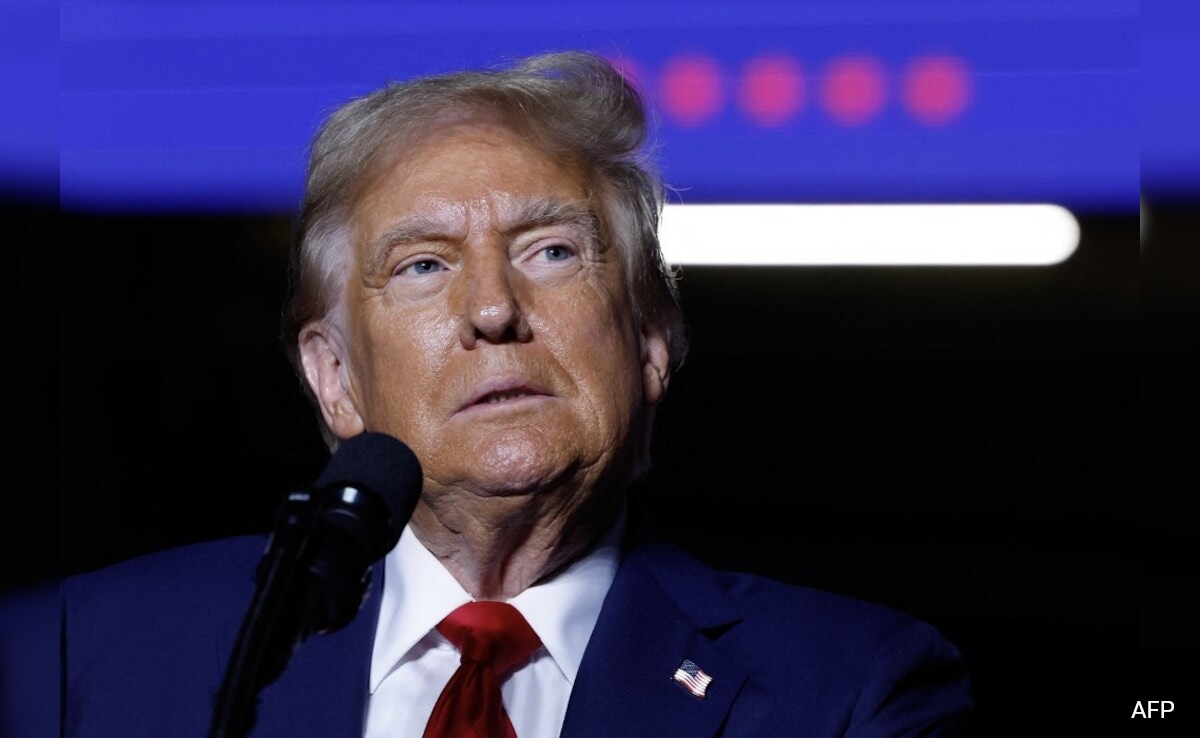
Donald Trump announced on Thursday that China has agreed to purchase 200 Boeing aircraft, a move he framed as a massive win for American manufacturing. Speaking in a Fox News interview following high-level talks with Chinese President Xi Jinping in Beijing, Trump claimed he secured an order for "200 big ones," exceeding Boeing's own request for a 150-plane commitment. This announcement is designed to signal a definitive thaw in trade relations and a long-awaited return for Boeing to its most critical export market.
However, the market reacted with immediate skepticism. Boeing shares tumbled more than 4% as the news broke, as investors quickly realized the "commitment" lacked the weight of a firm, binding contract. In the world of aerospace, a verbal agreement between heads of state is not an order; it is a placeholder. For a company like Boeing, which has spent the better part of a decade locked out of the Chinese market due to trade wars and the catastrophic 737 MAX grounding, this headline is a shadow of what was actually required to stabilize its future.
The Gap Between Rhetoric and Backlog
To understand why the stock market recoiled at the news of 200 "big" jets, you have to look at the numbers Boeing actually needs. Industry analysts had been pricing in a potential deal for up to 500 aircraft—a mix of narrowbody 737 MAX jets and widebody 777X or 787 Dreamliners. A 200-plane deal, while significant in a vacuum, barely scratches the surface of China’s projected demand over the next decade.
More importantly, Boeing cannot book these as "firm orders" yet. In aviation, an order only becomes real when an airline—not a government official—signs a purchase agreement and pays a non-refundable deposit. Until China Southern, Air China, or China Eastern put pen to paper, these 200 jets are "ghost planes." They don't appear in the official backlog, and they don't trigger the delivery payments Boeing desperately needs to repair its balance sheet.
Why China Holds All the Cards
China has mastered the art of "aviation diplomacy," using massive aircraft orders as a geopolitical carrot. By withholding orders from Boeing and pivoting toward Airbus, Beijing has successfully pressured Washington for years. The timing of this 200-jet announcement is calculated. It arrives during a summit where Taiwan and trade tariffs are the real items on the menu. Xi Jinping is offering Boeing a lifeline, but it is a short one, designed to be retracted if U.S. policy doesn't align with Beijing's interests.
- Market Share Erosion: While Boeing was sidelined, Airbus secured orders for hundreds of jets, cementing its dominance in Chinese hangars.
- The COMAC Factor: China is no longer purely dependent on the West. Its homegrown narrowbody, the C919, is now in commercial service. Every year Boeing remains in the "concept of a deal" phase is another year for COMAC to scale production.
- Inventory Stalemate: Boeing still has dozens of "white tail" 737 MAX jets—planes already built but never delivered to China—sitting in storage. Moving these existing planes is the first priority; 200 new orders are a distant second.
The Ghost of the Phase One Trade Deal
Veterans of the industry will remember the 2020 Phase One trade deal. That agreement also promised a surge in Chinese purchases of American goods, including aircraft. History shows that China only met about 58% of those overall commitments. Aircraft purchases, specifically, were among the most frequently evaded promises.
The current 200-jet commitment feels like a sequel to that script. It provides a political win for the administration and a temporary morale boost for Boeing's workforce, but it does not solve the fundamental crisis of trust. Boeing’s manufacturing quality issues, highlighted by the mid-air door plug blowout earlier this year and the prolonged 737 MAX grounding, have given Chinese regulators the perfect excuse to delay certifications and deliveries on safety grounds, even when the real reasons are political.
The Production Reality Check
Even if China signed for 200 jets tomorrow, Boeing has a physical problem: it might not be able to build them fast enough. The FAA has capped Boeing’s production rate of the 737 MAX as the company struggles to fix its internal quality control processes.
Boeing is currently trapped in a pincer move. On one side, it has a regulator (the FAA) telling it to slow down. On the other side, it has a customer (China) that only buys in bulk and expects immediate delivery slots. If Boeing cannot ramp up production due to safety oversight, it cannot fulfill a 200-plane order even if the money is on the table. This creates a vacuum that Airbus and COMAC are more than happy to fill.
What to Watch Next
The true test of this deal won't be found in a televised interview. It will be found in the monthly "Orders and Deliveries" report released by Boeing. Specifically, look for:
- Conversion to Firm Orders: When do individual Chinese airlines announce their specific tail numbers?
- The Delivery Rate: Does the Civil Aviation Administration of China (CAAC) accelerate the acceptance of planes currently sitting in Seattle and Wichita?
- The Mix: Are these 200 planes "big" widebodies like the 787, which carry higher profit margins, or are they mostly the smaller 737 MAX?
A "commitment" for 200 planes is a start, but in the high-stakes game of global aerospace, a start is not a win. Boeing is still flying through a storm, and this announcement hasn't cleared the clouds yet. The stock market’s drop tells the real story: until the planes are in the air and the cash is in the bank, this is just more political turbulence.
Boeing needs more than a headline to regain its footing in China. It needs a total overhaul of its relationship with both the White House and the Great Hall of the People.