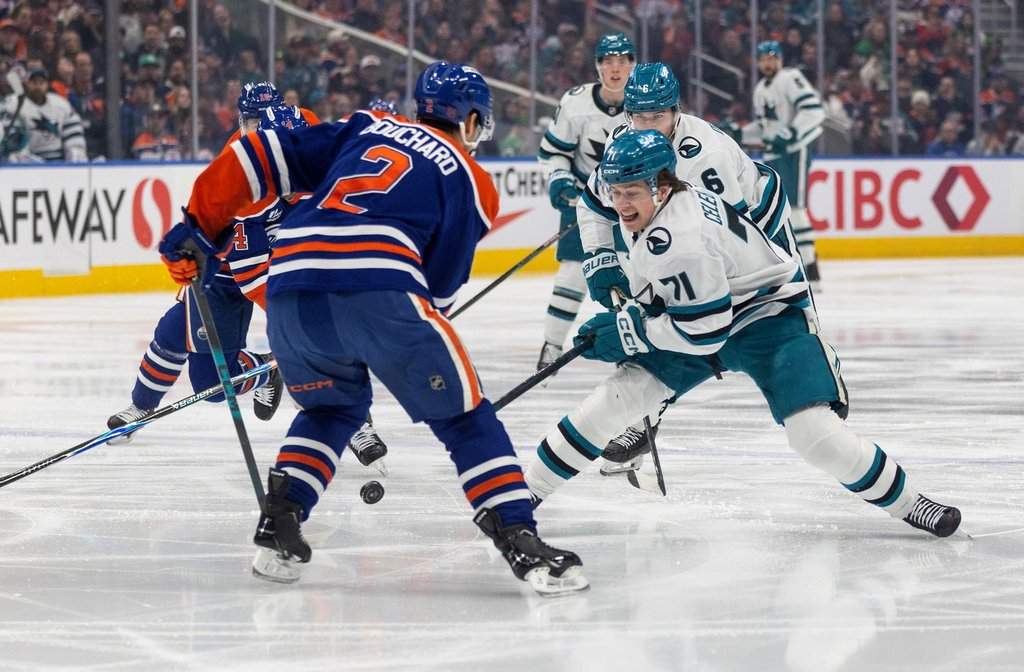
Macklin Celebrini arrived in Paris and immediately reminded the hockey world why he is the presumptive future of the sport. In a 6-1 exhibition rout of France on Sunday, the San Jose Sharks star-in-waiting didn't just participate; he orchestrated. With a goal and three assists, Celebrini provided the engine for a Canadian squad that looked less like a team shaking off rust and more like a predator finding its rhythm. While a win over France in a pre-tournament friendly is expected, the manner of this victory reveals a deeper shift in how Hockey Canada is building its modern identity around high-speed transition and relentless puck pursuit.
This was the opening salvo of Canada’s preparation for the 2026 World Championship, and it served as a cold reality check for the French hosts at Accor Arena. The scoreboard reflected the gap in raw talent, but the underlying metrics showed a Canadian roster designed to suffocate opponents through depth rather than relying on a singular superstar line.
The Celebrini Factor
At just 19 years old, Celebrini is already playing with the poise of a ten-year veteran. His performance in Paris was a masterclass in spatial awareness. He doesn't just skate to where the puck is; he anticipates the structural breakdown of the opposing defense two passes before it happens.
His four-point night was highlighted by a relentless ability to win puck battles along the wall and immediately turn them into high-danger scoring chances. For Canada, having a player of this caliber as a focal point in an exhibition game suggests that the coaching staff isn't interested in "easing" the youth into the system. They are handing over the keys.
Structural Dominance and the Gap in Depth
The 6-1 scoreline was actually kind to France. Canada dominated the possession metrics, keeping the puck in the offensive zone for extended cycles that left the French defenders visibly winded. This wasn't just about skill; it was about the Canadian system of "five-man units" where the defensemen are encouraged to activate and join the rush.
- Shot Suppression: Canada limited France to a handful of quality chances, forcing their shots from the perimeter.
- Transition Speed: The turn-over-to-goal timeline for Canada was under five seconds in three of their six scoring plays.
- Special Teams: Even in an exhibition setting, the Canadian power play looked crisp, moving the puck with a lateral speed that the French penalty kill couldn't track.
France managed to beat Canadian goaltender Jordan Binnington once, but it was a rare lapse in a game that was otherwise a one-sided affair. Binnington, who made 12 saves, was rarely tested but remained sharp enough to deny any hope of a French comeback after the first period.
The Physical Price of International Play
While the score was lopsided, the game wasn't without its edge. International hockey often carries a different physical weight than the NHL, and France tried to close the skill gap with a heavy, grinding style in the corners. Canada responded not with retaliation, but with superior puck protection.
Tom Wilson and Sidney Crosby—names that often headline the veteran presence on this roster—played a heavy game that wore down the French blue line. It is this combination of Celebrini’s youthful exuberance and the battle-hardened experience of the veteran core that makes this iteration of Team Canada so dangerous. They can beat you with a cross-seam pass or by grinding you into the boards for sixty minutes.
Defensive Reliability and the New Guard
Owen Power and Jamie Oleksiak provided a massive physical presence on the back end, making the front of the net a miserable place for French forwards to inhabit. The size of the Canadian defense is a deliberate choice. In the larger international rinks, the extra reach and skating ability of players like Power are vital for cutting off passing lanes and forcing play to the outside.
The defensive structure looked remarkably cohesive for a team that has only had a handful of practices together. This speaks to the "plug-and-play" nature of the Hockey Canada system, where players are expected to understand the overarching tactical requirements regardless of who their defensive partner is on a given night.
Why This Win Matters
Critics will point to the disparity in world rankings and dismiss a 6-1 win over France as a foregone conclusion. That misses the point of these exhibition matches. For Canada, these games are about internal competition and chemistry. With a roster this deep, every shift is an audition for ice time in the medal rounds.
The efficiency displayed in Paris suggests that the management group, led by Brad Treliving and Jason Spezza, has selected a group that fits together logically. There are no "passengers" on this team. Each player has a specific role, from the elite scoring of Celebrini to the shutdown capabilities of the bottom six.
Looking Toward the Tournament
Canada’s next test comes against Hungary on May 13. While the level of competition will remain a step below what they will face in the later stages of the World Championship against the likes of Sweden or the United States, the focus remains internal.
The goal isn't just to win; it is to reach a level of operational perfection where the system becomes second nature. If the Paris exhibition is any indication, Canada is already well on its way to that standard. They didn't just beat France; they dismantled them with a clinical precision that should serve as a warning to the rest of the field.
The real test begins when the points actually matter, but for now, Canada has sent a clear message. The youth is ready, the veterans are hungry, and the system is working.
Go to the net, win the battle, and don't let up.