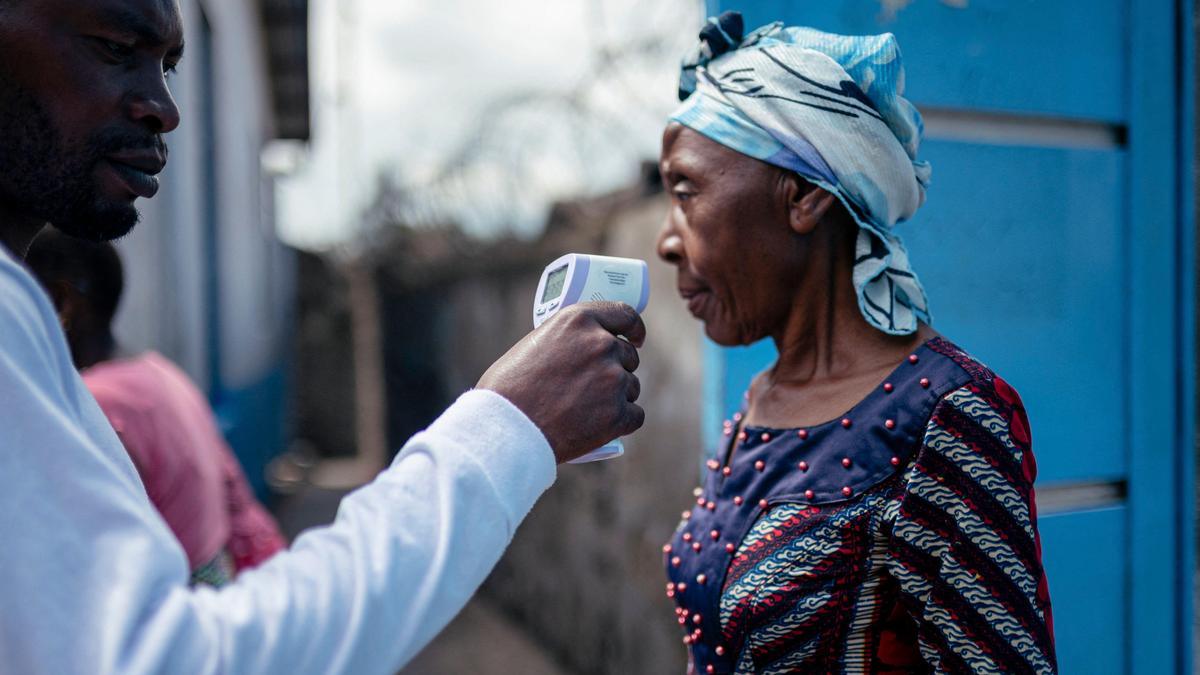
Public health officials are fighting a losing battle against the latest Ebola outbreak in the Democratic Republic of the Congo because they are treating a political and military crisis as a purely medical one. Standard containment protocols rely on stability. They require contact tracing, isolated treatment centers, and ring vaccination. But in the blood-soaked terrain of the eastern DRC, stability does not exist. Armed militias control the roads, local populations view government-backed health workers with intense hostility, and the geographic isolation of the affected zones makes the delivery of basic medical supplies a logistical nightmare. Until international agencies integrate military security and local diplomacy directly into their epidemiological strategy, the virus will continue to breach containment lines and threaten global health security.
The Mirage of the Standard Medical Response
Medical textbooks outline a clear blueprint for stopping Ebola. When a case is identified, health workers isolate the patient, trace every individual they encountered, and vaccinate the surrounding community. This strategy worked in quiet, urban centers during past outbreaks. It fails utterly in places like North Kivu and Ituri. Expanding on this idea, you can find more in: The Glitter Panic Why the Cake Decorating Dust Hysteria Misses the Real Chemical Culprits.
In these provinces, the state has effectively collapsed. Dozens of active rebel groups, including the Allied Democratic Forces and the M23 movement, operate with impunity. They ambush supply convoys. They raid villages. They turn designated health corridors into active combat zones.
When an outbreak hits an active war zone, the traditional epidemiological toolkit becomes useless. Contact tracers cannot track a contact who has fled into the jungle to escape a massacre. Isolating a patient is impossible when the local clinic has been burned to the ground by a rebel faction. The international community continues to pour hundreds of millions of dollars into classic medical infrastructure, ignoring the reality that you cannot deploy a mobile laboratory into a village that is currently being shelled. Observers at Everyday Health have provided expertise on this matter.
Deep Seeded Distrust and the Weaponization of Healthcare
The armed conflict creates a secondary, more insidious barrier to containment: absolute public distrust. Local communities in the eastern DRC have been abandoned by their central government and terrorized by militias for decades. Suddenly, when a deadly virus emerges, fleets of expensive white SUVs filled with foreign doctors and government officials arrive offering free healthcare and experimental vaccines.
To a population traumatized by perpetual warfare, this does not look like humanitarian aid. It looks like a highly suspicious political intervention.
This suspicion frequently boils over into outright violence. Community members, convinced that the treatment centers are either a financial scam or a government plot to eliminate political dissidents, have attacked medical facilities. Outpost clinics have been ransacked, and health workers have been murdered on the front lines.
http://googleusercontent.com/image_content/195
The medical establishment often misdiagnoses this resistance as simple ignorance. It is not. It is a rational response to decades of systemic exploitation and insecurity. When a mother sees her children dying of malaria, hunger, and militia violence every day without any international intervention, she will naturally question why the entire world suddenly panics and spends millions of dollars only when a disease threatens to cross international borders.
The Logistical Nightmare of the Hard to Reach Zones
Geography serves as a force multiplier for both the virus and the conflict. The eastern DRC features some of the most unforgiving terrain on the continent, characterized by dense rainforests, broken mountain ranges, and an almost complete lack of paved infrastructure.
Getting a doses of the Ebola vaccine to a remote village requires a complex, unbroken cold chain. The vaccines must be kept at ultra-low temperatures, fluctuating between minus 60 and minus 80 degrees Celsius.
[Central Storage: -70°C] ──> [Provincial Hub: Dry Ice] ──> [Field Team: Solar Freezers] ──> [Remote Village: Immediate Use]
Maintaining this temperature profile requires specialized freezers, reliable electricity, and a constant supply of liquid nitrogen or dry ice. In a region where the power grid is nonexistent, health teams must rely on solar-powered generators and portable cooling units.
Now overlay the security crisis onto this logistical challenge. A field team carrying a heavy, solar-powered refrigeration unit must trek through muddy tracks on foot or on motorbikes because the roads are impassable for trucks. They must navigate checkpoints manned by unpredictable, heavily armed teenage militia fighters. If a rebel ambush delays a team for even a few hours, the generators fail, the cooling units warm up, and thousands of dollars worth of life-saving vaccines spoil in the tropical heat.
Why the Peace Agenda is a Dangerous Fantasy
Some international observers and regional politicians argue that the solution is to push for a comprehensive peace agenda before addressing the health crisis. They call for immediate ceasefires to allow medical teams safe passage. This rhetoric sounds noble in a United Nations briefing room, but it represents a profound misunderstanding of the dynamics on the ground.
The militias operating in the eastern DRC are not centralized armies with a unified command structure. They are highly fractured, opportunistic groups driven by local grievances, ethnic rivalries, and the illicit exploitation of mineral wealth, including gold, coltan, and timber. They do not sign treaties, and they do not honor humanitarian ceasefires.
Waiting for a political settlement or a stable peace agreement before executing an aggressive health intervention guarantees that the virus will achieve a permanent, uncontainable foothold in the region. The virus moves faster than diplomacy. While diplomats bicker over ceasefire terms in distant capital cities, a single infected individual traveling on a motorbike can carry the pathogen into a major regional transit hub like Goma, or across the porous borders into Uganda, Rwanda, or South Sudan.
Dismantling the Foreign Medical Enclave
To break the cycle of failed containment, the international response must abandon the enclave model of humanitarian aid. For too long, interventions have been managed from heavily fortified compounds, with foreign experts flying in to direct operations before retreating behind security walls at night. This alienation fuels the rumor mills and deepens community resistance.
The entire operational framework needs to be inverted. Authority, funding, and resources must be stripped from international bureaucracies and handed directly to local civil society organizations, traditional leaders, and local faith-based networks.
Local actors possess the one commodity that money cannot buy: legitimacy. A community that will throw rocks at a UN vehicle will listen to a local pastor, a traditional chief, or a neighborhood midwife.
| Operational Element | Traditional Enclave Model | Localized Integration Model |
|---|---|---|
| Leadership | Foreign epidemiologists & UN officials | Local elders, pastors, & village midwifes |
| Security | Armed UN escorts (high visibility) | Community-negotiated safe passage |
| Communication | French/English mass media broadcasts | Local dialects & face-to-face dialogue |
| Logistics | Heavy vehicle convoys (roadbound) | Motorbike networks & localized distribution |
Training these trusted local figures to conduct contact tracing and community education removes the foreign, militarized face of the medical response. It transforms the intervention from a suspicious outside imposition into a localized defense mechanism.
Tactical Security Integration
Accepting the reality of the war zone means health organizations must stop pretending they can remain entirely neutral and detached from security dynamics. Neutrality does not protect a medical team from a roadside bomb or an indiscriminate militia raid.
Instead of relying on high-profile, aggressive military escorts provided by the Congolese army or UN peacekeepers—which instantly brands the medical teams as allies of the state—health organizations must develop sophisticated, localized security intelligence networks.
This involves hiring local conflict analysts who map the shifting territories of rebel factions on a daily, hourly basis. It requires negotiating safe passage directly with local commanders, utilizing community intermediaries who can explain that an Ebola outbreak inside a rebel-controlled zone will devastate the militia’s own families and tax base. It is a messy, morally gray strategy that forces health workers to communicate with war criminals, but it is the only mechanism that keeps field teams alive and vaccines moving.
Decentralizing the Treatment Infrastructure
The era of building massive, centralized Ebola Treatment Centers (ETCs) must end. These sprawling, plastic-walled complexes resemble alien outposts and terrify the local population. When a patient enters an ETC, they disappear behind heavy plastic barriers, and if they die, they are buried by teams in biohazard suits without their families present. This practices violates deep-seated cultural burial rites and convinces villagers that the centers are execution chambers.
The strategy must shift toward highly decentralized, low-profile isolation pockets built directly into existing, trusted community clinics.
These micro-units must be designed to allow family members to see and speak to their loved ones safely, using clear glass or reinforced plastic viewing windows. Families must be integrated into the care process, provided with personal protective equipment, and taught how to safely deliver food and emotional support. When the community sees patients entering a local clinic, receiving transparent care, and walking out alive, the fear vanishes, the resistance dissolves, and the secret, unsafe home burials that drive super-spreader events stop.
The international community must face the stark reality that fighting a virus in a war zone requires a total abandonment of conventional public health dogmas. As long as global health agencies wait for an imaginary peace to materialize or rely on heavy-handed, top-down medical interventions, they will continue to watch containment lines crumble, ensuring that the eastern DRC remains a permanent, volatile incubator for one of the deadliest pathogens on earth.