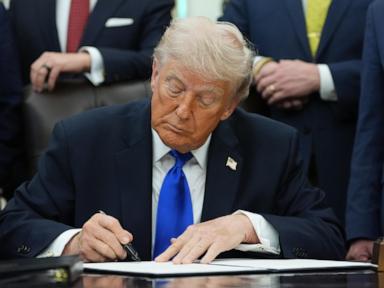
Donald Trump is reaching for his favorite blunt-force instrument again. By threatening a 25 percent tariff on European automobiles, the former president is signaling a return to the high-stakes protectionism that defined his first term. This isn't just about trade deficits or "non-compliance" with existing deals. It is a calculated strike at the heart of the German industrial machine, intended to force a complete reconfiguration of the global supply chain. If these levies land, they won't just raise the price of a luxury sedan; they will fundamentally alter how and where cars are built for the next fifty years.
The European Union represents one of the largest economic blocs on the planet, and its automotive sector is its crown jewel. Trump’s claim that the bloc has failed to live up to its end of the bargain—specifically a 2018 agreement to lower trade barriers—serves as the legal and political pretext for this escalation. However, the move is less about a single broken promise and more about a systemic shift toward American industrial isolationism.
The Economic Weaponry Behind the 25 Percent Threat
Most casual observers see a tariff as a simple tax. It is much more than that. It is a siege tactic. By slapping a 25 percent tax on imported European cars, the U.S. government would effectively be pricing brands like Volkswagen, BMW, and Mercedes-Benz out of the competitive middle-market. While high-end Porsche buyers might shrug off a price hike, the volume-sellers that keep German factories running cannot absorb such a blow.
The math is unforgiving. A $50,000 SUV imported from Stuttgart would suddenly face a $12,500 surcharge at the port of entry. Manufacturers are then left with two losing choices: pass the cost to the consumer and watch sales evaporate, or eat the cost and watch their profit margins turn into a bloodbath.
This isn't a theory. We saw a version of this play out during the steel and aluminum trade wars. The goal is to create enough financial pain that European boardrooms feel they have no choice but to move production to U.S. soil. Trump wants the factories in South Carolina and Alabama, not Lower Saxony. He is betting that the American consumer’s appetite for German engineering is strong enough to survive the transition, but weak enough to buckle under a 25 percent penalty.
The Myth of Trade Deal Compliance
Trump’s primary grievance centers on the 2018 "Rose Garden" truce. Back then, he and then-European Commission President Jean-Claude Juncker agreed to work toward zero tariffs on non-auto industrial goods. Trump argues that the EU has slow-walked these negotiations while maintaining a 10 percent tariff on U.S. car imports, compared to the 2.5 percent the U.S. currently levies on European passenger cars.
The EU counters that they have increased imports of American soybeans and liquefied natural gas (LNG) as a gesture of good faith. But to a transactional politician like Trump, soybeans don't equal Porsches. He views the trade imbalance through a very specific lens: the physical movement of manufactured goods. The fact remains that the EU exports significantly more in value to the U.S. than it receives, and in Trump’s world, that deficit is a scorecard showing that America is losing.
Why the European Auto Industry is Vulnerable Right Now
Timing is everything in geopolitics. Trump isn't throwing this punch while the European auto industry is at its peak. He is hitting them while they are already reeling from a series of internal and external shocks.
First, there is the energy crisis. Since the invasion of Ukraine, Germany has lost its access to cheap Russian gas. This has spiked the cost of operating the heavy machinery required for car manufacturing. When you add high labor costs and rigid environmental regulations to the mix, German-made cars are already becoming more expensive to produce.
Second, the transition to Electric Vehicles (EVs) has been a rocky road for the "Big Three" German manufacturers. They are caught in a pincer movement between Tesla’s dominance in software and China’s dominance in battery supply chains. If they lose easy access to the American market—one of the last regions where high-margin internal combustion engines still sell well—their ability to fund the massive R&D budgets needed for the EV shift will be crippled.
The Supply Chain Shell Game
Industry analysts often point out that "German" cars aren't always German. A BMW X5 sold in Munich might actually be built in Spartanburg, South Carolina. In fact, BMW is one of the largest exporters of vehicles from the U.S. to the rest of the world.
This creates a paradoxical situation. If Trump imposes broad tariffs based on "origin," he risks hitting vehicles that contain substantial American-made components. Modern supply chains are not a series of independent links; they are a tangled web. A transmission might cross the Atlantic three times before it is finally bolted into a chassis.
The threat of a 25 percent tariff forces manufacturers to play a desperate shell game. They must decide whether to source more parts locally within the U.S. to meet "domestic content" requirements or simply abandon certain segments of the American market altogether. It is a high-stakes gamble that could lead to de-industrialization in Europe while potentially creating a messy, inefficient manufacturing boom in the American Rust Belt.
The Retaliation Cycle No One Wants to Admit
Brussels is not known for backing down quietly. If the U.S. moves forward with a 25 percent auto tariff, the EU’s retaliatory list is already drafted. They won't just hit back at American cars. They will target iconic American exports designed to cause maximum political pain in specific voting districts.
- Bourbon and Whiskey: Targeting Kentucky, the home of powerful congressional leaders.
- Harley-Davidson Motorcycles: A symbolic strike at American manufacturing heritage.
- Agricultural Products: Hitting the Midwest farm belt, which is crucial for any presidential campaign.
This "tit-for-tat" cycle is how trade wars spiral out of control. The risk is that the initial 25 percent tariff on autos becomes the first domino in a much larger collapse of the transatlantic trade relationship. For decades, this relationship has been the bedrock of global stability. Seeing it dismantled over a dispute about BMWs and Mercedes-Benzes would have been unthinkable twenty years ago. Today, it is a very real possibility.
The Impact on the American Consumer
We need to be honest about who actually pays for these tariffs. It is not the foreign government. It is the American importer of record, who then passes that cost down the line.
If you are a fan of European engineering, the "Brutal Truth" is that your options are about to get much more expensive or disappear entirely. We are looking at a future where the "entry-level" European luxury car becomes a relic of the past. Only the ultra-wealthy will be able to absorb the tariff-adjusted prices, effectively turning the American car market into a bifurcated landscape of domestic trucks and ultra-luxury imports, with the middle ground completely hollowed out.
Furthermore, the lack of competition usually leads to a decrease in quality and an increase in price from domestic manufacturers. When American automakers don't have to worry about a competitively priced Volkswagen Tiguan or Audi A4, they have less incentive to keep their own prices low. Everyone loses at the dealership.
Security as a Justification
One of the most controversial aspects of Trump’s trade policy is his use of Section 232 of the Trade Expansion Act of 1962. This allows a president to impose tariffs if imports are deemed a threat to national security.
Calling a fleet of German sedans a "national security threat" sounds absurd to the average person. However, the legal argument is that a healthy domestic auto industry is essential for maintaining a country's industrial base, which can be converted for military use during a conflict. If the domestic industry is hollowed out by foreign competition, the nation’s ability to defend itself is theoretically compromised. It is a legal loophole large enough to drive a freight train through, and it gives the executive branch almost unlimited power to bypass Congress on trade matters.
The Global Realignment
This isn't happening in a vacuum. While the U.S. and EU are bickering over auto tariffs, China is moving aggressively to dominate the next generation of transportation. By weakening the transatlantic alliance through trade friction, both the U.S. and Europe risk falling behind in the global race for autonomous and electric vehicle supremacy.
The irony is palpable. By trying to protect the American auto industry with 19th-century trade tactics, the U.S. might be making it harder for domestic companies to compete in a 21st-century global market that relies on open exchange and collaborative R&D.
The German government has already signaled that it is willing to negotiate, but there is a limit to how much they can concede without destroying their own economy. They cannot simply "comply" with a deal that demands they stop being an export powerhouse. Exporting is what they do. It is their national identity.
A Calculated Chaos
Trump’s strategy is often described as "Madman Theory"—acting so unpredictably that your opponents are forced to make concessions just to stabilize the situation. The 25 percent tariff threat is the ultimate expression of this. It creates a state of permanent uncertainty that chills investment and forces every CEO in the world to keep one eye on the Oval Office.
Whether this leads to a "Great Deal" that brings thousands of jobs back to the U.S. or a disastrous trade war that plunges the global economy into a recession remains to be seen. What is certain is that the era of polite trade diplomacy is over. The gloves are off, the tariffs are on the table, and the sound of the automotive industry’s engine is being drowned out by the roar of economic nationalism.
Expect the volatility to increase as the election cycle nears. Every campaign stop in Michigan or Ohio will likely feature a doubling down on this rhetoric. For the executives in Munich and Wolfsburg, the next few years won't be about innovation or design; they will be about survival in a market that has decided it no longer wants to play by the old rules.
The 25 percent tariff isn't just a tax. It is a transformation. It represents the end of the globalized dream where a car could be designed in Germany, powered by a Japanese battery, and sold in Peoria without a second thought. That world is dying, and the new one being born is defined by borders, barriers, and a relentless focus on "America First," regardless of the collateral damage to long-standing allies.
Prepare for a much more expensive, and much more limited, showroom floor. The cost of geopolitical leverage is always paid by the person at the end of the line. That person is you.


