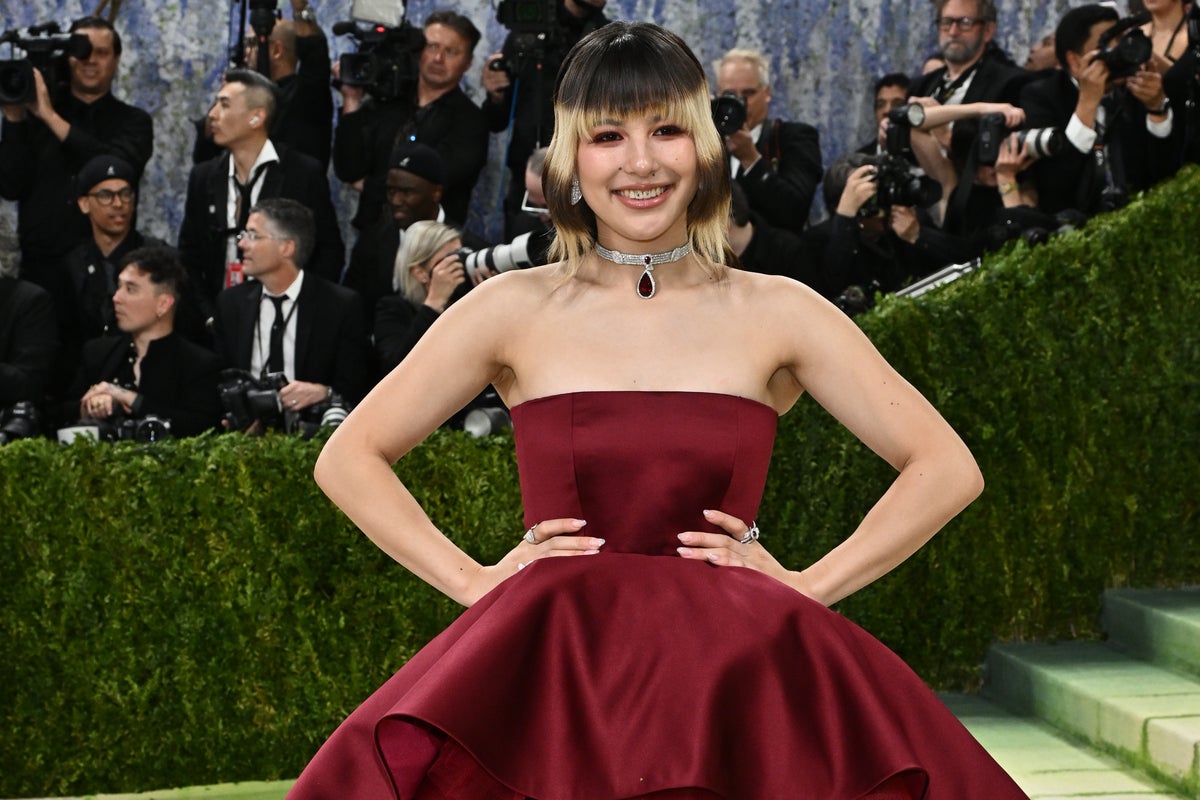
The Met Gala serves as a high-frequency valuation event for the "Celebrity-Industrial Complex," acting less as a social gathering and more as a liquidity event for personal brand equity. When an Olympic champion transitions from the specialized ecosystem of professional sports into the generalized ecosystem of global high-fashion, they undergo a structural re-rating of their market value. This shift is not merely about "fame"; it is a calculated migration from Performance-Based Equity to Association-Based Equity.
Traditional sports stardom relies on a linear correlation between athletic achievement and visibility. However, the Met Gala functions as a non-linear accelerator. It strips the athlete of their functional utility (their sport) and re-contextualizes them as a luxury asset. To analyze this phenomenon, we must examine the mechanics of brand signaling, the cost of entry into the ultra-elite tier of fame, and the structural friction that occurs when a meritocratic hero enters a curated aristocracy.
The Architecture of Brand Re-Rating
The transition of an Olympic athlete into the Met Gala environment can be mapped through three distinct structural phases. Each phase represents a hurdle that the individual must clear to convert temporary "buzz" into permanent cultural capital.
1. The Validation of Scarcity
The Met Gala operates on an artificial scarcity model. Unlike award shows where attendance is dictated by a nomination or a specific project, the Met Gala is governed by the "Vogue Filter." This creates an immediate signaling effect: the athlete is no longer just a champion in their field; they have been vetted by the arbiters of global aesthetic standards. For a brand, this reduces the risk of partnership. The athlete has moved from a niche market (sports fans) to a universal market (the global attention economy).
2. The High-Fashion Pivot
Athletes are typically associated with performance-wear—brands built on utility, sweat, and physical exertion. High fashion is the antithesis of utility. By appearing in couture, the athlete executes a "pivot" in their brand architecture. They demonstrate that their image can be decoupled from their physical performance. This is a critical move for longevity; an athlete’s physical peak is short, but their "image peak" can be extended indefinitely if they successfully transition into the luxury lifestyle sector.
3. The Peer Group Calibration
The Met Gala serves as a physical manifestation of a "high-status network." For an Olympic champion, the event is a calibration exercise. By being photographed alongside A-list actors, tech billionaires, and legacy icons, the athlete’s perceived social standing is averaged up to meet the level of the room. This is a classic example of Associative Heuristics: the public assumes that if you are in the room, you belong in the room, regardless of how you got there.
The Quantification of the "Famous" Moment
When an athlete describes "learning how famous they have become" during the Met Gala, they are experiencing a sudden spike in Attention Density. This can be quantified through three primary metrics that describe the shift from localized fame to global saturation.
- Interaction Velocity: The speed at which unrecognized individuals are replaced by recognizable peers seeking interaction. In a closed loop like the Met Gala, the frequency of "peer-to-peer" recognition from other high-status individuals is the ultimate indicator of market penetration.
- The Media Multiplier: A standard Olympic gold medal win produces a predictable spike in sports-adjacent media. A Met Gala appearance generates a cross-platform multiplier effect, hitting fashion, business, lifestyle, and general news verticals simultaneously.
- Search Intent Divergence: Before the event, search intent for an athlete is typically tied to their sport (e.g., "fastest time," "gold medal count"). Post-event, search intent shifts toward lifestyle and identity (e.g., "what is she wearing," "who is she dating"). This divergence indicates that the celebrity has become a "vessel" for broader cultural narratives.
The Structural Friction of Meritocracy vs. Curation
The Olympic champion faces a unique psychological and strategic challenge during this transition: the friction between meritocratic achievement and curated status.
In the Olympics, success is binary. You win or you lose based on a clock or a scorecard. There is a sense of objective reality. The Met Gala is the inverse; it is a subjective reality governed by hierarchy, optics, and social grace. An athlete who "learns how famous they are" is essentially experiencing the realization that their objective achievements have been converted into subjective social currency.
This conversion comes with a high maintenance cost. Performance-based equity is maintained by training and competing. Association-based equity is maintained through constant visibility, event attendance, and brand alignment. The athlete must now manage two distinct "jobs": the physical labor of being a champion and the emotional/strategic labor of being a global celebrity.
The Cost Function of Global Visibility
While the Met Gala provides an unparalleled platform, it also introduces a series of systemic risks that are often overlooked in standard media coverage.
Dilution of Original Value Proposition
There is a risk that the "athlete-as-hero" narrative becomes diluted by the "athlete-as-influencer" narrative. If the focus shifts too heavily toward fashion and red carpets, the core brand identity—built on grit and excellence—can begin to feel performative. This creates a ceiling for long-term brand value.
The Feedback Loop Trap
The Met Gala creates a feedback loop where the celebrity is surrounded by people of similar status. This can lead to a distorted perception of market reality. An Olympic champion may feel they have reached the "pinnacle" of fame because they are being greeted by Rihanna, but this does not necessarily translate to sustained consumer influence or commercial ROI for their sponsors.
The High-Fashion Tax
Participating in the Met Gala ecosystem requires significant investment in "soft infrastructure"—stylists, publicists, and managers specialized in the luxury sector. These costs are often front-loaded, meaning the athlete is spending their performance-based earnings to bet on a future in the association-based market.
Strategic Divergence: The Two Paths Forward
Following a successful Met Gala "debut," an athlete generally has two strategic paths.
Path A: The Lifestyle Conglomerate
The athlete leans fully into the fashion/lifestyle space, seeking to become a "multihyphenate." This involves launching their own brand lines, taking equity stakes in luxury startups, and prioritizing high-margin endorsements over performance-focused deals. Success here looks like the trajectory of Serena Williams or Naomi Osaka, where the personal brand eventually dwarfs the sport.
Path B: The Pure Performance Halo
The athlete uses the Met Gala appearance as a one-time "prestige booster" to increase the value of their sports-related contracts. They return quickly to their training environment, using the added fame to command higher fees for appearances and endorsements within the sports industry, but they do not attempt to maintain a permanent presence in the high-fashion circuit.
Tactical Execution for Personal Brand Resilience
To successfully navigate the transition from Olympic champion to global icon, the athlete must treat the Met Gala as a tactical deployment rather than a social achievement.
The primary objective is the capture of Metadata: the photos, the quotes, and the associations that will be used by the marketing team for the next 12 to 24 months. The second objective is Network Seeding: establishing high-value connections with decision-makers in non-sports industries (CEOs, creative directors, media moguls).
The "Olympic champion" who learns how famous they are at the Met Gala is witnessing the first data points of a new valuation. The real test is not whether they are recognized on the red carpet, but whether that recognition can be converted into a sustainable business model that survives their retirement from the track or the pool.
To ensure longevity, the athlete must implement a Narrative Hedging Strategy. They must continue to emphasize their "outsider" status as a world-class athlete while simultaneously demonstrating their "insider" fluency in the high-fashion world. This duality—the ability to be both the relatable hero and the unreachable icon—is the foundation of modern celebrity power.
The strategic play is to leverage the Met Gala’s high-visibility window to secure a multi-year partnership with a non-endemic luxury brand before the next Olympic cycle begins. This locks in the valuation spike and provides a financial floor that is decoupled from their next athletic performance. Failure to capitalize on this window leads to "Fame Decay," where the athlete remains famous enough to be bothered in public but not influential enough to command a premium in the boardroom.