The western press loves a comfortable narrative. For years, the story on China’s "legal shield" has been framed as a defensive crouch—a reactive scramble to build a "firewall" against U.S. sanctions and export controls. If you read the mainstream analysis, you’ll hear about how Beijing is merely trying to protect its sovereignty.
They are wrong.
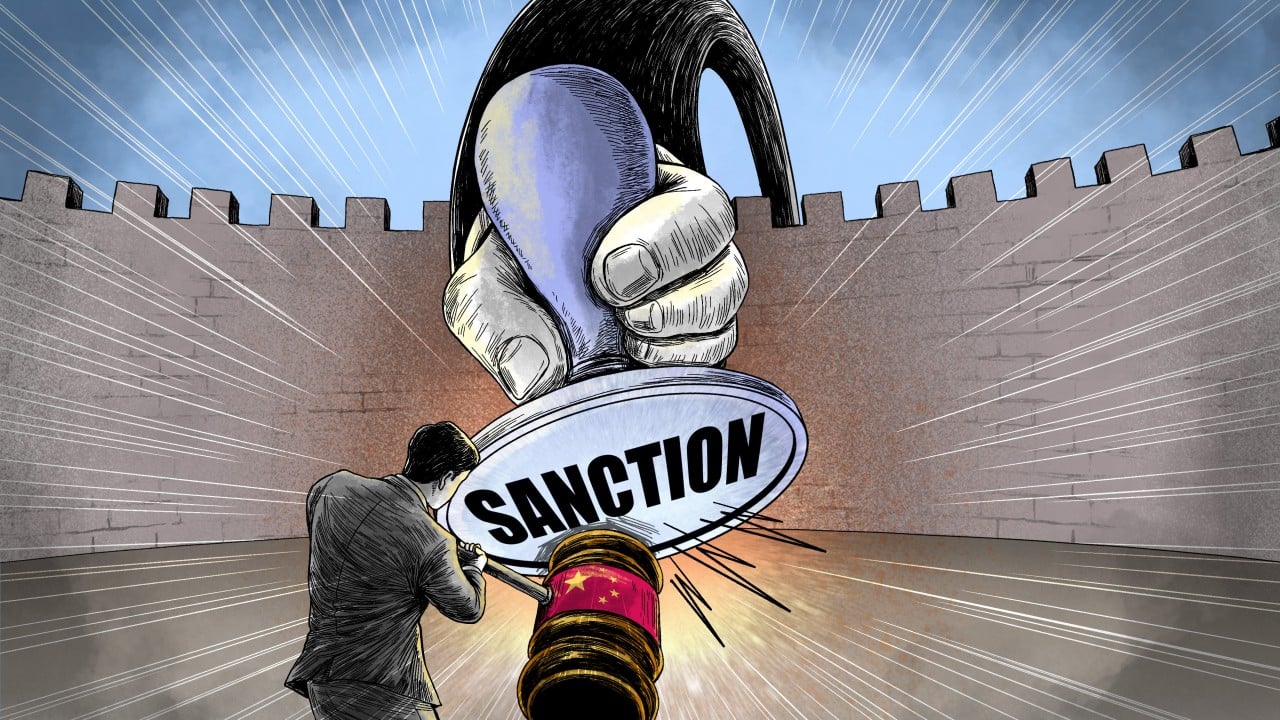
Calling China’s recent legislative blitz a "shield" is like calling a shark’s teeth a "dietary aid." It is technically true, but it misses the entire point of the anatomy. What we are seeing isn’t a defensive posture. It is the construction of a sophisticated, offensive legal infrastructure designed to force global CEOs into a binary choice: obey Washington and lose China, or obey Beijing and lose the world.
The "lazy consensus" suggests that China is just catching up to the U.S. Office of Foreign Assets Control (OFAC). The reality is that Beijing has leapfrogged the standard sanction model to create something much more volatile: a legal environment where neutrality is a crime.
The Myth of the Passive Defense
Most analysts point to the Anti-Foreign Sanctions Law (AFSL) and the Unreliable Entity List as proof of a reactive strategy. They argue that China only acts when poked. I’ve sat in boardrooms where directors breathed a sigh of relief because they haven’t been "poked" yet.
That is a fatal misunderstanding of how these laws function.
Unlike U.S. sanctions, which are often surgical and transparently listed, China’s legal framework is intentionally vague. It operates on "strategic ambiguity." The AFSL doesn’t just punish foreign governments; it targets individuals and companies that comply with foreign sanctions.
Imagine a scenario where a New York-based bank freezes the account of a sanctioned official in Hong Kong to comply with U.S. law. Under the AFSL, that bank is now legally liable in Chinese courts for "discriminatory restrictive measures."
This isn't a shield. It’s a pincer movement.
Sovereignty is the Smoke Screen
Western pundits focus on "sovereignty" because it’s a concept they understand. But the CCP isn't interested in Westphalian sovereignty. They are interested in jurisdictional extraterritoriality.
By expanding the reach of their courts, Beijing is effectively attempting to export its political will into the compliance departments of Fortune 500 companies. When the Data Security Law (DSL) and the Personal Information Protection Law (PIPL) were enacted, the "expert" take was that China was just copying Europe’s GDPR.
Again, incorrect.
GDPR is about protecting the individual from the state and corporations. China’s data laws are about protecting the state from the data. These laws mandate that any data deemed "important" (a term left purposefully undefined) cannot leave the country without a security assessment.
I’ve seen multinational tech firms spend $50 million on "data localization" projects in Shanghai, thinking they were buying safety. They weren't. They were building a hostage pen. Once that data is localized, the "legal shield" ensures that if the U.S. government asks for a forensic audit of that data, the company faces immediate criminal charges in China for "endangering national security."
The Compliance Trap: Why You Can't Play Both Sides
The most dangerous lie told to investors today is that "diversification" and "de-risking" will save them.
The new legal architecture in Beijing is specifically designed to kill the middle ground. The Export Control Law (ECL), for instance, allows China to restrict the export of "controlled items" to any country that "abuses export control measures" against China. This creates a recursive loop of retaliation.
If you are a semiconductor firm using Chinese raw materials to build chips for a U.S. defense contractor, you are no longer a businessman. You are a geopolitical flashpoint.
The "legal shield" ensures that:
- Compliance is a zero-sum game. You cannot satisfy both the U.S. Treasury and the Chinese Ministry of Commerce.
- Liability is personal. China’s new laws don't just fine the corporation; they target the "persons in charge." We are entering an era where western executives might be barred from leaving China because their company followed a U.S. court order.
- The judiciary is a weapon system. In the West, we view the law as a set of rails. In the current Chinese context, the law is the train, and the Party is the driver.
The Data Sovereignty Delusion
Let’s dismantle the idea that this is about "legal fairness."
Mainstream media often asks: "Will China’s courts treat foreign firms fairly under these new laws?"
This is the wrong question. It assumes the goal of the law is adjudication. It isn't. The goal is behavioral modification.
Take the Provisions on Administrative Law Enforcement Procedures for Market Regulation, which went into effect recently. These rules give regulators massive leeway to seize electronic data and private communications during "inspections." When combined with the "Anti-Espionage Law," the definition of a "state secret" now expands to basically anything that might give a foreign company a competitive edge or an inkling of the true state of the Chinese economy.
If you are conducting due diligence on a Chinese partner, you are technically "gathering intelligence." If you share that due diligence with your HQ in London, you are "transferring sensitive data."
The "shield" isn't protecting China from foreign pressure; it’s insulating the Chinese market from the transparency required for global capitalism to function.
The Cost of Staying
Every consultant in D.C. and Brussels is currently selling "China Plus One" strategies. They tell you to keep your Chinese operations but build a backup in Vietnam or India.
They are selling you a fantasy.
Beijing’s legal framework is catching up to your "Plus One." Through the Foreign Relations Law, China has asserted the right to take "necessary counter-measures" against acts that "endanger its sovereignty, security, and development interests." This is broad enough to cover a company moving its supply chain out of Xinjiang or even just reducing its investment in the mainland.
We are seeing the birth of "Economic Treason" as a legal standard for foreign corporations.
The "legal shield" is actually an enclosure. It’s designed to keep your capital, your IP, and your people inside a system where the rules change overnight based on the temperature of the relationship between Washington and Beijing.
Stop Looking for the Shield
If you are waiting for a clear list of what is and isn't allowed, you have already lost. The ambiguity is the feature, not the bug. It forces self-censorship. It forces companies to lobby their own home governments to go easy on China, lest they trigger the "shield" and lose their assets.
The U.S. uses the dollar as a weapon. China is using the Law as a weapon.
One relies on the plumbing of the global financial system. The other relies on the physical presence of your assets and people within their borders. You can route around a dollar sanction. You cannot route around a "security audit" of your factory in Shenzhen while your local GM is being questioned at an undisclosed location.
The "legal shield" is a masterclass in asymmetric warfare. It turns the West’s obsession with the "rule of law" against itself by creating a "rule by law" system that mimics the forms of modern governance while serving the interests of a single party.
Stop asking how to comply. Start asking what you are willing to lose. Because the moment you stepped into that jurisdiction, you handed them the keys to your "shield," and they’ve already turned it into a blade.
Get out, or double down and accept that you are no longer a private entity—you are a subsidiary of a geopolitical agenda you don't control. There is no third option.
Choose.