While everyone was busy watching Nvidia, a quiet explosion just happened in the Shaanxi province of China. Yuanjie Semiconductor Technology, a company you probably hadn't heard of until today, just posted a profit increase of 1,153% for the first quarter of 2026.
That isn't a typo. We're talking about a net profit of 179 million yuan ($26.2 million) on revenue that tripled to 355 million yuan. If you want to know where the real money in AI is moving right now, stop looking at the software and start looking at the glass. Specifically, the laser chips that turn electricity into light. If you enjoyed this piece, you might want to check out: this related article.
The end of the copper age
AI doesn't just need faster processors. It needs those processors to talk to each other without melting the motherboard. As data centers scale up to handle massive models like DeepSeek-V3 or the latest from OpenAI, traditional copper wiring has hit a physical wall. Copper gets too hot and loses too much signal when you try to push data at 800G or 1.6T speeds.
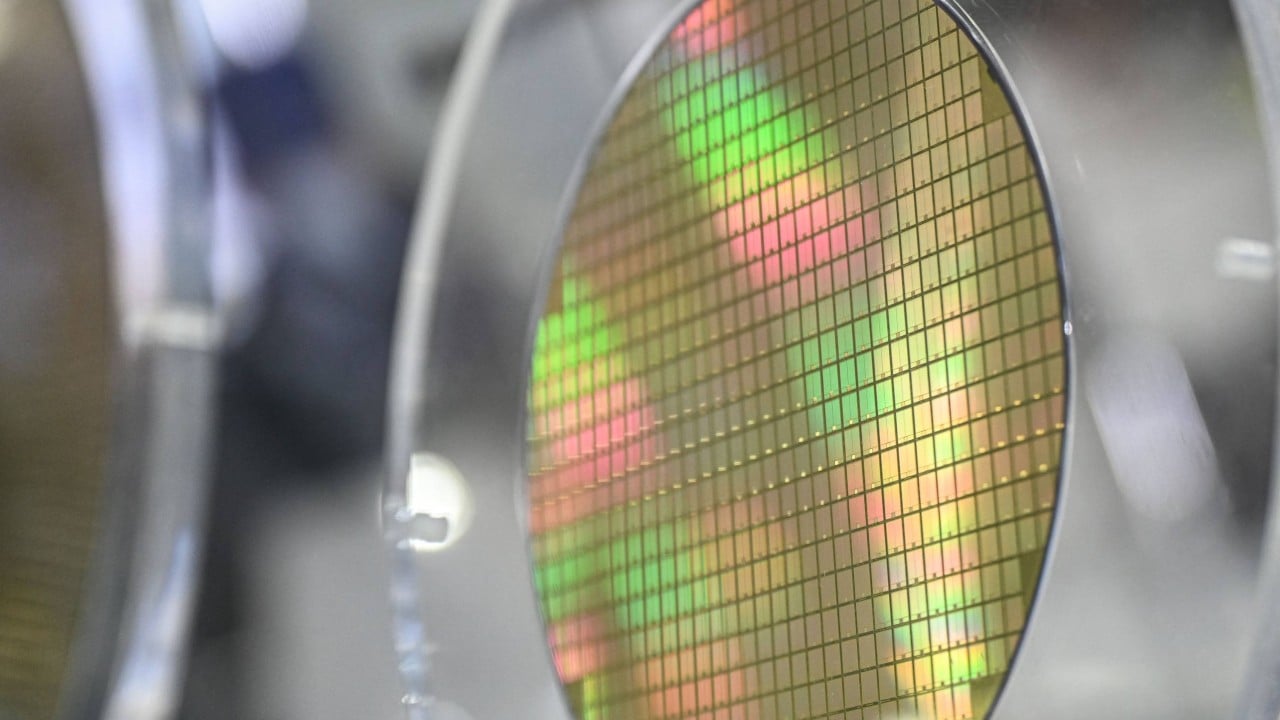
This is why Yuanjie's stock price just cleared the 1,400 yuan mark, making it the most expensive stock in China by share price, even beating out the legendary liquor giant Kweichow Moutai. The market is betting everything on optical interconnects. These laser chips—specifically Continuous-Wave (CW) silicon photonics sources—are the "heart" of the optical modules that allow GPUs to communicate across a data center at the speed of light. For another angle on this development, see the recent update from Financial Times.
Why the 1,153% jump actually makes sense
You might think an elevenfold profit surge sounds like a fluke or creative accounting. It isn't. It's the result of two massive forces colliding at the exact same time.
- The AI compute arms race: Every major cloud provider in China is scrambling to build out massive "computing power clusters." They don't just need a few chips; they need millions of high-speed optical connections to link thousands of H200s or domestic equivalents.
- Beijing's "Self-Reliance" mandate: U.S. export controls haven't just slowed China down; they've created a guaranteed market for domestic players. If a Chinese data center operator can't get high-end networking gear from Broadcom or Marvell, they have to buy from Yuanjie or Accelink.
Yuanjie's gross margins hit 54.7% recently because they shifted their product mix. They're moving away from low-margin telecom chips and into high-end data center components. When you're the only game in town for a critical component, you get to set the price.
China's "AI Plus" strategy is the real driver
At the 2026 "Two Sessions" meetings, China's leadership made it clear that "AI Plus" is the national priority. The goal is to integrate AI into 90% of the economy by 2030. This isn't just a tech goal; it's an industrial policy.
They're launching data center projects across the western provinces to balance the country's computing load. This requires massive amounts of optical fiber and the chips that power them. Companies like Yuanjie and Cambricon (the GPU maker) are the primary beneficiaries of this "East-to-West" computing strategy.
The risk most investors are ignoring
It's easy to get blinded by a 1,000% profit gain, but there’s a catch. China's optical chip industry is still heavily reliant on high-end manufacturing equipment that often comes from overseas. While Yuanjie is designing the chips, the "wafer to chip" yield rates for 1.6T modules are still a closely guarded secret.
There's also the "DeepSeek effect." As Chinese labs find ways to train models more efficiently with less raw compute, the desperate "buy everything" phase of the chip cycle might cool down.
What you should do next
If you're looking at this sector, don't just chase the highest percentage gain. Here’s how to actually play this:
- Watch the 800G transition: The real money is in companies that can mass-produce 800G and 1.6T optical modules. 400G is becoming a commodity; 800G is where the margins live.
- Monitor CPO development: Co-Packaged Optics (CPO) is the next evolution. It brings the optical engine right next to the switch chip. Any company that masters this packaging will own the next three years of the market.
- Check the inventory levels: High profits often lead to over-ordering. Keep an eye on the accounts receivable for these firms to make sure they're actually getting paid, not just booking "paper" growth from state-backed frantic buying.
The era of cheap copper is over. The AI boom is being built on a foundation of light, and for now, the companies making the lasers are the ones holding the keys to the kingdom.