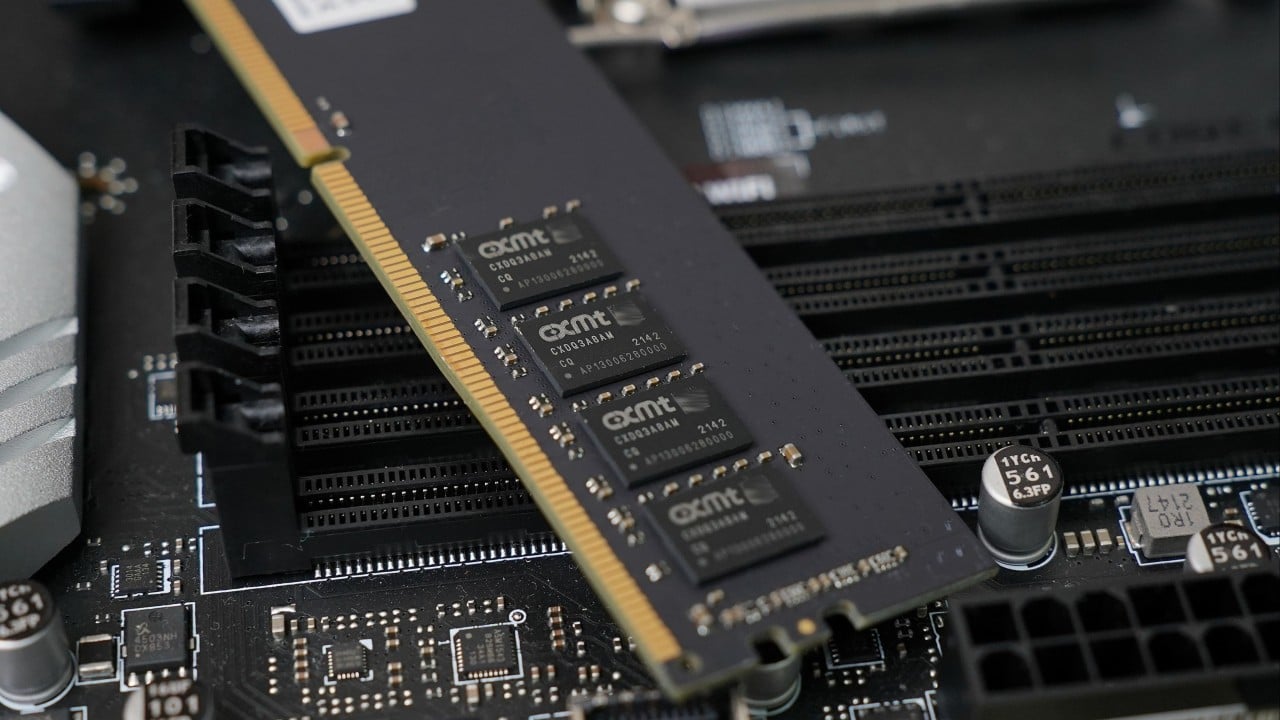
The tech press is currently obsessed with the "breakthrough" at ChangXin Memory Technologies (CXMT). The narrative is predictable: China has cracked the DDR5 code, domestic module makers are flooding the zone, and the global oligopoly of Samsung, SK Hynix, and Micron is finally shaking.
This story is a comforting lie for investors and a lazy shortcut for analysts.
The surge in production from Chinese memory firms isn't a victory lap. It’s a desperate inventory build-up masking a fundamental gap in lithography and yield rates. If you think volume equals parity, you don't understand how silicon is made. We aren't witnessing the birth of a new superpower; we’re watching a massive capital expenditure program collide with the brutal reality of the "Efficiency Wall."
The Yield Trap Everyone Ignores
The headline writers love to talk about CXMT hitting the market with DDR5. They rarely mention the cost per bit. In the semiconductor world, shipping a product is easy. Shipping a product profitably is where companies go to die.
Samsung and SK Hynix have spent decades refining Extreme Ultraviolet (EUV) lithography to cram more transistors into smaller spaces. CXMT is largely working with Deep Ultraviolet (DUV) equipment, forced to use multi-patterning techniques to achieve similar densities.
Imagine trying to draw a microscopic circuit with a Sharpie while your competitor uses a laser. To get the same result, you have to draw, erase, and redraw four times. This is "multi-patterning." It kills your yields. If Samsung gets 90 usable chips off a wafer and CXMT gets 60 because their process is more complex and error-prone, CXMT has to sell those 60 chips at a massive premium just to break even.
But they aren't. They are undercutting the market.
This isn't "competitive pricing." This is state-subsidized dumping designed to grab market share before the technical debt becomes unpayable. I have seen firms burn through billions in "production ramps" only to find that as soon as the subsidies dry up, the unit economics are terminal.
The Validation Gap: Why "Compatible" Isn't "Reliable"
The flurry of new modules from brands like Longsys, Netac, and Powev suggests a vibrant ecosystem. It’s actually a sign of fragmentation.
When a Tier-1 OEM like Dell, HP, or Lenovo builds a server, they don't just check if the RAM fits the slot. They require years of validation data. They need to know the Mean Time Between Failures (MTBF) under extreme heat and varying voltages.
- The Myth: Chinese DDR5 is ready for the data center.
- The Reality: It’s being pushed into the white-box PC market and low-end consumer builds.
The "breakthrough" is currently confined to the least demanding segment of the market. High-performance computing (HPC) and AI servers—the only sectors currently seeing massive growth—require more than just raw speed. They require signal integrity that CXMT’s first-gen DDR5 hasn't yet proven over a five-year lifecycle.
Let’s talk about the specs. The current Chinese DDR5 chips are often hovering around 4800MT/s to 5600MT/s. Meanwhile, SK Hynix is already pushing towards 8000MT/s and beyond with specialized binning. CXMT isn't competing for the crown; they are fighting for the scraps at the bottom of the spec sheet.
The Equipment Embargo is Working (Just Not How You Think)
The common contrarian take is that US sanctions failed because China is still producing chips. This misses the point entirely. Sanctions weren't designed to stop production; they were designed to make production unsustainably expensive.
By denying access to the latest EUV tools, the West has forced China into a "Brute Force" manufacturing model.
- More Wafers, Less Quality: To match the output of a single advanced Western fab, China has to build three.
- Power Inefficiency: Older process nodes require more power to hit the same clock speeds. In a world where "Performance per Watt" is the only metric that matters for AI, Chinese DDR5 is a non-starter for the high-end.
- The Talent Drain: You can buy the machines, but you can't buy the decades of "black box" tribal knowledge required to tune a fab for high-yield DDR5.
I’ve watched domestic players in other sectors—like NAND flash—reach a 128-layer milestone and proclaim victory, only to realize the "Big Three" moved to 232 layers while they were still celebrating. Memory is a treadmill that never stops. If you are running 20% slower than the leader, you don't stay 20% behind. You eventually fall off the back.
The Module Maker Delusion
Why are Chinese module makers (the guys who buy the chips and stick them on green boards) ramping up so fast? It isn't because of a sudden spike in demand. It’s a hedge against future supply chain shocks.
These companies are front-loading production because they fear the window for importing essential components—controllers from Marvell or Phison, or even specialized chemicals—might close.
When you see a "production ramp" in a volatile political climate, don't assume it’s growth. Often, it’s hoarding. These modules are sitting in warehouses, waiting for a market that is already oversupplied. The global PC market is sluggish. The smartphone market is plateauing. The only place where demand is "up and to the right" is AI, and Chinese memory is currently locked out of the HBM (High Bandwidth Memory) race that powers Nvidia’s H100s and B200s.
The HBM Sucker Punch
This is the most damning part of the "China Memory Powerhouse" narrative. DDR5 is yesterday's news. The real war is in HBM3e and HBM4.
HBM (High Bandwidth Memory) is essentially a 3D stack of DRAM chips connected by TSVs (Through-Silicon Vias). It is incredibly difficult to manufacture. Samsung and SK Hynix are printing money here because AI demand is insatiable.
CXMT and its peers are barely in the HBM conversation. By the time they have "perfected" standard DDR5, the high-value market will have moved entirely to stacked architectures that they cannot currently mass-produce. They are winning the battle for the 2022 desktop while losing the war for the 2027 AI cluster.
The Price War is a Suicide Pact
The "lazy consensus" says that low prices from Chinese makers will force the incumbents to lower their prices, benefiting consumers.
Actually, it’s creating a two-tier market.
- Tier A: Mission-critical, high-speed, validated memory (Samsung, Hynix, Micron). Prices stay high because demand is inelastic.
- Tier B: "Good enough" memory for budget builds and domestic government contracts. Prices crater because everyone is fighting for the same low-margin pie.
Chinese module makers aren't disrupting the incumbents; they are cannibalizing each other. They are trapped in a race to the bottom where the only winner is the state-run fund that gets to report high "production volume" numbers to the central government.
How to Actually Read the Market
If you want to know if China has actually made a breakthrough, stop looking at "production starts" and start looking at "server-grade validation."
Until you see a major non-Chinese cloud provider—AWS, Azure, or even a global player like Equinix—deploying CXMT-based modules at scale, the "breakthrough" is a paper tiger. It’s a domestic solution for a domestic problem.
The industry insiders I talk to aren't worried about the technology. They are worried about the noise. The noise creates a false sense of parity that leads to bad investment cycles.
Stop asking if China can make DDR5. They can. A high schooler can bake a cake, but that doesn't mean they can run a Michelin-star pastry shop. Ask instead: Can they make it without a subsidy? Can they make it at 8000MT/s? Can they make it stay alive for 50,000 hours in a 40°C server room?
The answer, for now, is a resounding no.
Stop buying the "ramp up" hype. In the semiconductor world, if you aren't leading, you're just providing the raw materials for someone else’s profit. China is currently the world’s most expensive assembly line, not its new laboratory.
The "breakthrough" is just a very loud, very expensive echo.