The $25 billion backwardation shock hitting global balance sheets is not an aggregate demand problem; it is a structural cash-flow drain triggered by a localized, asymmetric kinetic conflict. A recent Reuters analysis of corporate disclosures across the United States, Europe, and Asia reveals that at least 279 publicly traded firms have instituted emergency corporate maneuvers—ranging from dividend suspensions to manufacturing output reductions—to blunt the financial fallout from the escalation of hostilities involving Iran.
While market observers frequently treat geopolitical unrest as an unquantifiable "black swan" risk, the current corporate deficit can be systematically broken down into direct microeconomic operational bottlenecks. By mapping these corporate disclosures against the structural architecture of global logistics and energy markets, the true financial transmission mechanisms become distinct. The $25 billion loss recorded to date represents merely the first iteration of an inflationary feedback loop that has begun to re-engineer global supply chains. If you found value in this piece, you might want to check out: this related article.
The Transmutation of Crude: The Corporate Energy Cost Function
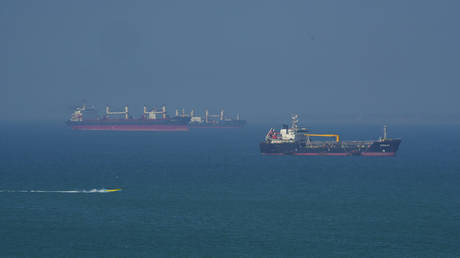
The primary economic transmission mechanism of the conflict operates through the physical blockade of the Strait of Hormuz. Because approximately one-fifth of global petroleum liquid consumption transits this chokepoint daily, the imposition of a blockade or high-risk maritime premium immediately shifts the global oil supply curve inward. Brent crude scaling past $111 per barrel represents a baseline increase of more than 50% relative to the pre-conflict equilibrium.
For global enterprises, this macro-level commodity spike translates directly into highly predictable microeconomic cost functions. The burden is unevenly distributed, falling heaviest on firms where energy or petroleum-derived inputs represent a high proportion of variable costs. For another perspective on this event, refer to the recent update from Forbes.
The Aviation Fuel Asymmetry
Airlines have absorbed nearly $15 billion—or 60%—of the total quantified corporate losses reported globally. The sensitivity of the aviation sector to the energy cost function is governed by a precise operational relationship: jet fuel typically constitutes 25% to 35% of an airline’s operating expenses. When jet fuel prices double over a 60-day horizon, the variable cost per available seat kilometer (ASK) shifts dramatically upward, rendering existing forward-booked passenger ticketing architectures unprofitable.
Firms cannot reprice historical bookings retroactively. Consequently, airlines are forced to deploy immediate tactical mitigations:
- Imposing immediate retroactive fuel surcharges on unbooked capacity.
- Cutting less efficient, long-haul routing networks to optimize load factors.
- Drawing down cash reserves or eliminating capital expenditure programs to maintain liquidity.
Industrial and Petrochemical Feedstock Elasticity
Beyond direct combustion fuel, petroleum and natural gas serve as the fundamental chemical feedstocks for secondary industrial manufacturing. For businesses producing consumer goods, durable appliances, or automobiles, a sustained $100+ per barrel environment increases the marginal cost of production across multiple tiers of the supply chain.
Consider the cost elasticity of common synthetic materials:
- Polyethylene and Polypropylene: These baseline plastics, synthesized from ethylene and propylene (crude oil and natural gas derivatives), serve as the primary raw inputs for packaging and casing across consumer staples and automotive components.
- Industrial Gases and Metallurgical Inputs: The regional disruption has restricted global access to critical processing elements like helium, aluminum, and ammonia-based fertilizers.
The exact operational sensitivity of a firm to these inputs is demonstrated by corporate disclosures from diversified manufacturers. For instance, consumer goods manufacturer Newell Brands notes an exact linear cost sensitivity: every $5 increment in the price of a barrel of oil extracts approximately $5 million in unhedged operational margins. Similarly, Proctor & Gamble has logged a post-tax profit impact of $1 billion, driven by the dual compounding pressures of rising chemical input costs and elevated domestic distribution logistics.
Supply Chain Fracture: The Logistics Bottleneck Matrix
When maritime chokepoints become contested military zones, the cost of moving a physical unit of freight increases non-linearly. The disruption within the Strait of Hormuz creates an operational bottleneck that forces global logistics networks to absorb two distinct structural penalties: geographic rerouting delays and specialized asset scarcity.
The economic impacts can be evaluated via a simple structural matrix across impacted industries:
| Industry Sector | Primary Microeconomic Driver | Manifested Corporate Action |
|---|---|---|
| Airlines & Logistics | Doubling of Jet Fuel & Bunker Fuel Surcharges | Route rationalization, immediate implementation of cargo surcharges, suspension of non-critical capacity expansion. |
| Automotive & Industrials | Component shortages (Aluminum, Electronics) and extended component lead times | Production line throttling, lowering of full-year delivery guidance (e.g., Toyota’s $4.3 billion margin revision). |
| Consumer Discretionary | Rising input costs (Plastics, Logistics) colliding with weakening real consumer wages | Dividend suspensions, pivot to lower-margin value products, SKU rationalization to preserve working capital. |
| Chemicals & Agriculture | Blockade of Middle Eastern Petrochemical and Fertilizer exports | Implementation of immediate 20% to 30% downstream price hikes to protect gross margins. |
This bottleneck alters the velocity of corporate inventory. Under standard "just-in-time" (JIT) inventory systems, capital is optimized by minimizing the volume of raw components held in stationary storage. When global shipping networks face delays of 10 to 20 days to bypass high-risk zones, the "inventory in transit" asset class balloons. Firms must commit more working capital to hold goods that are sitting on vessels, driving down return on invested capital (ROIC) and stretching cash conversion cycles.
The Delayed Margin Compression Mechanism
A critical anomaly identified in recent equity research is that despite a $25 billion quantified hit, many corporate income statements for the first quarter managed to retain historical net profit margins. This phenomenon does not imply immunity; rather, it reflects a structural accounting delay inherent in corporate procurement cycles and financial hedging strategies.
The mechanism protecting short-term earnings consists of three distinct components:
1. Rolling Derivative Hedges
Sophisticated enterprises do not purchase energy or commodities on the spot market. Airlines and large-scale industrial firms utilize options and futures contracts to hedge their fuel and raw material exposure 3 to 12 months in advance. These hedges act as financial shock absorbers. However, as these historical derivative positions expire, firms are forced to roll their contracts over at the current, highly elevated spot prices. The structural margin compression will therefore manifest with a 90-to-180-day delay, altering second- and third-quarter earnings.
2. First-In, First-Out (FIFO) Inventory Valuation
Under standard FIFO accounting principles, the cost of goods sold (COGS) reflects the price of raw materials acquired months ago, long before the outbreak of the conflict. The expensive raw materials currently being purchased at $111 per barrel are sitting in warehouses or transit pipelines; they will not hit the income statement until those specific physical units are finished, sold, and recognized as revenue.
3. The Squeezed Pricing Power Frontier
To offset rising costs, 279 major global firms have begun initiating defensive price increases. However, the ability to pass costs downstream is bound by the price elasticity of consumer demand.
As energy shocks function as a regressive tax on disposable income, consumer-facing businesses encounter a hard ceiling on pricing power. McDonald’s and Whirlpool have both noted a material shift in consumer psychology: lower-income brackets are rapidly pulling back on discretionary or replacement purchases, choosing instead to repair existing home appliances rather than purchase new units. When pricing power degrades while input costs continue to rise, the unavoidable corporate outcome is structural margin compression.
Defensive Allocations and Strategic Adjustments
As corporations transition from immediate crisis management to sustained operational defense, capital allocation strategies must pivot. The optimization of equity returns via aggressive share buybacks and high dividend distributions is structurally incompatible with a sustained systemic supply shock.
The strategic play for multinational corporations involves two mandatory reallocations of capital.
First, corporations must execute an aggressive shift from JIT inventory designs to "just-in-case" (JIC) safety-stock configurations. This requires drawing down available credit facilities or redirecting free cash flow away from equity holders toward financing expanded raw material reserves. Firms that fail to build these inventory buffers risk unexpected production line stoppages, which carry significantly higher structural penalties than the carrying cost of holding extra inventory.
Second, corporate treasury departments must immediately re-baseline their capital expenditure projections against a higher weighted average cost of capital (WACC). Because the energy shock drives broader inflationary pressures, sovereign bond yields—including the US 10-year Treasury climbing to 4.63%—are resetting higher. This upward shift in risk-free rates automatically raises the hurdle rate for every internal corporate investment project.
Growth initiatives that appeared highly NPV-positive under a stable global framework must be culled or mothballed. Cash preservation, localized supply chain onboarding, and rigid cost-containment architectures represent the only viable path to protecting long-term enterprise value until regional maritime trade lanes revert to structural equilibrium.