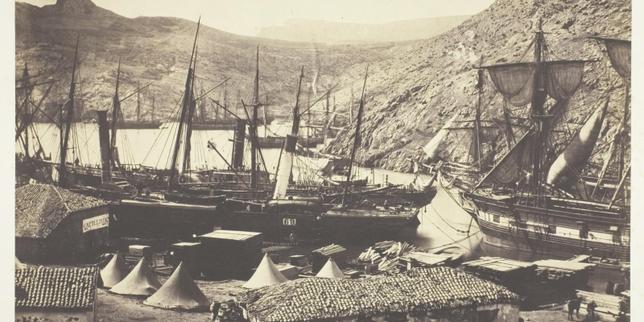
The Crimean War represents the first instance where industrial throughput and technological acceleration determined the outcome of a great power conflict, rendering traditional Napoleonic doctrine obsolete. While historical narratives often prioritize the siege of Sevastopol or the tragedy of the Light Brigade, an analytical breakdown reveals a fundamental shift in the mechanics of state-sponsored violence. Success was no longer dictated by the tactical brilliance of commanders on horseback; it was governed by the integration of steam power, the telegraph, and rifled ballistics into a cohesive logistical chain.
The Ballistic Superiority Threshold
The transition from the smoothbore musket to the Minié rifle fundamentally altered the risk-reward ratio of infantry engagements. This shift created a structural disadvantage for the Russian Empire, which relied on the traditional "cult of the bayonet."
- Effective Range Expansion: Smoothbore muskets (like the Russian 1808 model) were largely ineffective beyond 100 meters. The Minié rifle, utilized by French and British forces, extended lethal engagement distances to 400-600 meters.
- The Accuracy Multiplier: The expanding lead bullet design allowed for rapid loading while maintaining a tight seal in the rifling. This increased the probability of a hit by a factor of three compared to traditional munitions.
- Defensive Dominance: High-velocity rifled fire allowed defenders to decimate advancing columns long before they could reach a range where a charge or volley fire was viable. The massacre of the Russian ranks at the Battle of the Alma was a direct consequence of this technological asymmetry.
The Russian failure to modernize their ordnance was not merely a procurement error but a symptom of a deeper industrial bottleneck. Russia produced approximately 20,000 rifles annually, whereas the Anglo-French coalition could scale production into the hundreds of thousands via mechanized factories. This created a firepower deficit that no amount of numerical superiority could overcome.
Logistical Arbitrage and the Steam Engine
A critical paradox of the Crimean War is that the Western Allies, fighting thousands of miles from their home ports, maintained better supply lines than the Russians fighting on their own soil. This was the result of maritime steam power versus terrestrial animal traction.
The Maritime Pipeline
The British and French utilized steam-powered transports to move troops and matériel through the Mediterranean and Black Seas. Unlike sailing vessels, steamships operated on predictable schedules, independent of wind conditions. This created a consistent "just-in-time" delivery system for reinforcements.
The Russian Infrastructure Failure
In 1853, Russia possessed only one major railway line (Saint Petersburg to Moscow). Supplies destined for the Crimea had to be transported via ox-cart across hundreds of miles of unpaved, mud-prone tracks. The attrition rate of logistics was staggering: Russia often lost more men to disease and exhaustion during the march to the front than in actual combat. By the time a Russian battalion reached Sevastopol, its combat effectiveness was frequently reduced by 30-50%.
The Grand Crimean Central Railway
The British response to the "Great Winter" of 1854—the construction of a seven-mile tactical railway from the port of Balaklava to the siege lines—marked the birth of modern military engineering. This was the first time a railway was built specifically to support a siege. It reduced the transit time of heavy artillery shells from days of back-breaking animal labor to mere minutes of steam-driven transport.
Information Asymmetry and the Telegraph
The deployment of the submarine telegraph cable across the Black Sea in 1855 introduced real-time strategic oversight, a development that permanently shifted the locus of power from the battlefield commander to the central government.
- Compression of the OODA Loop: For the first time, London and Paris could receive reports and issue orders within hours rather than weeks. This eliminated the autonomy of generals like Raglan and Canrobert, subjecting tactical decisions to the pressures of domestic politics and public opinion.
- The Media Variable: Professional war correspondence, most notably by William Howard Russell of The Times, utilized the telegraph to broadcast the realities of the front to the civilian population. This created a feedback loop where administrative failures (such as the lack of medical supplies) led to immediate political consequences, including the collapse of the Aberdeen ministry in Britain.
The telegraph functioned as a force multiplier for accountability. It forced the military to professionalize its medical and administrative branches, as seen in the reorganization of the nursing corps and the logistical reforms following the "commissariat" scandals.
The Ironclad Transition and Naval Obsolescence
The Battle of Kinburn (1855) served as the death knell for wooden-walled navies. The French deployment of three floating batteries (Lave, Dévastation, and Tonnante) armored with 4.5 inches of iron plates proved that masonry fortifications and wooden hulls were defenseless against modern incendiary shells.
While the Russian forts fired thousands of rounds, they failed to penetrate the iron plating of the French vessels. Conversely, the French shells devastated the Russian shore batteries. This engagement demonstrated a new technological floor: any navy not built of iron and powered by steam was effectively a liability. The destruction of the Ottoman fleet at Sinope earlier in the war by Russian explosive shells had already signaled this shift, but Kinburn provided the solution: armor.
The Economic Cost of Autocracy
The war exposed the terminal inefficiency of the Russian serf-based economy when pitted against Western industrial capitalism.
- Financial Mobilization: Britain and France financed the war through sophisticated bond markets and tax structures. Russia, lacking a modern banking system, resorted to printing unbacked paper rubles, leading to massive inflation and the depletion of its gold reserves.
- The Labor Constraint: The Russian military relied on a 25-year conscription of serfs. This not only drained the agricultural labor force but also inhibited the development of a flexible, skilled industrial class necessary for a modern war machine.
The war acted as a stress test that the Russian social and economic model failed. The subsequent Emancipation Reform of 1861 was not merely a humanitarian gesture but a strategic necessity to create the mobile labor force required for future industrialization.
Medical Innovation as a Strategic Asset
Prior to 1855, disease killed more soldiers than combat. The intervention of figures like Florence Nightingale and the implementation of the Sanitary Commission recommendations represented a shift toward a data-driven approach to military health.
By treating the hospital as a system with measurable inputs (clean water, ventilation, waste management), the British reduced the mortality rate in their Scutari hospital from 42% to 2%. In a war of attrition, the ability to return wounded or sick soldiers to the front is a critical metric of success. The Russians, lacking a systematic medical infrastructure, suffered nearly 400,000 non-combat deaths, a catastrophic loss of human capital that accelerated their surrender.
The Anatomy of the Siege of Sevastopol
Sevastopol was not a traditional siege of a city, but a prolonged industrial competition between the fortification engineering of Eduard Totleben and the siege-train capacity of the Allies.
- Dynamic Fortification: Totleben utilized earthworks rather than masonry. Earthworks absorbed the impact of modern heavy shells much better than stone, which would shatter and create lethal shrapnel.
- Ammunition Consumption: The scale of artillery usage was unprecedented. During the final bombardment, the Allies fired over 150,000 rounds in a single week.
- The Trench Deadlock: The zig-zagging approach trenches and the reliance on heavy rifled artillery foreshadowed the Western Front of 1914. It proved that in the face of modern firepower, the only survival strategy was to go underground.
The fall of Sevastopol was inevitable once the Allied supply line (the railway) outpaced the Russian ability to repair earthworks and replenish their own dwindling magazine supplies.
The strategic lesson of the Crimean War is that technological parity is a prerequisite for sovereignty. Russia’s defeat was the direct result of attempting to fight an industrial-age war with an agrarian-age infrastructure.
For modern strategists, the Crimean conflict provides a blueprint for identifying the "lag" between technological invention and institutional adoption. The winner is rarely the side with the first prototype, but rather the side that successfully integrates the new technology into its logistical and economic core. To avoid the Russian trap, a state must ensure its industrial base can scale as rapidly as its frontline attrition demands. The war did not just end Russian dominance in Europe; it established the Industrial-Military Complex as the primary driver of global power.
In future conflicts, the "Crimean moment" occurs when a legacy platform (like the wooden ship or the unarmored column) meets a disruptive technology (like the shell gun or the rifle) and is found wanting. The only defense is a continuous, data-driven audit of one's own technological and logistical assumptions.