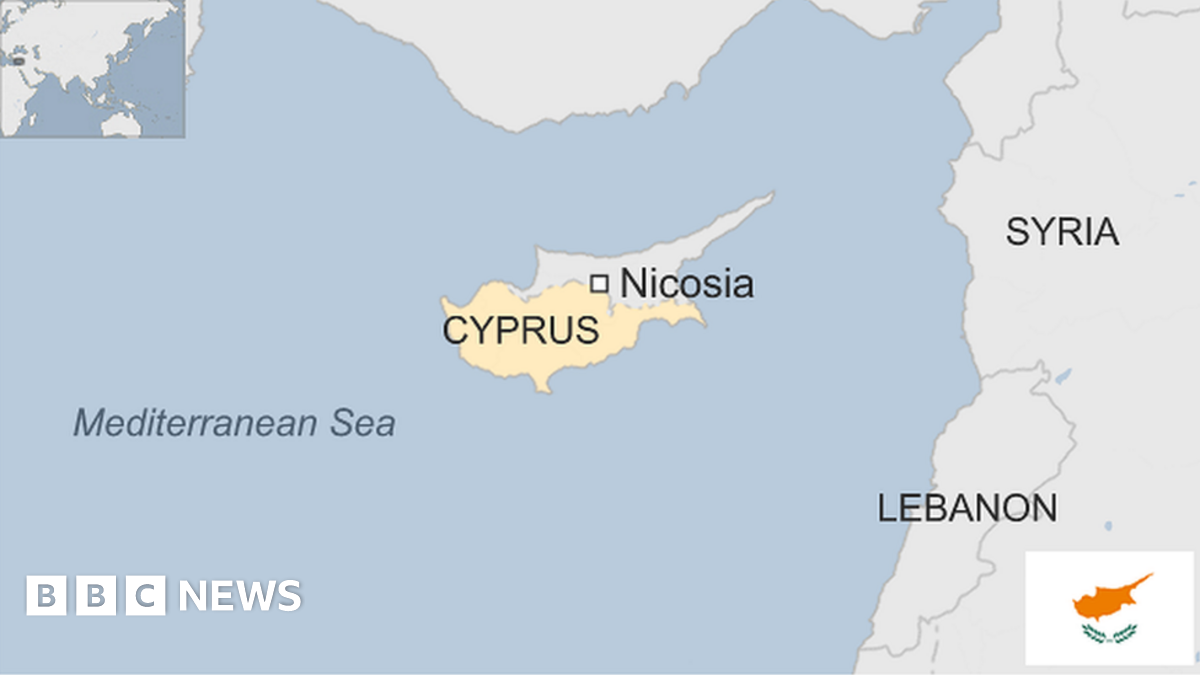
The mainstream media loves a "nothing burger." When a "suspect object" bobbing in the water between Cyprus and Lebanon leads to a deactivated alert, the standard reporting follows a tired script: local authorities were cautious, the threat was neutralized, and everyone can go back to their souvlaki. It is a narrative of competence and containment.
It is also a lie.
The "all clear" signal in the Mediterranean is the most dangerous sound in modern intelligence. When Cyprus "calls off" an alert, they aren't telling you the danger is gone. They are telling you they’ve reached the limit of what they can publicly acknowledge without triggering a regional meltdown. While the headlines focus on the object—likely a stray buoy, a piece of jettisoned cargo, or a low-rent surveillance drone—they ignore the tectonic plates grinding beneath the surface.
Cyprus isn't just an island. It’s a 3,500-square-mile aircraft carrier parked in the middle of a powder keg. If you think a floating object near Lebanon is just a maritime fluke, you aren't paying attention to the math of modern warfare.
The Buffering Fallacy
The "lazy consensus" suggests that Cyprus acts as a buffer zone between the European Union and the volatility of the Levant. This view is dangerously naive. A buffer implies a space that absorbs shock. Cyprus doesn't absorb shock; it amplifies it.
When an object is spotted drifting from the direction of Lebanon, the immediate reaction isn't just about explosive ordnance disposal. It’s about attribution. In the world of hybrid warfare, "trash" is rarely just trash. We are seeing a rise in what I call "Threshold Testing."
Imagine a scenario where a non-state actor—let’s not be shy, we’re talking about Hezbollah or its proxies—releases a series of inert, low-tech objects into the prevailing currents.
- It tests the reaction time of the Cypriot National Guard.
- It maps the sensor sensitivity of the British Overseas Territories (RAF Akrotiri and Dhekelia).
- It forces the "target" to burn resources and cycles on a non-threat.
Calling off the alert is exactly what the adversary wants. It creates a "cry wolf" baseline. When the real hardware arrives, it will look exactly like the "suspect object" that turned out to be a dead sea turtle or a plastic barrel last Tuesday.
The Akrotiri Factor
You cannot talk about Cypriot security without acknowledging the massive, British-shaped elephant in the room. RAF Akrotiri is the primary staging ground for Western operations in the Middle East. It is the hub for sorties into Syria and Iraq. It is the literal eye of the needle for intelligence gathering.
When a suspect object appears "close to Lebanon" but within the Cypriot sphere of influence, the panic isn't about a fishing boat. It’s about the vulnerability of the West’s most critical logistics node.
The mainstream press treats these alerts as isolated incidents of maritime safety. I’ve sat in rooms where "maritime safety" was the polite code for "we have no idea if that’s a remote-operated mine or a sensor package." The reason the alert was called off so quickly isn't necessarily because the object was harmless. It’s because acknowledging its true nature would require a kinetic response that Cyprus—and by extension, the EU—is desperate to avoid.
The Geography of Denial
Let’s look at the numbers. The distance between Tripoli, Lebanon, and Larnaca, Cyprus, is roughly 160 kilometers. A standard semi-submersible drone, moving at a modest 20 knots, covers that distance in about four hours.
By the time a civilian vessel spots a "suspect object" and notifies the Joint Rescue Coordination Center (JRCC) in Larnaca, the window for a proactive defense has already slammed shut. The Mediterranean is small. The response times are shorter.
The "All Clear" is a sedative for the public. It maintains the illusion of the "Blue Border." But the reality is that the Eastern Mediterranean has become a laboratory for gray-zone tactics.
- Subsea Cables: Cyprus is a massive hub for data cables connecting Europe to Asia.
- Hydrocarbons: The Aphrodite gas field is a multi-billion dollar target that neighbors like Turkey view with predatory interest.
- Migration: Human trafficking routes are frequently used to mask the movement of tactical assets.
When the news says the alert is over, they are ignoring the fact that the reconnaissance was likely already successful.
Why the Media Gets the "Why" Wrong
People also ask: "Is it safe to travel to Cyprus during Middle East tensions?"
The honest, brutal answer is: Your physical safety on a beach in Paphos is fine. Your status as a pawn in a geopolitical game is what you should worry about.
The media focuses on the object. The object is irrelevant. The reaction is the data point. If I am an intelligence officer in Beirut or Tehran, I don't care if my "object" gets picked up by a Cypriot patrol boat. In fact, I prefer it. I want to see which radar frequency they used to track it. I want to see if the British scrambled a Griffin helicopter or if the Cypriots sent a fast patrol boat. I want to see how long it took for the news to hit the wire.
The competitor’s article focuses on the "resolution" of the event. There is no resolution in the Levant. There is only a temporary pause between provocations.
The Cost of False Certainty
We have seen this play out before. In the 1980s and 90s, maritime threats were loud and obvious. Today, they are quiet and ambiguous. The "suspect object" is the new normal.
The real danger isn't the bomb that goes off; it’s the dozen "inert" objects that don't. They desensitize the population. They drain the military budget. They make the "All Clear" feel like a victory when it is actually a tactical retreat into complacency.
I’ve seen naval commanders ignore "debris" only to find out six months later that their hulls were being mapped by magnetic acoustic sensors. In the maritime world, if you can see it, it’s a distraction. The real threat is what you haven't spotted yet.
The Strategic Reality
Cyprus is currently trying to balance its role as a "pillar of stability" with its reality as a frontline state. It wants to be the EU’s safe haven, but it is geographically tethered to a region that is currently on fire.
By calling off alerts quickly, the government protects the tourism industry. A permanent "State of Alert" would kill the economy. So, they have a vested financial interest in finding "nothing." Follow the money. A "suspect object" that turns out to be a "buoy" doesn't cancel hotel bookings. A "suspect object" that turns out to be a "Hezbollah reconnaissance drone" triggers a travel advisory that costs the GDP 5%.
Which truth do you think a government is going to choose?
Stop Looking at the Water
The next time you see a headline about an alert being called off in the Mediterranean, don't breathe a sigh of relief. Ask yourself what was happening on the other side of the island while everyone was looking at the "object."
Check the flight trackers. Check the naval transponders. You’ll see the real movement happening under the cover of the "nothing burger."
The maritime alert isn't a news story. It's a smokescreen.
The Mediterranean is no longer a sea; it is a sensor web. If you are still waiting for a formal "declaration" of conflict, you have already lost the war. The conflict is happening in four-hour intervals, punctuated by "objects" that disappear as quickly as they arrive, leaving behind a trail of data for the people who actually know how to use it.
Quit looking for the explosion and start looking at the patterns. The "All Clear" is the most successful psychological operation of the decade.
Stop believing the sea is empty just because the government told you the "object" was harmless. In this region, nothing is harmless, and no alert is ever truly called off. It just goes dark.