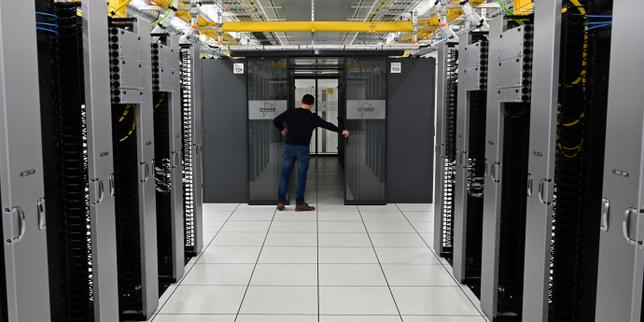
The intersection of hyper-scale cloud expansion and European Union climate mandates has reached a critical failure point. While the European Commission’s Energy Efficiency Directive (EED) was designed to enforce transparency within the digital sector, the final implementation reflects a successful lobbying effort that preserves the "black box" status of data center environmental impacts. This regulatory outcome creates a massive blind spot for grid operators and climate auditors. The primary mechanism of this failure is not a total lack of reporting, but the strategic exclusion of granular, facility-level data from public scrutiny.
The Architecture of Information Asymmetry
Information asymmetry in the data center industry functions through a tiered reporting structure. By ensuring that emissions and energy consumption data are aggregated or anonymized before public release, tech firms maintain a competitive and political advantage. This strategy rests on three distinct pillars of obfuscation:
- The Competitive Sensitivity Defense: Firms argue that revealing power usage effectiveness (PUE) or water usage effectiveness (WUE) at a per-facility level provides competitors with insights into proprietary hardware density and cooling efficiency.
- The Aggregation Shield: By reporting emissions at a regional or "portfolio" level, companies can mask high-intensity, inefficient legacy sites with new, high-performance facilities. This prevents localized pressure from municipal governments or grid authorities.
- The Third-Party Buffer: Utilizing colocation providers allows major tech firms to externalize their reporting requirements. If the provider reports the aggregate energy use of a massive facility, the individual "tenants"—often the largest tech companies in the world—can avoid direct accountability for their specific server rack footprints.
The Cost Function of Regulatory Dilution
The success of US tech firms in lobbying the EU results in a distorted market for "green" computing. When emissions remain secret, the true cost of digital infrastructure is externalized onto the public power grid and the local environment. We can define this through a specific cost function:
$$C_{ext} = (E_{real} - E_{reported}) \times P_{carbon} + G_{strain}$$
Where:
- $C_{ext}$ represents the externalized cost to the region.
- $E_{real}$ is the actual operational energy consumption.
- $E_{reported}$ is the figure sanitized for public consumption.
- $P_{carbon}$ is the carbon price or social cost of emissions.
- $G_{strain}$ is the uncompensated load on local energy infrastructure.
The delta between real and reported energy use allows firms to optimize their internal margins at the expense of regional energy security. In Dublin, Amsterdam, and Frankfurt—key data center hubs—the energy demand from these facilities has reached a threshold where it competes directly with residential and essential service requirements. By keeping emissions and energy data secret, these firms prevent a data-driven debate about resource allocation.
The Power Usage Effectiveness Paradox
Industry standards like Power Usage Effectiveness (PUE) are often cited as proof of efficiency. However, PUE is a flawed metric for environmental impact because it measures the ratio of total facility power to IT equipment power.
- PUE = Total Facility Power / IT Equipment Power
A facility can have a "perfect" PUE while still utilizing carbon-intensive energy sources. Furthermore, the EED lobbying efforts have successfully decoupled PUE from Scope 3 emissions reporting—the emissions generated by the manufacturing and disposal of the hardware itself. For a 100MW data center, Scope 3 emissions can account for up to 40% of the total lifecycle carbon footprint. By limiting public reporting to operational efficiency, the industry effectively ignores nearly half of its environmental liability.
Mechanism of Lobbying Success: The Technical Committee Pivot
The dilution of EU transparency rules did not occur through grand political gestures but through the technical committees responsible for defining "reporting standards." US-based tech giants utilized industry associations to redefine the granularity of mandatory public disclosures.
The strategic shift involved moving the reporting requirement from "publicly accessible facility-level dashboards" to "confidential submissions to national authorities." This change ensures that while a government regulator might see the data, the public, environmental NGOs, and academic researchers cannot. This creates a bottleneck where the only entities with the power to analyze the data are often understaffed government agencies that lack the technical capacity to challenge the submissions of a trillion-dollar corporation.
Grid Instability and the Transparency Gap
The lack of facility-level data creates a structural risk for European energy grids. Grid operators require precise, real-time data to manage the volatility introduced by renewable energy sources like wind and solar. Data centers, which operate as massive, constant base-load consumers, can destabilize local grids if their consumption patterns are not transparent.
The current reporting framework allows data centers to claim "100% renewable" status through Power Purchase Agreements (PPAs) or Renewable Energy Certificates (RECs). However, these are often financial instruments rather than physical reality. A data center may consume coal-fired power at 2:00 AM when the wind isn't blowing, but "offset" it by buying wind energy credits from a different region. Without facility-level, hourly carbon intensity reporting, the claim of carbon neutrality is a mathematical abstraction rather than a physical fact.
The Hierarchy of Data center Secrecy
The strategy of secrecy is applied unevenly across the infrastructure stack.
- The Physical Layer: Location and physical security are tightly guarded, often cited as national security or critical infrastructure concerns.
- The Utility Layer: Water consumption is increasingly the most sensitive data point, as data centers compete with local agriculture and residential needs during heatwaves.
- The Computational Layer: Hardware specifications and workload types are kept secret to prevent "reverse engineering" of the company’s software efficiency.
Each layer of secrecy reinforces the others. If the public doesn't know the hardware density (Computational Layer), they cannot accurately estimate the cooling needs (Utility Layer), which in turn makes it impossible to challenge the facility's reported efficiency (Physical Layer).
Structural Limitations of Current EU Oversight
The European Commission’s reliance on self-reporting is the fundamental flaw in the EED. In any system where the regulated party controls the measurement apparatus, the data will inevitably skew toward the most favorable interpretation.
- Verification Gap: There is currently no independent, third-party physical audit requirement for data center energy meters.
- Definition Arbitrage: Firms can define "useful heat" in varied ways to meet heat-reuse mandates, often claiming heat is being "reused" even when the infrastructure to transport that heat to local homes does not yet exist.
- Threshold Manipulation: Reporting requirements often kick in at specific megawatt (MW) thresholds. Firms can circumvent these by building multiple smaller facilities in close proximity (campus style) that are legally distinct but operationally a single massive entity.
The Economic Moat of Opacity
For the "Big Three" cloud providers (AWS, Google, Azure), opacity is an economic moat. If these firms were forced to disclose the exact energy cost per compute-hour for their AI training models, it would likely reveal that the current pricing of AI services is unsustainably low.
High-density AI workloads require specialized cooling and significantly more power than standard cloud storage. By masking these costs in an aggregated "global sustainability report," these firms can subsidize the energy-intensive AI arms race. Transparency would force a repricing of compute that could favor more efficient, smaller-scale competitors or specialized hardware providers.
The Inevitable Collision with Corporate Sustainability Reporting Directive (CSRD)
While the EED has been successfully lobbied, the looming Corporate Sustainability Reporting Directive (CSRD) may act as a secondary pincer movement. CSRD requires more rigorous auditing of environmental claims. However, tech firms are already positioning to use the same "commercial sensitivity" arguments to limit the depth of CSRD disclosures.
The battle for data center transparency is a proxy war for the control of the digital economy. If energy use is the primary constraint on AI growth, then those who control the narrative around energy use control the pace of the industry.
Strategic Realignment for Stakeholders
Organizations and municipalities currently negotiating with data center developers must move beyond the "jobs and investment" narrative and focus on technical integration.
- Enforce Hardware-Level Metering: Municipalities should require independent, real-time power and water metering as a condition for building permits, bypassing the aggregated national reporting frameworks.
- Mandate Locational Marginal Carbon Intensity: Move away from annual PPA offsets and toward hourly reporting of the carbon intensity of the specific grid node where the facility is located.
- Define "Heat Reuse" by Delivered Joules: Refuse to accept "heat-ready" status as a compliance metric. Compliance should only be granted based on the actual volume of thermal energy delivered to a municipal heat network.
The current regulatory landscape is a victory for the lobbying apparatus of the tech sector, but it is a pyrrhic one. As energy grids reach their breaking points, the political backlash against "secret" energy consumers will likely result in much more draconian, uncoordinated local restrictions. The industry’s refusal to accept transparent facility-level reporting today ensures a more volatile and restricted operational environment tomorrow.
Investors must now discount "carbon neutral" claims that lack granular, hourly, facility-level verification. The transition from financial-based offsetting to physical-based accounting is the next major shift in the sector. Firms that have built their growth on the assumption of permanent energy opacity are now carrying an unpriced regulatory risk that will materialize as European energy markets tighten.
The strategic play for European regulators is to link data center operating licenses directly to grid-balancing performance. If a facility cannot provide transparent, real-time data to the grid operator, it should be the first to face curtailment during peak demand events. This shifts the burden of transparency back onto the firm, making data sharing a prerequisite for operational stability.