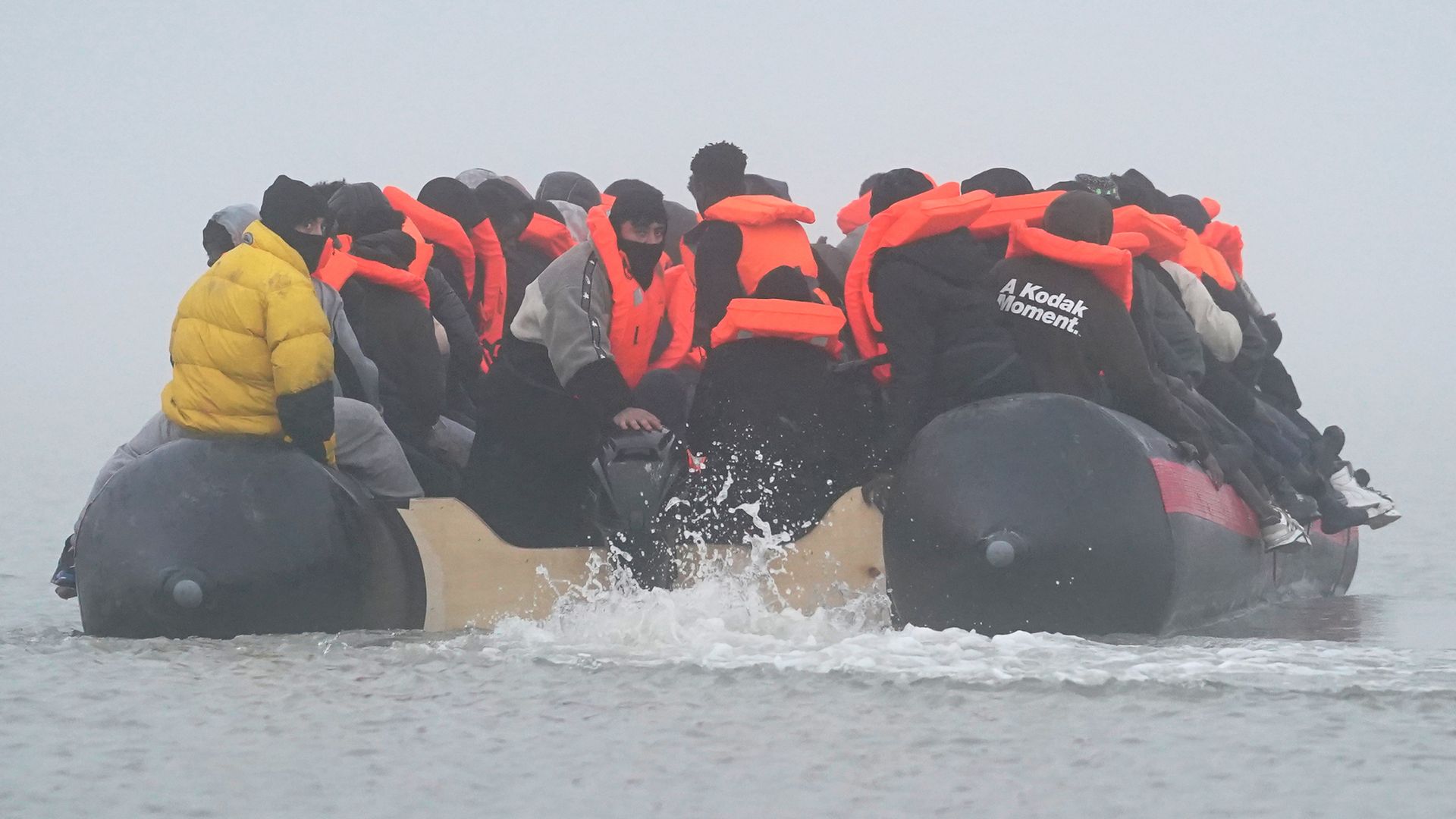
Small boats are still sinking. People are still dying. This morning, the French coast became a graveyard again as four migrants lost their lives trying to reach British shores. It's a familiar, gut-wrenching headline that's become background noise for too many people, but for the families of those four individuals, the world just ended.
We need to stop pretending this is a mystery. We know why this happens. The English Channel is one of the busiest shipping lanes on the planet, and people are attempting to cross it in "boats" that are essentially inflatable tubs held together by hope and duct tape. When a boat like that hits the freezing, choppy waters off the coast of Wimereux, it doesn't take much for things to turn fatal. This latest tragedy occurred in the early hours of the morning, a time when visibility is low and the cold is sharp enough to stop your heart in minutes.
The reality of these crossings is grimmer than any political debate suggests. You have overcrowded vessels, often carrying double or triple their intended capacity. You have people who can't swim. You have smugglers who get paid regardless of whether their "passengers" make it to Dover or end up at the bottom of the sea.
Why the French Coast Remains a Danger Zone
The stretch of water between Calais and Dover is only about 21 miles at its narrowest point. That sounds manageable. It isn't. The currents are brutal. The wind changes in a heartbeat. Large cargo ships create wakes that can flip a small dinghy without the crew even noticing they've hit anything.
In this specific incident, the boat ran into trouble almost immediately after launching from the French coast. Reports from French maritime authorities, including the Prefect of the Channel and the North Sea, confirm that the victims drowned when their boat capsized or individuals fell overboard during a panic. Emergency services were scrambled, including helicopters and navy vessels, but by the time they arrived, it was too late for four of them.
The French navy and local rescue teams are out there every single night. They're pulling people out of the water in the pitch black. But they're fighting a losing battle against a business model that treats human beings like disposable cargo. The smugglers don't care about life vests that actually float or engines that won't stall. They care about the cash.
The Massive Failure of Current Migration Policies
Politicians on both sides of the Channel love to talk. They talk about "breaking the model" of the smugglers. They talk about "stopping the boats." They spend millions on drones, thermal cameras, and extra police patrols on the beaches of northern France. Yet, the boats keep launching.
Why? Because the demand doesn't vanish just because you put up a fence. People fleeing conflict in the Middle East, instability in Africa, or economic collapse in parts of Asia see the UK as their best chance for a future. When you shut down legal routes, you create a monopoly for the criminal gangs.
I've looked at the data from the UK Home Office and organizations like the Refugee Council. The numbers are staggering. Thousands of people make this crossing every year. Most make it. Some don't. The ones who don't are often forgotten within a news cycle.
The current strategy is reactive. It focuses on catching people once they're already in the water or once they land on a beach in Kent. By then, the danger has already been faced. We're treating the symptom, not the cause. The cause is a lack of safe, managed ways for people to claim asylum without having to risk their lives in a rubber ring.
What it Feels Like in the Water
It's hard to describe the sheer terror of being in the Channel at 3 AM. The water temperature is rarely above 15°C (59°F), even in summer. In winter or early spring, it's much colder. Cold shock sets in instantly. Your lungs gasp for air, and if you're underwater, you inhale the sea. Your muscles seize up. You can't think. You can't swim.
Most of these boats are filled with people who have never seen the ocean before. They're terrified. When the boat starts taking on water—and it almost always does—panic spreads like wildfire. People shift weight. The boat tips. Suddenly, everyone is in the dark, freezing water.
Rescue teams have reported finding people clinging to the side of a deflating boat for hours. Sometimes they find children who have been separated from their parents in the chaos. It’s a level of human suffering that shouldn't be happening in 2026.
The Smuggler Business Model
Let's talk about the people getting rich off this. Smuggling rings are sophisticated. They use social media to advertise "safe" crossings. They charge thousands of dollars per person. They've shifted their tactics, moving further down the coast to avoid the heavy police presence near Calais and Dunkirk.
They launch from places like Wimereux or even further south. This means the journeys are longer and more dangerous. But the smugglers don't care. If a boat sinks, they’ve already been paid. They just buy another cheap inflatable and find another group of desperate people.
We need to be more aggressive about targeting the supply chain of these boats. Most of them are manufactured in China or Turkey and shipped through Europe. Intercepting the hardware is just as important as patrolling the beaches, yet the flow of rubber boats into Northern France seems almost impossible to stop.
The Role of the UK and France
There's a lot of finger-pointing. The UK blames France for not doing enough to stop the launches. France blames the UK for having a "magnet" economy and labor market that attracts undocumented workers. Honestly, both are right, and both are wrong.
The UK’s "Stop the Boats" campaign has become a central political pillar, but it relies heavily on French cooperation. France, meanwhile, is dealing with thousands of people living in squalid camps along its coast. They want these people gone, and if they head toward the UK, it’s one less problem for the French authorities to manage on their soil.
This tension creates a gap that smugglers exploit. Until there is a genuine, unified approach that includes both enforcement and humanitarian processing, the death toll will keep rising.
Moving Toward a Real Solution
If we want to stop these deaths, we have to change the math. That means making the crossing unnecessary.
First, we need processing centers in Europe. If someone has a legitimate asylum claim, they should be able to file it without crossing a sea in a dinghy. This doesn't mean letting everyone in, but it means managing the flow.
Second, the "returns" agreements need to work. If someone doesn't qualify for asylum, there needs to be a clear, swift process for returning them. Currently, the system is so backlogged and complex that it serves as an incentive for people to try their luck and disappear into the "gray economy."
Third, we have to go after the money. Not just the low-level guys on the beach pushing the boats into the surf, but the organizers living in luxury in other countries. Follow the bank transfers. Shut down the accounts.
The death of four people today is a tragedy, but it's also a choice. It's a choice made by smugglers, and it's a choice made by governments that prefer soundbites over structural change. We can't keep acting surprised when the sea does what it always does to fragile boats.
If you want to understand the scale of this, look at the maritime tracking maps of the Channel. Look at the sheer volume of traffic. Then imagine a tiny black dot in the middle of it all, filled with fifty people who just want a chance at life. That's the reality. It's time to stop the talking and start the solving. Pay attention to the NGOs working on the ground like Utopia 56 or the RNLI. Support policies that prioritize human life over political theater. The next boat is already being inflated. The time to act was yesterday.