The media wants to hand you a "simple guide" to the new Welsh constituencies. They’ll show you shiny maps, list candidate names, and tell you it’s all about "balancing the numbers." They are lying by omission. What they call a rebalancing is actually the most aggressive dilution of Welsh political leverage in a century.
The shift from 40 to 32 seats isn’t a housekeeping exercise. It is a calculated kneecapping of local accountability dressed up in the neutral language of "electoral quotas." If you think having eight fewer MPs at Westminster makes your voice "equal" to a voter in the Home Counties, you’ve been sold a demographic lemon.
The Quota Fallacy
The Boundary Commission operates on a sterile mathematical principle: every constituency (mostly) must have between 69,724 and 77,062 voters. This sounds fair in a spreadsheet. In reality, it ignores geography, community identity, and the basic physics of representation.
Take the new Montgomeryshire and Glyndŵr. To satisfy the numbers, they’ve stitched together a monstrosity that spans from the English border deep into the heart of mid-Wales. I’ve seen politicians struggle to cover a compact urban ward; now, we expect them to represent disparate rural communities with zero shared infrastructure just because the "math works."
When you expand the physical size of a seat to hit a population target, you don't "balance" representation. You kill it. You create a scenario where an MP is a distant figure in a car, not a local advocate. This is the Administrative Erasure of the Welsh valley and the rural village.
The Senedd "Fix" is a Trap
The counter-argument usually follows this line: "Don't worry, we're expanding the Senedd to 96 members to make up for the Westminster loss."
This is a classic bait-and-switch. While the Senedd grows, the voting system is being rigged for party machines. The move to a closed proportional list system for the 2026 Senedd elections is the ultimate middle finger to the voter.
- No more voting for people: You vote for a party.
- Zero accountability: The party decides who is at the top of the list.
- The "Zombie MP" Effect: Even if a candidate is loathed by their local community, as long as the party bosses like them, they get a seat.
I’ve watched political parties blow millions on branding while their local ground game rots. This new system rewards the brand, not the service. It’s a business model for careerists, not a democratic reform.
The Candidate Carousel
Look at the candidate lists being circulated. You’ll see familiar names "parachuted" into these new, Frankenstein constituencies. Because the boundaries have shifted so violently, parties are treating Wales like a game of Risk.
Candidates with zero connection to the Bangor Aberconwy region are suddenly "passionate" about local issues there because the data says it’s a safe or winnable bet. This isn't representation; it's carpetbagging facilitated by cartography.
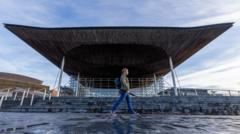
[Image showing the change from 40 to 32 constituencies in Wales]
The Economic Cost of Less Noise
Politics is a market. In the Westminster market, Wales just lost 20% of its "sales force." When it comes to Treasury negotiations or infrastructure bids, 32 voices will always be drowned out by the 543 from England.
The logic of "one vote, one value" is a myth when applied to a union of four distinct nations. By forcing Wales into the same population constraints as the South East of England, you effectively ignore the higher cost of service delivery in mountainous, sparsely populated regions. An MP in Caerfyrddin has a fundamentally harder job than an MP in a London borough. Giving them the same "quota" is a move designed to fail the rural economy.
The Illusion of Choice
Every "simple guide" focuses on who is running. They miss the "People Also Ask" reality: "Does my vote even matter now?"
In many of these new seats, the answer is a brutal "less than before." By merging safe seats and diluting marginals, the Boundary Commission has inadvertently created larger, more stagnant blocks of political territory.
If you want to actually influence the future of Wales, stop looking at the candidates and start looking at the maps. The lines have been drawn to prioritize administrative ease over democratic vitality. The status quo is a slow fade into irrelevance.
The candidates aren't the story. The disappearance of the seats is. You aren't being "rebalanced." You're being budgeted.