The air at 3,000 meters above sea level is thin, crisp, and smells of woodsmoke and damp earth. In the Cundinamarca department of Colombia, the Andes do not just roll; they loom. Here, the town of Sutatausa clings to the mountainside, a place where the colonial church steeples look like needles stitching the clouds to the jagged rock. But the real life of this place—the pulse that keeps the lights on and the kitchens warm—happens in the dark. It happens hundreds of meters beneath the hoarfrost.
When the earth exhaled on a Tuesday night, the sound wasn't a roar. To those on the surface, it was a dull thud, a vibration felt in the soles of the feet rather than the drums of the ears. It was the sound of accumulated methane finding a spark. It was the sound of nine lives being extinguished in a pocket of prehistoric shadows.
Mining isn't a career choice in these highlands. It is an inheritance. You don't "enter the industry." You follow a father, an uncle, or an older brother into a hole in the ground because the soil above is too steep for cattle and too rocky for much else. The coal is there, rich and black, a concentrated ghost of ancient forests waiting to be fed into the furnaces of the world.
The Anatomy of a Breath
To understand what happened in the tunnels of Sutatausa, you have to understand the delicate chemistry of survival. A coal mine is a living, breathing organism, but its lungs are artificial. Fans hum constantly, pushing fresh Andean air down narrow shafts to displace the "firedamp"—the miners' term for the methane gas that seeps silently from the coal seams.
Methane is a patient killer. It has no scent. It has no color. It waits until it reaches a concentration of five to fifteen percent in the air. At that point, it doesn't just burn; it explodes with a velocity that turns dust into shrapnel and narrow tunnels into the barrels of a gun.
Consider a hypothetical worker named Mateo. Mateo is thirty-two. He has a wife who worries and a daughter who is learning to read. When Mateo steps into the skip to descend, he isn't thinking about gas percentages. He is thinking about the dampness in his boots and the weight of the pick. He trusts the sensors. He trusts the ventilation. He trusts the mountain to hold its breath for one more shift.
But on that Tuesday, the mountain exhaled.
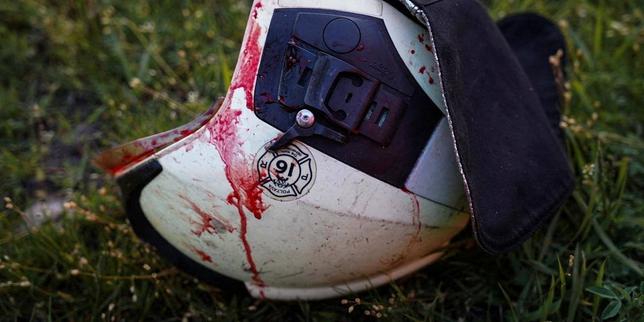
The explosion ripped through several interconnected galleries. In the immediate aftermath, the rescue teams—the socorristas—descended. These are men who know that every minute spent underground is a gamble with their own oxygen. They found the first six bodies relatively quickly. The last three took longer. The search was a grueling crawl through rubble and toxic fumes, a desperate attempt to find a miracle in a tomb.
The Geography of Risk
Colombia is the largest coal producer in Latin America. It is a titan of the global energy market, yet its mining landscape is a study in contradictions. On one hand, you have the massive, open-pit operations of the north, like El Cerrejón, where giant trucks move earth in a choreographed ballet of industrial might. On the other, you have the "traditional" or "artisanal" mines of the interior.
These are the mines of Cundinamarca and Boyacá. They are labyrinths. They are narrow, timber-propped veins that require sweat and manual labor. While the government in Bogotá frequently announces new safety initiatives and stricter licensing, the reality on the mountain is often different. Economic pressure is a relentless taskmaster. When the price of coal rises, the incentive to dig deeper and faster often outpaces the slow, bureaucratic march of safety inspections.
The statistics are grim markers of this reality. In the last decade, hundreds of Colombian miners have died in similar incidents. Each time, there is a flurry of news reports, a period of national mourning, and a promise that things will change. Then, the news cycle moves to the capital. The cameras leave. The mountain remains.
The families in Sutatausa don't see statistics. They see empty chairs at the dinner table. They see the "No Entry" tape fluttering in the wind outside a mine mouth that was, only yesterday, a gateway to a paycheck. The grief here is quiet. It is a communal weight. In a small town, nine deaths isn't a tragedy—it's a generational scar.
The Invisible Stakes
We live in a world that demands heat and steel. We sit in air-conditioned rooms and scroll through glass-and-metal devices, rarely considering the origin of the carbon that fueled the factory or the electricity that charged the battery. There is a profound disconnect between the high-tech elegance of our lives and the subterranean brutality required to sustain them.
This isn't just about "bad luck" or "poor luck." It is about the cost of energy. When we talk about the "transition" to green power, we often frame it in terms of carbon footprints and global temperature targets. We forget that for the people of Sutatausa, the transition is a matter of life and death. If the mines close, they starve. If the mines stay open under current conditions, they die in the dark.
The struggle is not just against the gas or the rock. It is against a global economic system that demands the lowest possible price for raw materials, often at the expense of the people who extract them. The safety equipment, the advanced sensors, the sophisticated ventilation systems—these things cost money. In the competitive world of coal exports, those costs are often viewed as obstacles to profit.
The Silence After the Thud
When the final body was recovered and the names were read aloud, a heavy silence settled over the valley. It is the kind of silence that follows a funeral, but it is also the silence of a town that knows the skip will eventually start moving again. The debt must be paid. The children must be fed. The coal is still there, waiting.
The rescue workers emerged from the earth covered in a fine, grey soot. Their eyes were bloodshot, reflecting a mixture of exhaustion and a horror that doesn't wash off with soap. They have seen what happens when the mountain decides to reclaim its own. They know that the "human element" isn't a phrase in a report—it's the warmth of a hand that is no longer there to be held.
We tend to look at these events as isolated accidents, anomalies in an otherwise modern world. But they are the predictable outcomes of a specific set of choices. Every time we choose to ignore the safety standards of the developing world in favor of cheaper commodities, we are, in a sense, lighting the fuse.
The nine men of Sutatausa didn't go to work to become martyrs for the energy industry. They went to work because they were men of the mountain. They were experts in a craft that the rest of the world has forgotten even exists, a craft that involves dancing with shadows and bargaining with the weight of the world.
As the sun sets over Cundinamarca, the colonial church bells ring. They are thin sounds against the vastness of the Andes. Below, in the tunnels, the methane continues to seep, invisible and patient, waiting for the next time the air fails and the spark finds a home. The mountain doesn't care about the headlines. It doesn't care about the coal prices. It only knows the slow, cold rhythm of the earth, and the sound of men walking into the dark, hoping to return to the light.
The real tragedy isn't just that they died. It is that we will likely forget why they had to be there in the first place, until the next thud shakes the ground and the silence begins all over again.