The Pacific doesn’t roar before it hits. It hisses. It’s a sound like static on a radio, the white noise of a billion tons of saltwater sliding over a sandbar. For those who live along the jagged, beautiful coastline of New South Wales, that sound is as familiar as a heartbeat. It’s the soundtrack to morning coffees and evening walks. But on a Tuesday morning near the mouth of the Richmond River, that hiss turned into a scream.
Two men woke up that day. They didn't wake up as heroes or as martyrs. They woke up as neighbors. They were members of Marine Rescue NSW, a group of volunteers who operate on a simple, terrifying logic: when everyone else is running away from the surf, you head straight into it.
The call came in early. A small boat, a six-meter vessel carrying three people, had been caught in the treacherous crossing of the Ballina bar. The bar is a place where the river meets the sea in a chaotic marriage of currents. It’s a graveyard for fiberglass and steel. The boat had capsized. Three lives were bobbing in the wash, clinging to the wreckage of a morning fishing trip gone wrong.
Two volunteers pushed off from the shore. They weren't paid. They weren't conscripted. They were simply there.
The Geography of Bravery
To understand what happened next, you have to understand the physics of a breaking wave. When a swell hits shallow water, the bottom of the wave slows down while the top keeps its momentum. It leans forward, becoming top-heavy, until it collapses under its own weight. In a river bar, this process is amplified by the outgoing tide pushing against the incoming swell. It creates a vertical wall of water.
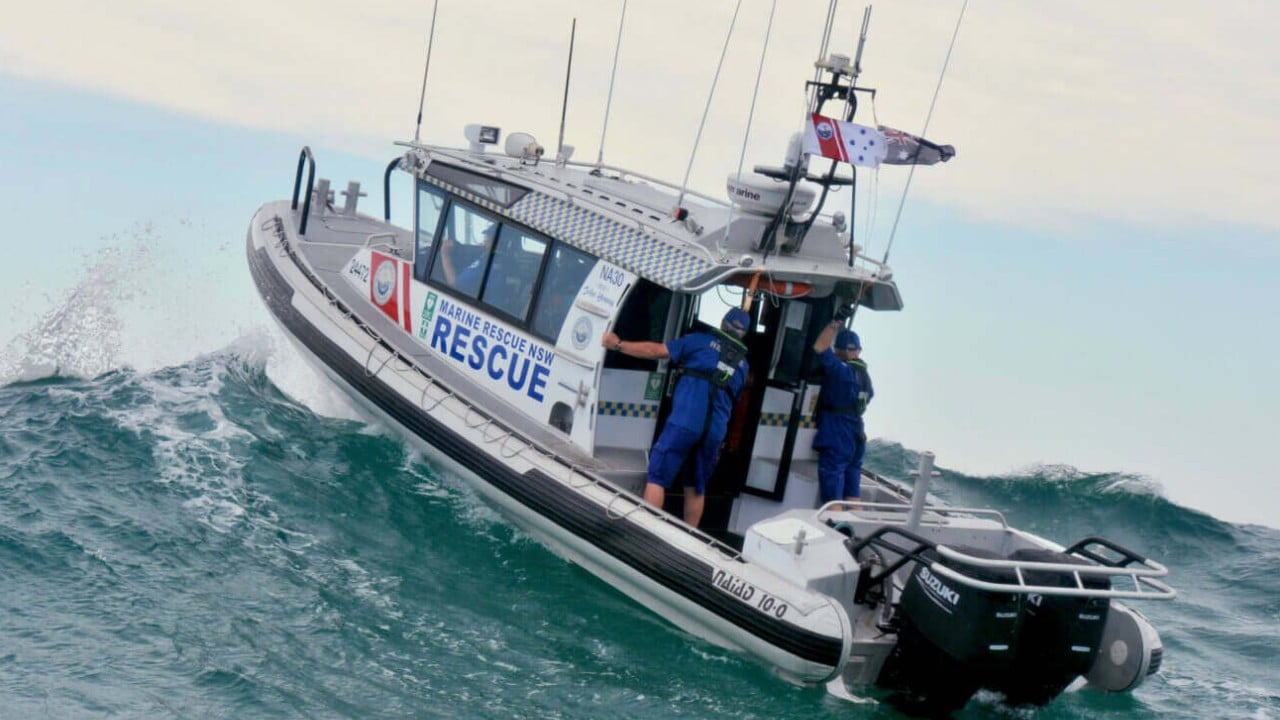
The rescue vessel was a specialized craft, designed to handle the rough stuff. But nature doesn't care about design specs. As the two volunteers neared the capsized boat, a rogue set of waves—larger and more frequent than the ones before—began to hammer the area.
Witnesses on the shore described the scene as a blur of white foam and grey sky. The rescue boat, caught in the impact zone, was flipped. In an instant, the rescuers became the victims. The ocean, indifferent to intent, swallowed them both.
Think about the silence of a town after a tragedy like this. Ballina isn't a metropolis; it’s a community where everyone is a degree or two of separation away from a tragedy. The volunteers weren't strangers from a distant government agency. They were the men you saw at the hardware store. They were the ones who coached junior footy or shared a beer at the RSL.
The three people from the original boat survived. They were plucked from the water, cold and traumatized, but alive. They carry the weight of a debt that can never be repaid. It is a heavy thing to know that your life was bought with the lives of others.
The Invisible Safety Net
We live in a world that increasingly relies on the "professionalization" of everything. We expect a service for every crisis. We pay our taxes and we assume that when the light turns red, someone with a badge and a paycheck will appear.
But the maritime safety of the Australian coast is held together by a different kind of thread. It’s a patchwork quilt of volunteers. These are people who spend their weekends training, maintaining equipment, and sitting in radio rooms, waiting for a crackle of distress.
There is a specific kind of courage required for this. It isn't the adrenaline-fueled bravery of a soldier in the heat of battle. It’s the quiet, premeditated bravery of a person who puts on a life jacket knowing exactly how dangerous the next hour will be. They know the statistics. They know the water.
Consider the mathematics of risk. Most of us spend our lives trying to minimize it. We buy insurance. We wear seatbelts. We avoid the dark alleyways. But a volunteer rescuer moves toward the risk. They see the "Danger" sign and they treat it as a destination.
The loss of these two men isn't just a news cycle event. It is a structural failure in our sense of security. It reminds us that our safety is often a gift from people who owe us nothing.
The Cost of the Coast
The Richmond River bar has a reputation. Old-timers talk about it with a mix of respect and fear. They speak of "the hole" and "the surge" as if they are living entities. On that Tuesday, the ocean reminded everyone why that respect is mandatory.
The investigation into the incident will look at the mechanics. They will look at the engine logs, the weather reports, and the structural integrity of the hull. They will produce a report that explains the how.
But the why is much harder to pin down. Why do we keep going out? Why do we think we can master a force that has been carving the continents for eons?
It’s a human trait, this desire to push the boundaries of the land. We want the fish that live in the deep water. We want the thrill of the crossing. We want the freedom of the horizon. And because we want those things, we need people like the two volunteers from Ballina to act as the sentinels of our ambition.
They were found in the surf. Emergency services—paramedics, police, and fellow volunteers—tried to bring them back. They spent hours on the beach, their shadows long in the afternoon sun, performing the rhythmic, desperate dance of CPR.
They failed.
The ocean kept what it took.
Beyond the Headline
When we read a headline that says "2 Die in Rescue," our brains process it as a statistic. We move on to the next tab, the next notification. We might feel a momentary pang of "that’s a shame," but the reality is abstract.
To make it real, you have to look at the empty chairs. You have to look at the gear still hanging in the lockers at the Marine Rescue station. You have to think about the families who watched those men walk out the door that morning, perhaps with a "see you for dinner," only to have the day end in a knock at the door that changes everything forever.
This is the human element that standard news reporting misses. It misses the texture of the grief. It misses the way a small coastal town feels smaller when its giants fall.
The sea doesn't offer apologies. It doesn't give back what it takes. It just continues to hit the shore, wave after wave, with that same hissing sound.
The two volunteers didn't save the world. They didn't stop a war or find a cure for a disease. They just tried to help three people they didn't know. They stood in the gap between a family and a funeral, and in doing so, they fell.
We owe them more than a moment of silence. We owe them an acknowledgment of the invisible stakes they navigated every time they stepped onto a boat. We owe them the realization that our communities are not built on laws or economies, but on the willingness of ordinary people to do extraordinary things for no reason other than the fact that it is the right thing to do.
The water at Ballina is calm today. The sun glints off the surface, making the Richmond River look like a sheet of hammered silver. It looks inviting. It looks safe. But underneath that surface, the currents are still moving, the tides are still pulling, and the debt we owe to those who watch the water continues to grow, silent and deep.