The global energy grid is backsliding. Despite a decade of promises to consign coal to history, the world’s most carbon-intensive fuel is experiencing a massive, desperate resurgence. This isn't a minor fluctuation or a statistical quirk. It is a full-scale scramble for survival triggered by the collapse of reliable natural gas flows and a systemic failure to build a resilient green alternative before pulling the plug on the old guard.
When gas pipelines from Russia were throttled or severed, the romanticized transition to renewables met a brutal reality. Wind and solar weren't ready to carry the base load. Nuclear plants in Europe were being decommissioned or were undergoing long-overdue maintenance. Faced with the prospect of darkened cities and shuttered factories, governments from Berlin to Beijing did the only thing they could to keep the lights on. They turned back to coal. Meanwhile, you can find related events here: The Pressure Cooker and the Empty Plate.
This pivot has sent global coal shipments to record highs. We are seeing a reshuffling of the global trade map where coal, once considered a "stranded asset," is now the most sought-after commodity on the high seas.
The Supply Chain Panic
The current surge in coal shipments is driven by a simple, terrifying math. Natural gas prices spiked so high that coal, even with its associated carbon taxes and logistical nightmares, became the cheaper, more reliable option for power generation. For many emerging economies, it wasn't even a choice between green and black. It was a choice between black coal and blackouts. To see the complete picture, check out the excellent analysis by Bloomberg.
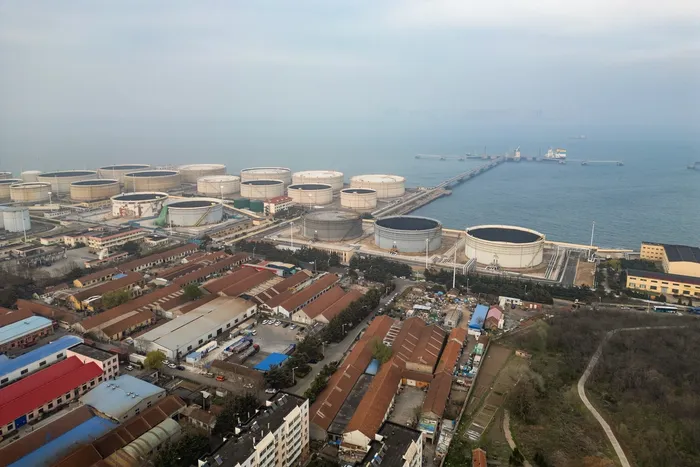
Logistics hubs that were supposed to be winding down coal operations are now operating at maximum capacity. We see massive congestion at major export terminals in Indonesia, Australia, and South Africa. This isn't just about digging more rocks out of the ground. It’s about the massive maritime infrastructure required to move billions of tons of dry bulk across oceans that weren't prepared for a coal comeback.
Ship owners are reaping the rewards. Bulker rates for Capesize and Panamax vessels—the giants of the sea—have seen intense volatility as they are diverted from traditional routes to feed the sudden hunger of European and Asian furnaces. Europe, in particular, has been forced into an awkward about-face. Countries that spent years lecturing the world on decarbonization are now importing record amounts of thermal coal from as far away as Colombia and Kazakhstan.
The Death of the Bridge Fuel Narrative
For years, the energy industry pushed natural gas as the "bridge fuel." The idea was simple. We would use gas because it burns cleaner than coal, using it to transition away from the heavy stuff while we scaled up renewables. That bridge collapsed the moment geopolitical stability vanished.
Reliability is the only currency that matters in a crisis. Natural gas, while efficient, proved to be a geopolitical liability. It requires fixed infrastructure—pipelines that can be turned off with a single valve in a hostile capital. Coal is different. It is a "fungible" commodity. You can put it on a boat, send it anywhere, and pile it up in a yard for months. It doesn't leak, it doesn't explode in a pipeline, and it doesn't require a specialized high-tech terminal to store.
This physical tangibility is why coal is winning the immediate war for energy security. Power plant managers are looking at their stockpiles and realizing that a three-month supply of coal sitting on the ground is worth more than a promise of gas delivery next week. The "bridge" didn't lead to a green future. It led back to the 19th century.
The High Cost of the Quick Fix
There is a heavy price to pay for this regression, and it isn't just environmental. The sudden shift back to coal has disrupted global shipping lanes and driven up the cost of other dry bulk commodities. When you monopolize shipping capacity for coal, the price of moving grain, iron ore, and fertilizer also climbs. We are seeing a localized inflationary spiral fueled by the desperate need for thermal energy.
Furthermore, the investment signals are now hopelessly confused. Capital that should be flowing into long-term renewable infrastructure is being diverted to restart mothballed coal plants and extend the life of aging mines. This creates a "lock-in" effect. Once a utility spends hundreds of millions of dollars to bring a coal unit back online, they need to run it for years to recoup the cost. We aren't just burning more coal today. We are ensuring we will be burning it for the next decade.
The Asian Factor
While Europe’s return to coal makes the headlines because of the irony, the real volume is in Asia. China and India are not just "seeking alternatives." They are doubling down. China’s domestic coal production has reached staggering levels, but they still need high-quality seaborne imports to blend for efficiency and to satisfy coastal power plants.
India’s industrial growth is hungry. They have made it clear that their priority is poverty alleviation and industrial expansion, both of which require cheap, scalable power. If the global market can provide coal, they will buy it. The surge in shipments to the Indo-Pacific region is the true engine of the coal industry's revival. For these nations, coal is not a backup plan. It is the foundation.
Mining the Policy Gaps
The resurgence of coal exposes a massive gap in how we plan for energy transitions. We focused on the "exit" from fossil fuels without adequately securing the "entrance" for renewables. We incentivized the shutdown of reliable base-load power before the storage technology for renewables—batteries and pumped hydro—was ready to handle the load.
Investors are now wary. They see a world where energy policy is dictated by the crisis of the month rather than a coherent thirty-year strategy. This uncertainty makes the cost of capital for green projects higher, while the immediate cash flow from coal assets becomes irresistible for those with a low appetite for risk. It is a perverse incentive structure that rewards the old and punishes the new.
The shipping data doesn't lie. Every vessel loaded with coal at Newcastle or Richards Bay is a testament to a failed transition strategy. These ships are carrying the physical evidence of a world that miscalculated its own resilience.
The Efficiency Trap
Not all coal is equal. As countries scramble for supply, they are often forced to take lower-grade lignite or "brown coal" when high-energy bituminous coal isn't available. This is the worst-case scenario for the atmosphere. Lower-grade coal requires burning significantly more volume to produce the same amount of electricity, leading to even higher emissions per megawatt-hour.
The logistics of moving this volume are also more intense. More ships, more train car loads, and more handling are required for an inferior product. We are working harder and polluting more just to stand still. This is the "efficiency trap" of the current energy crisis. We are so desperate for energy that we have abandoned the pursuit of efficient energy.
Infrastructure Resilience
If there is a lesson to be learned from the coal shipment jump, it’s that infrastructure is destiny. The countries that survived the gas price spike with the least damage were those that maintained a diversified energy mix. Those that went "all in" on a single source or a single supplier are the ones now paying a premium to bring coal ships to their docks.
The resilience of the coal supply chain—its ability to reroute, scale, and store—is a feature that the modern energy grid lacks. Until we can replicate that level of reliability with carbon-neutral sources, the ships will keep sailing. The market doesn't care about targets set for 2050 when the factories need to run at 8:00 AM tomorrow.
The Shipping Reality
The global merchant fleet is the heartbeat of this crisis. We are seeing a trend toward longer voyages. Coal that used to travel a few hundred miles by pipe is being replaced by coal traveling thousands of miles by sea. This "ton-mile" increase is a massive boon for the shipping industry but a disaster for global logistics costs.
The more miles a ton of coal travels, the more diesel the ship burns to get it there. It is a compounding cycle of carbon. We are burning fuel to transport fuel so that we can burn that fuel. The sheer absurdity of the logistics chain in 2024 and 2025 highlights the desperation of the current moment. There is no elegance in this solution. There is only the raw, grinding necessity of keeping the grid alive.
Stranded Ambitions
The surge in coal shipments isn't a sign of coal's long-term health, but rather a sign of our current frailty. It is a fever. The body is burning whatever it has to survive the infection of energy insecurity. But the damage done by this fever will be long-lasting. Every new coal contract signed today is a delay in the de-carbonization timeline that we cannot afford.
The industry analysts who predicted the end of coal were right about the science but wrong about the sociology. They forgot that when people get cold and hungry, they stop caring about the color of their energy. They just want the heat to turn on. Until we can guarantee that heat with a different fuel, King Coal isn't going anywhere. He’s just waiting in the harbor for the next ship to dock.
Fixing this requires more than just building more wind turbines. It requires a fundamental rethink of base-load reliability. It requires an honest admission that our current path was built on a foundation of cheap, stable gas that no longer exists. Without a new plan for base-load power that matches the reliability and fungibility of coal, we will be watching these shipment numbers climb every time a geopolitical tremor hits the globe.
Stop looking at the coal shipments as a market trend. Start looking at them as a grade on our global energy report card. Right now, we are failing.