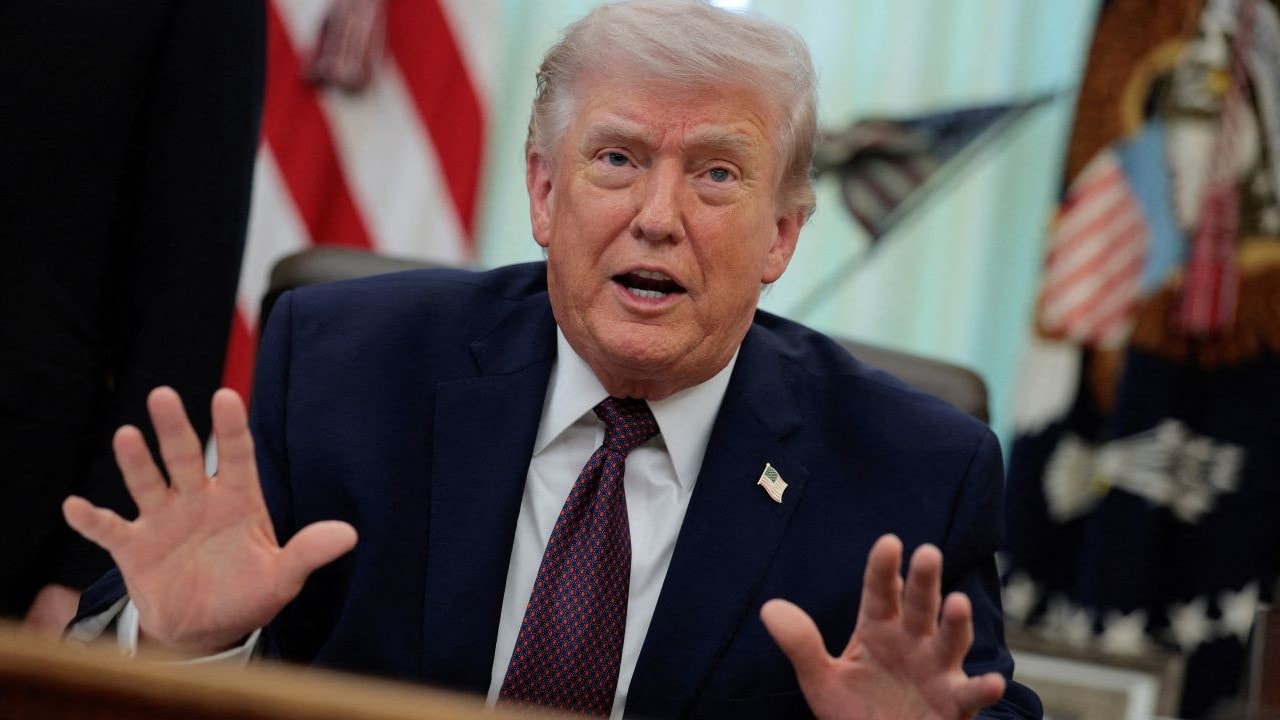
Donald Trump recently lamented that he should have demanded a bigger piece of Intel during his administration's negotiations with the semiconductor giant. The mainstream financial press swallowed the narrative whole. Commentators are busy debating the political ethics of a president demanding equity in a private company, while tech analysts are calculating what a 10% or 20% government stake in Intel would look like today.
They are all missing the point. The entire premise of the conversation is broken. Meanwhile, you can find related events here: The Anatomy of Urban Event Failure Structural Bottlenecks in Public Space Permitting.
The lazy consensus assumes that a harder bargain from the White House could have saved Intel from its current existential crisis, or that Uncle Sam missed out on a lucrative windfall. In reality, no amount of aggressive dealmaking could fix what ails Intel. The belief that political leverage can substitute for foundational engineering excellence is the core delusion of modern industrial policy.
The Sovereignty Myth: Why Government Equity Can’t Buy Innovation
The media loves a godfather-style negotiation narrative. The story goes like this: the state holds the keys to subsidies, permits, and tariffs; the corporation wants the cash; the politician squeezes the executive for a piece of the action. To explore the full picture, we recommend the excellent analysis by The Economist.
But equity in a failing chipmaker is not a prize. It is a liability.
To understand why, you have to look at the structural mechanics of the semiconductor industry. Capital injection is only the third or fourth most important variable in manufacturing chips. The primary variables are yield rates, micro-architectural execution, and lithography transitions.
When the Trump administration was negotiating with former Intel CEO Bob Swan and later Pat Gelsinger, Intel was already slipping behind Taiwan Semiconductor Manufacturing Company (TSMC) in the race to master Extreme Ultraviolet (EUV) lithography. Intel delayed its adoption of EUV, opting instead to push deep ultraviolet (DUV) immersion lithography past its physical limits through complex multi-patterning. This wasn't a liquidity problem. It was a profound, systemic engineering miscalculation.
Imagine a scenario where the US government successfully negotiated a 15% equity stake in Intel in 2020. What changes?
Nothing for the better. The presence of a government board seat or a state-directed equity mandate does not magically fix a broken 10nm node or accelerate a troubled 18A process. If anything, it slows the company down. It introduces a bureaucratic layer of risk aversion to a business that requires cutthroat, high-stakes technology bets.
I have watched boards with government representation try to navigate rapid technological shifts in the aerospace and defense sectors. They operate with a permanent handbrake applied. They prioritize domestic job preservation over ruthless automation. They favor politically safe R&D over radical, high-risk overhauls. A government-backed Intel would have been even slower to pivot to a pure-play foundry model, terrified of the political fallout that comes with restructuring legacy American design teams.
The Flawed Premise of 'Asking for More'
The "Art of the Deal" philosophy treats corporate negotiations as zero-sum games of chicken. If you walk away with more equity, you won't. But in deep tech, value is non-linear and hyper-volatile.
Let's look at the actual numbers. In 2020, Intel’s market capitalization hovered around $200 billion to $250 billion. Had the government taken a 10% stake in exchange for fast-tracked permits or subsidized factories, that stake would have depreciated significantly over the following years as Intel missed its data center milestones and ceded massive market share to AMD and Nvidia.
The tech sector does not respect political leverage. Wall Street evaluates chip companies on gross margins and Average Selling Prices (ASPs). When Intel's data center group margins collapsed from over 45% down to the low double digits, the stock plummeted. A government equity stake would have meant the American taxpayer was simply holding the bag for a legacy incumbent's operational decline.
The real question nobody is asking is this: Why do we think politicians make good venture capitalists?
The track record of state-directed equity in commercial tech is a graveyard of misallocated capital. Look at China’s Big Fund (National Integrated Circuit Industry Investment Fund). Despite pumping tens of billions of dollars directly into domestic semiconductor equity, they have spent years battling corruption scandals and failing to achieve self-sufficiency in leading-edge logic chips. Why? Because state money floods the market with capital while distorting the competitive evolutionary pressure that forces engineers to build superior products or die trying.
Dismantling the 'People Also Ask' Consensus
When people look at the intersection of government intervention and the silicon supply chain, the questions they ask reveal a deep misunderstanding of how technology is actually built.
Would a government stake have protected American tech sovereignty?
No. Tech sovereignty is built on intellectual property and manufacturing yield, not cap tables. ASML, the Dutch company that holds a monopoly on EUV lithography machines, didn’t become dominant because the Netherlands took a massive equity stake in it. It became dominant because it spent two decades executing a flawless engineering roadmap alongside intensely demanding customers like TSMC. If the US government owned a chunk of Intel, it wouldn't change the fact that the machines required to build top-tier chips are built in Veldhoven, and the chemical supply chains run through Japan.
Shouldn't taxpayers get an upside when governments subsidize private companies?
This sounds reasonable on paper, but it fundamentally misunderstands the mechanism of industrial subsidies like the CHIPS Act. Subsidies are not investments meant to generate a direct financial return; they are expensive, non-commercial premiums paid to offset the massive cost differentials of building manufacturing facilities in high-cost regions.
It costs roughly 30% to 50% more to build and operate a leading-edge fab in the United States than it does in Taiwan or South Korea. The government's money doesn't create new, excess profitability for the company to distribute back to shareholders; it merely levels the playing field so the factory gets built on domestic soil instead of overseas. Demanding equity on top of that is asking to skim profits from a business model that is already structurally disadvantaged by domestic labor costs and regulatory overhead.
The Brutal Truth: The CHIPS Act is a Life Support Machine, Not an Incubator
The current political establishment points to the CHIPS Act as the ultimate evolution of the negotiations Trump started. They claim that by tying billions in grants and loans to specific manufacturing milestones, they are forcing Intel to execute.
This is an illusion.
The CHIPS Act is acting as a massive, subsidized cushion that insulates Intel from the full consequences of its market failures. When a company knows it is "too big to fail" from a national security standpoint, its internal culture shifts from a wartime footing to a bureaucratic one. The focus changes from "how do we build a chip that crushes Nvidia and TSMC" to "how do we check the boxes required to unlock the next tranche of federal funding."
I have sat in meetings with executives operating under government contracts. The vocabulary changes. Terms like "compliance," "allocation," and "bipartisan alignment" replace "velocity," "performance-per-watt," and "architectural breakthrough."
The hard truth is that the finest engineering talent doesn't want to work for a quasi-state utility. They want to work for companies that are winning. They want to work for companies like Nvidia, where the equity upside is driven by absolute market dominance, not government subsidies. By politicizing Intel’s cap table and turned its corporate strategy into a talking point for political campaigns, we are driving away the very talent required to fix the underlying technology.
Stop Treating Silicon Like Steel
The fatal flaw in the Trump negotiation worldview—and the broader Washington consensus—is treating the semiconductor industry like it is the steel industry of the 1970s.
If you own a steel mill, output is largely a function of raw material inputs, energy costs, and labor capacity. If the state steps in, protects the mill with tariffs, and provides cheap capital, the mill can survive and produce usable steel indefinitely. The technology is relatively static.
Silicon is not steel. Silicon is a hyper-perishable asset. The moment a chip design drops behind the performance curve by even 18 months, its value doesn't drop by 10%—it drops to zero. Hyperscalers like Microsoft, Amazon, and Google will not buy an inferior, power-hungry server chip just because the US government owns a stake in the manufacturer. They will build their own custom ASICs, or they will buy from whatever foundry delivers the best performance per dollar, regardless of geography.
The belief that a tougher negotiation could have extracted more value from Intel assumes that the value was stable. It wasn't. The value was evaporating because the execution engine was broken.
If the US government wants to secure its semiconductor supply chain, it needs to stop trying to play venture capitalist with legacy giants. It needs to stop obsessing over who owns what percentage of a struggling company's stock.
The state cannot negotiate its way around the laws of physics. It cannot tweet a 2nm node into existence. If a company cannot execute its engineering roadmap, the only thing a government equity stake achieves is making the taxpayer a co-owner of a slow-motion train wreck.