He is the man with the 300 IQ and the most confusing birth certificate in gaming history. If you grew up in the nineties, you knew him as Dr. Robotnik, the jagged, mean-spirited scientist turning cute forest animals into metallic nightmares. But if you’re a younger fan, or if you happened to live in Japan back then, he was always Dr. Eggman. It's weird. It’s a branding headache that has lasted over thirty years, yet most fans just sort of accepted it. Honestly, the story of how one man became two different icons says a lot about how SEGA tried to conquer the world in the 16-bit era.
Most people think it was a simple name change. It wasn't.
The Great Transpacific Branding War
Naoto Ohshima, the original designer of the character, never intended for the name "Robotnik" to exist. When Sonic the Hedgehog was being developed at SEGA of Japan, the antagonist was always called Eggman. It was a literal description of his shape. He was an egg-shaped man. Simple.
But when the game moved to the United States for its big Western debut, SEGA of America felt "Eggman" sounded a bit too silly. They wanted something that felt more like a Saturday morning cartoon villain. Dean Sitton, a key figure at SEGA of America at the time, is often credited with coming up with the name "Doctor Ivo Robotnik." It sounded Eastern European, cold, and high-tech. It fit the vibe of a man who wanted to pave over nature with a robotic empire.
So, for nearly a decade, we had a fractured reality.
In the East, he was the bumbling but dangerous Eggman. In the West, he was the terrifying Robotnik of the Sonic SatAM cartoon and the Archie comics. This wasn't just a name difference; the personalities were miles apart. Western Robotnik was a genocidal dictator who literally "roboticized" his family. Japanese Eggman was a quirky, temperamental scientist who acted more like a frustrated child with too many toys.
Sonic Adventure and the Great Merger
The confusion hit a breaking point in 1998 with the release of Sonic Adventure on the Dreamcast. SEGA wanted a unified global brand. They were tired of managing two different versions of the same guy. Their solution was actually pretty clever, though it felt a bit clunky at the time.
In the English localization of Sonic Adventure, the characters call him "Eggman" as a taunt, a nickname based on his physical appearance. He hates it. He insists his name is Robotnik. But as the games went on, the "Eggman" branding simply won out. By the time Sonic Heroes rolled around, the name Robotnik was essentially relegated to the history books, appearing only in deep lore or as a surname.
Actually, SEGA eventually canonized it: His legal name is Ivo Robotnik, but his "villain name" or "brand" is Dr. Eggman.
More Than Just a Name: The Evolution of a Madman
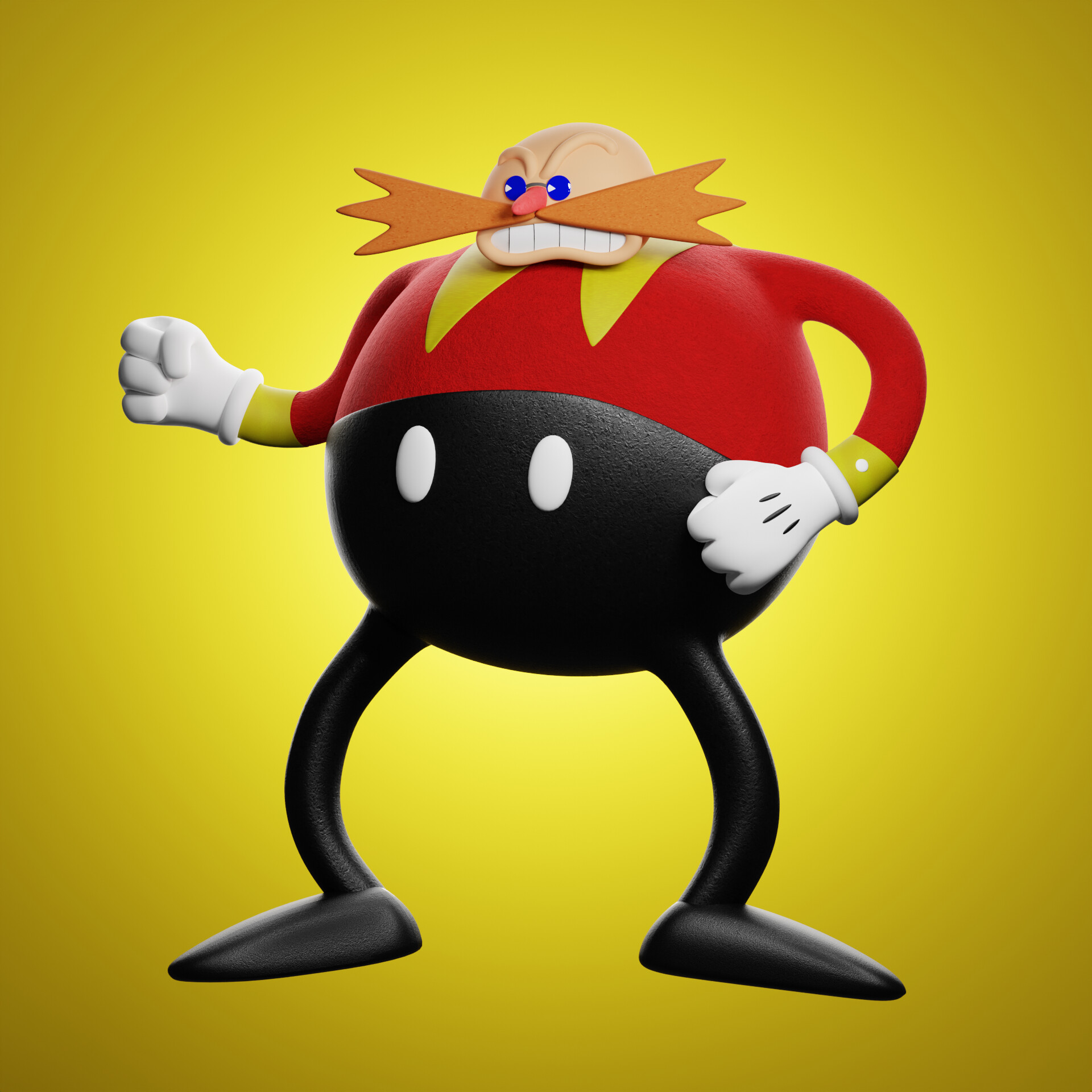
If you look at the design evolution, you can see how the character shifted to bridge these two identities. The classic "classic" Eggman was round, wore a red jumpsuit, and had those iconic yellow cape-flaps. He looked like a caricature of Theodore Roosevelt in pajamas.
As the series matured, the design got sharper. Sonic '06 (we don't have to talk about the gameplay) gave him a realistic, tall, and gangly look that leaned heavily into the "Robotnik" persona. It was creepy. Fans hated it.
Eventually, SEGA landed on the modern design we see in Sonic Frontiers or the Sonic the Hedgehog films. It’s a perfect middle ground. He’s still round and ridiculous, but he has the tech-heavy gear that makes him feel like a legitimate threat to global security. Jim Carrey’s portrayal in the movies even pays homage to both names, starting as a government consultant named Robotnik and eventually embracing the "Eggman" moniker as he loses his mind in the Mushroom Planet.
Why the Dual Identity Matters for Lore
The name split created some fascinating ripples in the series' mythology. Think about Gerald Robotnik. He’s Eggman’s grandfather, the creator of Shadow the Hedgehog. If the character had always been just "Eggman," we wouldn't have this tragic, high-stakes family history involving Space Colony ARK. The name "Robotnik" carries a weight of legacy and scientific hubris that "Eggman" just can't match.
Then you have characters like Eggman Nega. Is he a descendant? An alternate-dimension version? The series plays with these names to signal different tones.
What Most Fans Get Wrong About the Name Change
There is a common myth that SEGA "forgot" the name Robotnik. They didn't. They just realized that in a global market, having one name is cheaper and more effective for marketing.
If you go back and play the original Sonic the Hedgehog on a Japanese Mega Drive, you’ll see "Eggman" written on his boss vehicles. If you play the US version, those labels are often missing or changed. It was a conscious effort to scrub the Japanese identity for a Western audience that SEGA of America thought wouldn't "get" the humor.
How to Track the History Yourself
If you’re a collector or a lore hunter, the name discrepancy is a great way to date Sonic media.
- 1991–1998: High separation. Games, comics, and cartoons in the West use "Robotnik" almost exclusively.
- 1999–2003: The Transition Era. Games start using both, often explaining "Eggman" as a nickname.
- 2004–Present: Unified Branding. He is referred to as Dr. Eggman in 99% of marketing, though his family history still uses the Robotnik name.
It’s one of the few instances in gaming where a localization choice became so ingrained in the culture that the original creators had to find a way to write it into the actual story.
Key Takeaways for the Sonic Historian
To truly understand this character, you have to stop viewing him as just a guy in a flying pod. He is a bridge between two very different philosophies of game design.
- Check the Region: Always look at the Japanese manuals for early games to see the original "Eggman" intent. The tone is much more whimsical.
- Follow the Family Tree: The name "Robotnik" is now officially the family surname, used for Gerald and Maria, which adds a layer of prestige to Eggman's background.
- Appreciate the Hybrid: Modern Sonic media, especially the IDW comics and the live-action films, uses the tension between the "silly" Eggman and "serious" Robotnik to create a more complex villain.
The next time you see him building a giant mechanical version of himself, remember that he’s not just a doctor with a penchant for bad fashion. He’s a survivor of a 30-year marketing war between Japan and America. He might be Dr. Eggman to the world, but for a whole generation of gamers, he will always be the man who made us fear the name Robotnik.
Actionable Steps for Sonic Fans
If you want to dive deeper into the Robotnik/Eggman divide, start by watching the opening of Sonic Adventure (1998). Pay close attention to the dialogue when Sonic first encounters him; it’s the exact moment the two names officially collide in the games. From there, read the Sonic the Hedgehog encyclo-speed-ia to see how SEGA officially charts his lineage. Finally, track down the "Eggman" and "Robotnik" distinctions in the early concept art by Naoto Ohshima to see the sketches that originally defined the character's "egg-like" shape before the Western marketing machine took over.