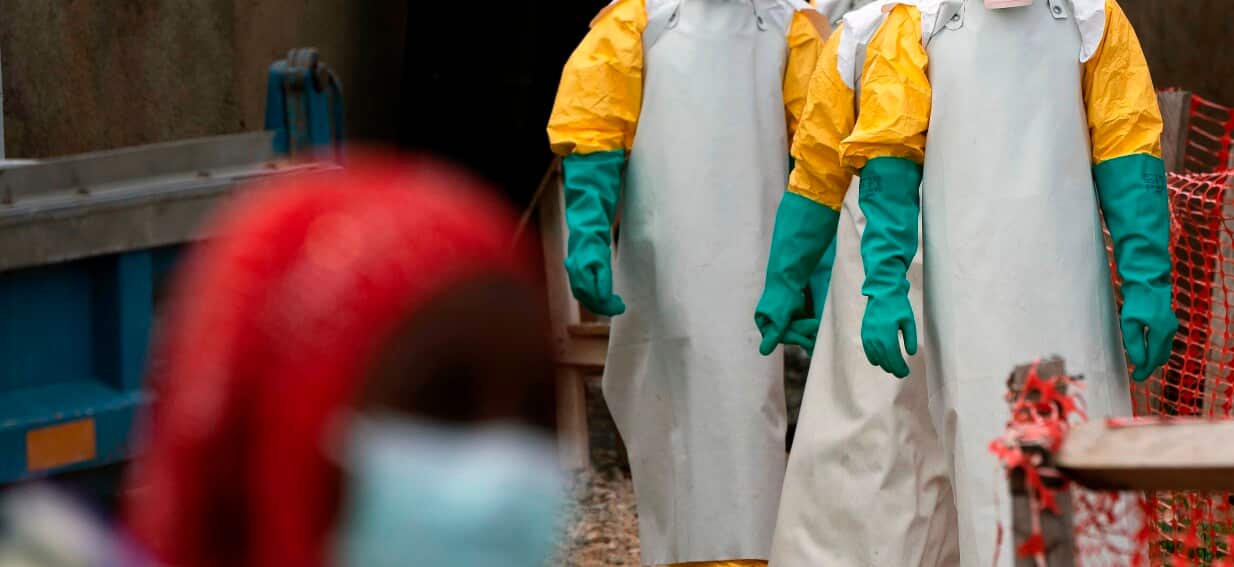
The World Health Organization just sounded the highest possible alarm. By declaring the Ebola outbreak gripping the Democratic Republic of Congo and Uganda a Public Health Emergency of International Concern, the global health body confirmed what frontline doctors feared. This isn't a localized crisis anymore. It is a cross-border threat.
When the WHO makes this kind of declaration, people panic. They picture cinematic lockdowns and apocalyptic scenarios. But panic helps absolutely no one. What we need right now is a clear-eyed look at the data, the geography, and the actual mechanics of how this virus is moving. The situation on the ground in Central and East Africa is fluid, dangerous, and complicated by factors that standard medical textbooks don't account for. If you liked this article, you might want to look at: this related article.
If you want to understand why this declaration happened now and what it actually means for global health security, you have to look past the sensationalized headlines.
The Reality of the Cross Border Ebola Threat
This declaration didn't happen overnight. It is the result of a terrifyingly predictable pattern of viral spread accelerated by human movement. The Democratic Republic of Congo, particularly its eastern provinces, has been battling Ebola outbreaks for decades. But the current situation escalated dramatically when confirmed cases began popping up across the border in Uganda. For another angle on this event, refer to the recent update from Mayo Clinic.
Border regions in this part of Africa aren't brick walls. They are highly porous. Tens of thousands of traders, farmers, and refugees cross between the DRC and Uganda every single day. They use informal pathways, dirt roads, and river crossings. If a person is incubating the virus in an area like North Kivu or Ituri, they can easily walk into a Ugandan market town before showing a single symptom.
DRC Outbreak Hotspots ---> Porous Border Crossings ---> Ugandan Border Districts
Public health teams are fighting a war on two fronts. In the DRC, health workers face the monumental challenge of tracing contacts in areas deeply affected by armed conflict and community mistrust. When security breaks down, tracking the virus becomes nearly impossible. Isolated cases quickly turn into unverified clusters. By the time a patient presents at a clinic in Uganda, the transmission chain behind them might already be dozens of people deep.
Why the Current Ebola Strain Strains Our Medical Resources
Not all Ebola viruses are created equal. The world learned a lot during the massive West Africa outbreak a decade ago, but applying those lessons requires knowing exactly what strain you are fighting. Historically, outbreaks in this region involve either the Zaire strain or the Sudan strain.
The distinction matters immensely for treatment and prevention. While we have highly effective, regulator-approved vaccines for the Zaire strain—like Ervebo—our defense arsenal against other strains is much more experimental. When an outbreak hits, researchers and logistics teams have to scramble to deploy ring vaccination strategies using candidate vaccines that are often still in clinical trial phases.
Medical teams face immediate, brutal bottlenecks:
- Cold Chain Logistics: Keeping vaccines at the ultra-low temperatures required is a nightmare in rural areas without reliable electricity.
- Diagnostic Lag: Confirming a case requires specialized laboratory testing. Shipping blood samples from remote villages to central labs takes days.
- Therapeutic Supply: Monoclonal antibody treatments exist, but global stockpiles are limited and expensive to distribute in conflict zones.
If you don't catch cases early, the mortality rate shoots up drastically. We aren't just fighting a virus; we are fighting infrastructure deficits.
The Direct Impact of a Global Public Health Emergency Declaration
So what changes because the WHO labeled this a global emergency? On paper, a lot. In reality, it depends entirely on how wealthy nations respond to the call for funding.
This designation triggers international legal obligations under the International Health Regulations. It unlocks emergency funding mechanisms from organizations like the World Bank and the WHO itself. It allows for the rapid deployment of international medical experts, epidemiologists, and specialized logistics teams to the affected border regions.
But it also carries economic risks. Historically, these declarations make international corporations and airlines skittish. Travel restrictions and trade bans often follow, even though the WHO explicitly advises against them. Shutting down borders or cutting off flights to Uganda and the DRC doesn't stop the virus. It actually makes things worse. It destroys local economies, slows down the delivery of vital medical supplies, and drives the movement of people underground, away from official health screening checkpoints.
Misconceptions About Global Transmission Risk
Let's address the anxiety around international air travel. Every time Ebola dominates the news cycle, people in Europe, Asia, and North America start worrying about a global pandemic on the scale of respiratory diseases.
Ebola doesn't work that way. It is not COVID-19. It is not influenza. You cannot catch Ebola by sitting in the same room as someone who is coughing, unless you are in direct contact with their bodily fluids. The virus only transmits when a patient is actively showing severe symptoms like fever, vomiting, and bleeding. An asymptomatic traveler sitting next to you on a plane cannot infect you.
The risk to countries outside of the immediate geographic zone remains low. Modern international airports have strict screening protocols, and sophisticated healthcare systems are highly capable of isolating a stray imported case. The real danger isn't that Ebola will tear through London or New York. The danger is that it will permanently embed itself in East African urban centers, causing massive loss of life and regional economic collapse.
Immediate Actions Needed to Contain the Spread
Containing this outbreak requires moving past bureaucratic statements and executing a hyper-localized strategy. Resources must be flooded into the border districts immediately.
First, we need to scale up community-led contact tracing. International doctors can't just march into a village and demand information. Local leaders, religious figures, and traditional healers must be integrated into the response. They are the ones who can counter misinformation and build the trust required to get sick individuals into treatment centers early.
Second, cross-border data sharing needs to happen in real time. The health ministries of the DRC and Uganda cannot operate in silos. If a contact escapes surveillance in a Congolese town, their details must instantly hit the mobile devices of border agents and clinic workers in neighboring Ugandan districts.
Finally, wealthy nations need to fulfill their funding pledges immediately. Empty promises don't buy personal protective equipment, they don't pay local healthcare workers who are risking their lives daily, and they don't fund the trucks needed to move medical supplies over broken roads. Security forces must also provide safe corridors for medical teams operating in the volatile zones of eastern DRC to ensure that no community is left entirely vulnerable to the spread. This is a race against time, and bureaucratic delays will cost human lives.