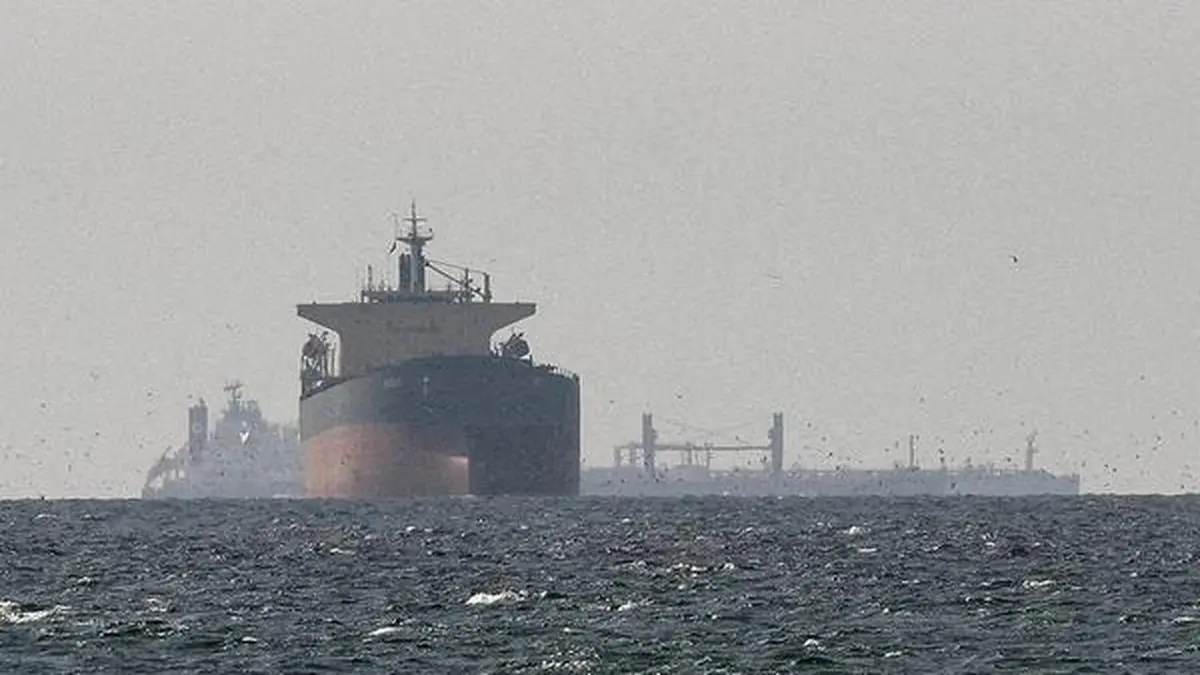
Iraq’s decision to offer price discounts to crude buyers willing to transit the Strait of Hormuz is not a gesture of diplomatic goodwill; it is a calculated execution of a risk-adjustment mechanism designed to preserve market share against increasing logistical friction. In the global oil market, the price of a barrel is the sum of its energy content minus the cost of its delivery and the risk of its interruption. By slashing the Official Selling Price (OSP) for Hormuz-bound cargoes, Iraq is effectively subsidizing the insurance premiums and security risks that private off-takers are currently unwilling to bear.
The Strait of Hormuz represents the world's most significant oil chokepoint, with approximately 20-21 million barrels per day (bpd) of crude and refined products passing through its narrow waters. When regional tensions escalate, the "Hormuz Risk Premium" manifests as a surge in War Risk Insurance (WRI) rates and freight costs. Iraq’s pricing strategy aims to neutralize this premium, ensuring that Basrah Medium and Basrah Heavy remains competitive against Atlantic Basin or West African grades that do not face similar transit constraints. You might also find this connected article useful: Why Ryan Cohen Wants to Buy eBay and What Most People Get Wrong.
The Triad of Iraqi Crude Logistics
To understand the necessity of this price cut, one must map the three primary export channels available to the Iraqi State Organization for Marketing of Oil (SOMO). Each channel possesses a distinct cost-risk profile that dictates Iraq's pricing leverage.
- The Persian Gulf Terminals (Basrah and Khor al-Amaya): These facilities handle the vast majority of Iraq's exports. However, they are geographically trapped behind the Strait of Hormuz. For a buyer in Europe or Asia, purchasing from these terminals requires a commitment to the most volatile transit route in the modern energy landscape.
- The Kirkuk-Ceyhan Pipeline: Historically, this offered a bypass to the Mediterranean. However, prolonged legal disputes between Baghdad and the Kurdistan Regional Government (KRG), coupled with infrastructure damage, have frequently rendered this northern route unreliable or entirely dormant.
- Trucking and Emerging Alternatives: High-cost, low-volume options that cannot support the scale of Iraq’s production quotas.
Because the northern bypass is often constrained, Iraq is forced to over-rely on the southern terminals. This creates a logistical monoculture. If the risk of transiting Hormuz becomes too high, buyers naturally pivot to suppliers in the UAE (which has the ADCOP pipeline to Fujairah) or Saudi Arabia (which utilizes the East-West Pipeline to Yanbu). Iraq lacks a comparable large-scale bypass, making the OSP discount its only viable tool to maintain export volumes. As highlighted in recent reports by The Wall Street Journal, the results are significant.
Quantifying the Discount Function
The discount is rarely a flat fee; it is a dynamic response to the Shadow Cost of Transit. This cost is composed of three primary variables that Iraq must offset to keep its crude attractive.
The War Risk Insurance (WRI) Offset
Marine insurance providers typically charge a "base" rate. When a region is designated a high-risk zone, they add a "breach" premium for each voyage. In periods of high tension, these premiums can jump from 0.01% to 0.5% of the hull value within 48 hours. On a Very Large Crude Carrier (VLCC) valued at $100 million, this represents a $500,000 increase in overhead per trip. Iraq’s OSP reduction must, at a minimum, cover this delta.
The Freight Premium Variance
Shipowners demand higher "Worldscale" rates to send their vessels into contested waters. If the market rate for a VLCC from the Persian Gulf to China is $15,000 per day, but the "risk-adjusted" rate for Hormuz is $22,000, the $7,000 difference must be absorbed by the seller (Iraq) rather than the buyer (the refinery).
Opportunity Cost of Inventory
Refiners operate on razor-thin margins. If a cargo is delayed by naval inspections or security incidents in the Strait, the refinery faces "stock-out" risks or the cost of holding alternative inventory. Iraq’s discount serves as a liquidity buffer, compensating the buyer for the potential of capital being tied up in a stalled cargo.
The Competitive Displacement Effect
The global oil market is a zero-sum game of refinery configuration. Most complex refineries in Asia are "tuned" to process specific grades like Basrah Medium. However, modern refining technology allows for a degree of "crude switching."
If the price of Basrah Medium, inclusive of the Hormuz risk, exceeds the price of a similar grade from Brazil or the US Gulf Coast, the refiner will switch. Once a refiner optimizes their "linear programming" (LP) models for a different crude, it is difficult and costly to win them back. Iraq’s strategy is a defensive move to prevent structural displacement. They are paying a "loyalty rebate" to ensure that Asian refiners—who take nearly 70% of Iraqi exports—do not invest the CAPEX required to permanently shift their supply chains away from the Gulf.
The Geopolitical Feedback Loop
There is a circular logic to these discounts. By lowering the price to offset transit risk, Iraq unintentionally signals to the market exactly how much it fears a blockade. This transparency can embolden regional actors who wish to use the Strait as a geopolitical lever.
Furthermore, Iraq’s reliance on Hormuz creates a fiscal vulnerability. Unlike Saudi Arabia, which can redirect roughly 5 million bpd to the Red Sea, Iraq’s budget—which is 90% dependent on oil revenues—is entirely hostage to the Strait’s stability. The OSP discount is a "fiscal shock absorber." It allows the state to maintain a steady flow of USD, even if the net profit per barrel is lower. In a choice between $75/barrel with zero volume (due to buyer flight) and $70/barrel with full volume, the Iraqi treasury must choose the latter to avoid domestic insolvency.
Structural Limitations of the Pricing Strategy
While effective in the short term, the "discount for risk" model faces three terminal limitations:
- The OPEC+ Revenue Floor: Iraq is bound by production quotas. Since it cannot increase volume to make up for lower per-barrel margins without violating OPEC+ agreements, the discounts directly cannibalize the national budget.
- Infrastructure Lag: Price cuts do not solve the physical bottleneck. If the Strait is physically closed, no amount of discounting will move the oil. The failure to complete the Basrah-Aqaba pipeline leaves Iraq without a "physical" hedge against Hormuz.
- Buyer Perception of Reliability: A discount compensates for cost, but it does not compensate for a total break in the supply chain. Systematic buyers (like state-owned enterprises in India and China) prioritize security of supply over marginal price gains. If the risk of a total cutoff reaches a certain threshold, the discount becomes irrelevant.
The Shift Toward "Delivered" Contracts
To further mitigate the Hormuz effect, Iraq is increasingly exploring DES (Delivered Ex-Ship) contracts rather than the traditional FOB (Free on Board) terms. In an FOB contract, the buyer assumes the risk the moment the oil hits the ship. In a DES contract, Iraq retains ownership and risk until the oil reaches the buyer's port.
By shifting to DES, Iraq can utilize its own shipping fleet (Iraqi Oil Tankers Company) and negotiate sovereign-level insurance deals that are cheaper than what a private commercial buyer could obtain. This allows Iraq to "hide" the discount within the shipping and insurance costs rather than slashing the OSP publicly, which prevents a downward price war with other OPEC members.
Strategic Recommendation for Market Observers
Analyze the "Basrah-Dubai Spread" as a primary indicator of regional stability. When the discount for Iraqi grades relative to the Dubai benchmark widens beyond historical norms, it indicates that SOMO’s internal intelligence suggests a sustained period of maritime friction.
Investors and analysts should stop viewing these price cuts as "weakness" and start viewing them as operational hedging. The true metric of success for Iraq in this environment is not "Price per Barrel," but "Consistent Export Volume." So long as Iraq maintains its 3.3 to 3.5 million bpd export rate through the southern terminals, the pricing strategy is functioning. The moment volumes drop despite the discounts, the market must prepare for a significant global supply shock, as it indicates the "Hormuz Risk" has surpassed the "Hormuz Discount."


