Aarav spent three years saving for a dream that lived in a glossy brochure. He worked double shifts at a Bangalore tech firm, skipped weddings, and lived on instant noodles, all to see his name printed on a UK Tier 4 visa. To his family, that sticker in his passport was more than a travel document. It was a golden ticket. It was the promise that their son would return with a Master’s degree and a global perspective that would change their lineage forever.
Today, that sticker is losing its shine.
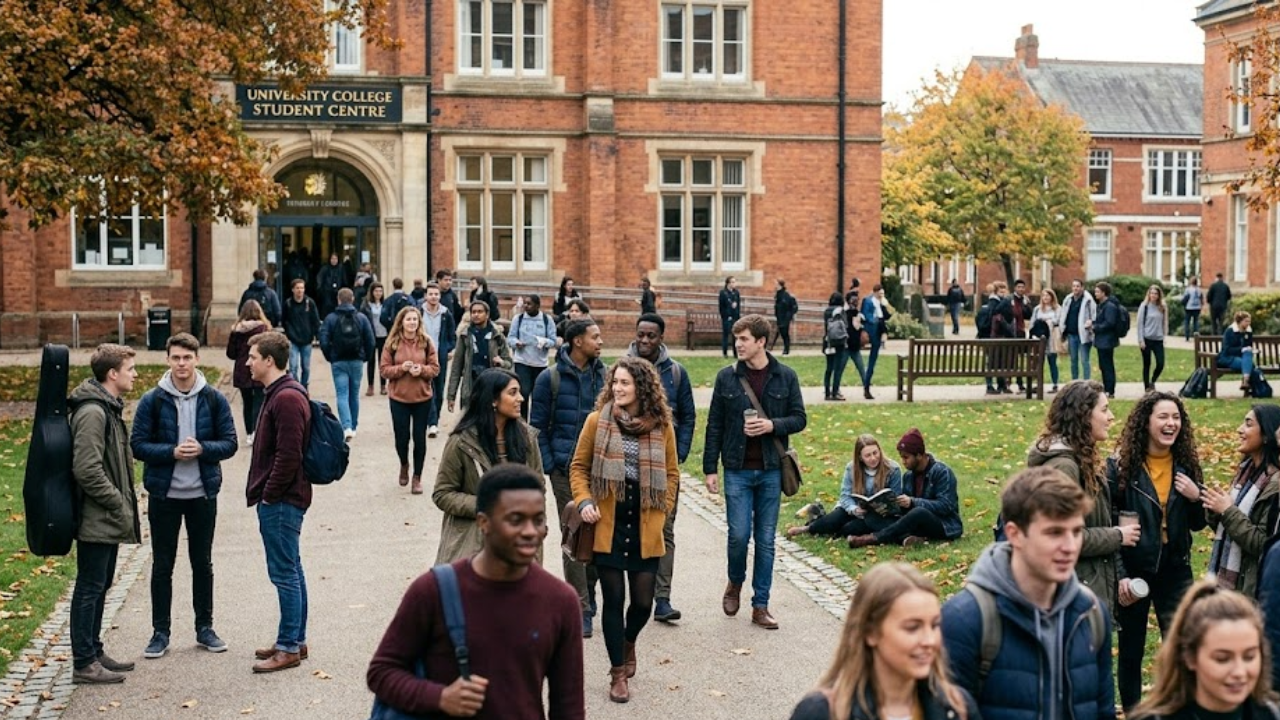
The quiet corridors of British academia are vibrating with a new, anxious frequency. It is the sound of silence where there used to be a bustling trade in ideas and tuition fees. Recent data from a major survey of UK universities has laid bare a staggering shift: student enrolments from India have plummeted across 76% of the country’s higher education institutions. This isn't a minor dip or a seasonal fluctuation. It is a mass exodus of intent.
The Math of a Dream
British higher education is one of the nation's most successful exports. For decades, it functioned like a well-oiled machine. Students arrived, paid their fees, contributed to the local economy, and enriched the intellectual life of the campus. In return, they received a world-class education and a period of post-study work that allowed them to recoup their massive investments.
But the machine has developed a catastrophic rattle.
Consider the financial weight on a student's shoulders. A typical international postgraduate degree can cost anywhere from £15,000 to £35,000 in tuition alone. When you add the soaring cost of living in cities like London, Manchester, or Bristol, the total bill often exceeds what a middle-class Indian family earns in a decade. They don't pay this out of pocket. They take out predatory loans, putting the family home up as collateral.
When the UK government recently overhauled its visa policies—specifically the ban on international students bringing dependents—the math stopped working.
Imagine a hypothetical student named Priya. She is 28, a mid-career professional with a husband and a young daughter. Under the old rules, she could bring her family, her husband could work to support her studies, and her child could experience a British school. Under the new rules, she must choose: her degree or her family.
She chooses her family. Thousands like her are making the same choice.
The Invisible Stakes for the High Street
The impact of this 76% decline doesn't stop at the university gates. It spills out into the butcher shops, the corner stores, and the rental markets of towns that many people struggle to find on a map. Places like Huddersfield, Coventry, and Leicester have built entire micro-economies around the international student body.
When three-quarters of universities report a drop in their primary source of international growth, the local ripple effect is violent. Landlords find themselves with empty HMOs (Houses in Multiple Occupation). Local pubs lose their midweek crowd. Bus routes that once ferried students to 9:00 AM lectures start to run at a loss.
The universities themselves are staring into a fiscal abyss.
Many institutions have become dangerously reliant on international fees to subsidize the education of domestic British students, whose tuition has been capped for years. Without the "premium" paid by students from Delhi, Mumbai, and Hyderabad, the budget for a new chemistry lab or a renovated library simply evaporates. Some universities are already signaling that they may have to cut courses or merge departments just to keep the lights on.
It is a house of cards built on a foundation of shifting immigration policy.
The Rhetoric of the Welcome Mat
There is a psychological element to this decline that no spreadsheet can fully capture. It is the "vibe" of a nation. For years, the UK marketed itself as a "Global Britain," a welcoming hub for the brightest minds on the planet. But the political climate has shifted toward a rhetoric of restriction.
News travels fast on WhatsApp.
When a student in Punjab reads about shifting visa rules, potential crackdowns on the graduate route, and a general atmosphere of scrutiny, they don't see a land of opportunity. They see a risk. They see a country that wants their money but doesn't necessarily want them.
Meanwhile, other players are watching from the sidelines with hungry eyes. Australia, Canada, and Germany have spent the last eighteen months fine-tuning their own offers. They are simplifying their visas. They are highlighting pathways to residency. They are standing at the airport with a sign that says "Welcome," while the UK is increasingly seen as standing there with a clipboard and a frown.
The Quality Trap
Critics of the previous system argued that the UK had become a "visa factory," where the quality of education was secondary to the right to work. They claimed that some institutions were lowering their standards just to fill seats.
If that was the problem, the current drop is a very blunt instrument for a delicate surgery.
By making the UK less attractive across the board, the government hasn't just filtered out "low-quality" applicants. It has deterred the high-flyers—the future surgeons, the AI researchers, and the entrepreneurs who have multiple options. These individuals are highly sensitive to being treated as a statistic rather than a scholar. When they feel the door is half-closed, they don't push; they just walk to the next door.
The survey results show that this isn't just a London problem. It is systemic. From the historic spires of the Russell Group to the modern campuses of the post-1992 universities, the trend is uniform. The pipeline is drying up.
The Human Cost of a Statistical Win
Politically, reducing net migration numbers is often framed as a victory. On a chart in a government briefing, a downward line looks like a promise kept to the electorate.
But look closer at the empty seat in the lecture hall.
That seat represents a lost perspective. It represents a British student who won't get to debate global trade with a peer from the Global South. It represents a research project that won't get funded because the department is in "emergency recovery mode." It represents a local cafe owner who has to let go of their part-time staff because the morning rush has vanished.
Aarav, our hypothetical student from Bangalore, ended up choosing a university in Amsterdam. He found the visa process clearer, the housing more accessible, and the post-study options more stable. He is currently learning Dutch. His future contributions—his taxes, his inventions, his cultural influence—will now benefit the Netherlands instead of the United Kingdom.
The UK didn't just lose his tuition fee. It lost him.
The crisis facing 76% of UK universities isn't just an administrative hurdle or a temporary dip in the market. It is a fundamental realignment of how the world perceives the British invitation. Once a brand is damaged, once the "welcome" feels conditional or begrudging, it takes more than a few marketing campaigns to fix.
The lights in the lecture halls are still on, but the room is getting colder. Every empty desk is a message sent back home, a warning whispered across borders, telling the next generation of dreamers to look elsewhere. The sticker in the passport hasn't just lost its shine; it has lost its power to change lives.
And in the long run, the cost of that empty seat will be far higher than any tuition fee could ever cover.