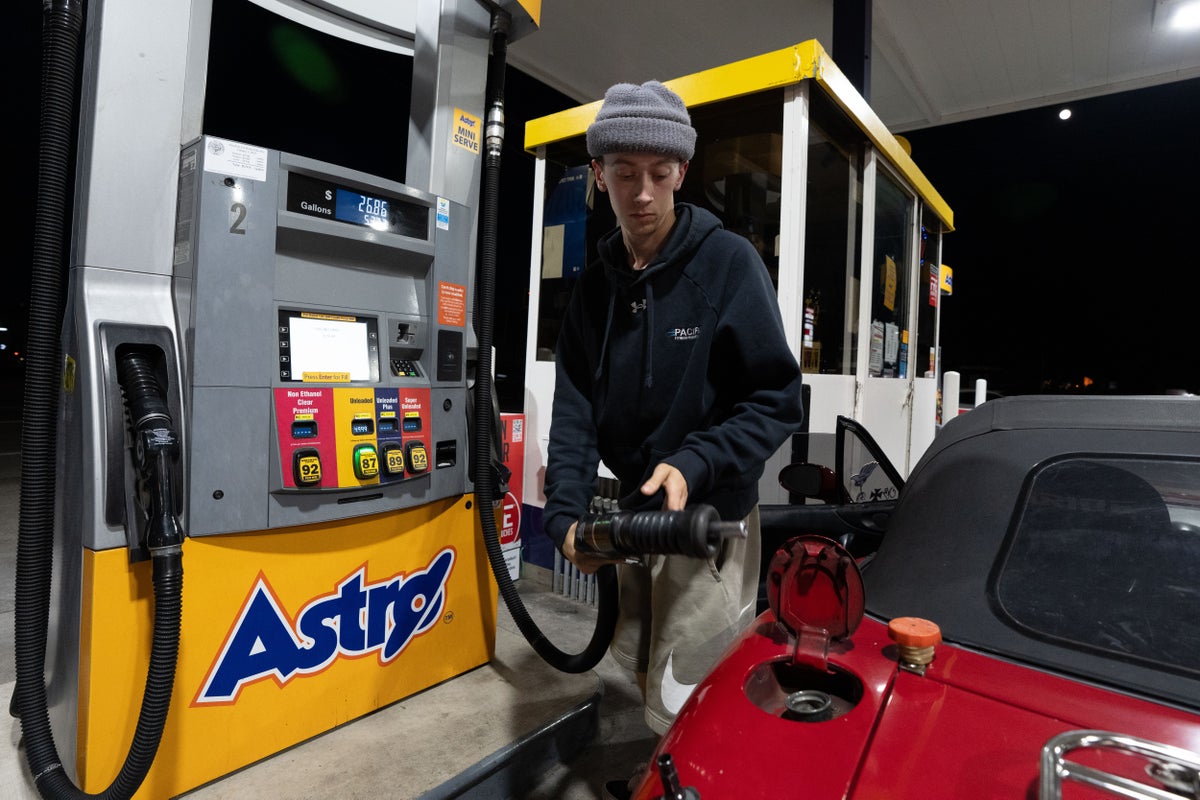
Domestic retail gasoline prices are not a direct reflection of crude oil extraction costs; they are the output of a complex, multi-variable equation involving geopolitical risk premiums, refining bottlenecks, and inventory cycles. The 52% surge in U.S. pump prices following the onset of regional conflict in the Middle East exposes the structural fragility of the global energy supply chain. This price movement represents a "fear-driven decoupling" where the cost of the finished product rises at a rate disproportionate to the underlying commodity’s spot price.
Understanding this escalation requires analyzing the four fundamental pillars of fuel valuation: global crude benchmarks, the "crack spread" (refining margins), logistics constraints, and tax/regulatory overhead.
The Crude Component and Geopolitical Risk Arbitrage
The primary driver of the initial price shock is the Brent-WTI spread. While the United States produces significant quantities of West Texas Intermediate (WTI), global gasoline prices are largely indexed to Brent Crude, the international benchmark.
Conflict in the Middle East introduces a "war premium" based on the probability of transit disruptions. The Strait of Hormuz acts as a physical choke point through which approximately 20% of the world’s liquid petroleum flows. When conflict scales, insurance premiums for tankers increase, shipping routes are diverted, and the market prices in a "scarcity hedge."
- Supply Elasticity Failure: In a stable market, high prices signal producers to increase output. However, geopolitical instability creates a lag. Shale producers in the Permian Basin cannot offset a Middle Eastern supply shock instantaneously due to capital discipline and labor shortages.
- The Strategic Petroleum Reserve (SPR) Paradox: Depleting reserves to stabilize prices provides short-term relief but increases long-term volatility. The market recognizes that a lower SPR reduces the "buffer" against future shocks, which can perversely keep forward-looking prices high.
Refining Capacity and the Middle Distillate Bottleneck
A common misconception is that more crude oil automatically leads to cheaper gasoline. In reality, gasoline is a manufactured product, and the United States is facing a systemic crisis in refining capacity.
The "crack spread" refers to the pricing difference between a barrel of crude oil and the petroleum products distilled from it. Even if crude prices remain relatively stable, gasoline prices can skyrocket if refining capacity is at its ceiling.
- Capacity Attrition: Since 2020, several major U.S. refineries have been decommissioned or converted to biofuels. This reduces the total "throughput" available to convert crude into 87-octane fuel.
- Maintenance Cycles: Conflict-induced price spikes often coincide with seasonal transitions (switching from winter to summer blends). Summer blends are more expensive to produce and require complex additives to reduce evaporative emissions.
- Operational Strain: When demand is high and supply is tight, refineries run at 90-95% capacity. This leaves zero margin for error. A single mechanical failure or weather event in the Gulf Coast results in an immediate price spike because there is no "slack" in the system.
The Logistics of Displacement and the Jones Act
Moving fuel from the Gulf Coast—where the majority of refining occurs—to the East and West Coasts is an exercise in inefficiency. The Merchant Marine Act of 1920 (Jones Act) requires goods shipped between U.S. ports to be carried on ships that are built, owned, and operated by United States citizens.
The cost of chartering a Jones Act-compliant vessel is significantly higher than using a foreign-flagged tanker. This creates a situation where it is often cheaper for the U.S. East Coast to import gasoline from Europe than to ship it from Texas. When Middle Eastern conflict disrupts European energy markets, the East Coast loses its primary import alternative, forcing it to compete for limited domestic supply and driving the 52% premium seen at the pump.
Monetary Inflation and Currency Valuation
Gasoline is priced in U.S. Dollars (USD) globally. However, the domestic purchasing power of the dollar plays a hidden role in the 52% increase. If the dollar weakens against a basket of currencies while energy demand remains constant, the price of oil—denominated in those dollars—must rise to maintain value parity.
Inflationary pressures within the U.S. economy also impact the "last mile" of gasoline delivery.
- Labor Costs: Tanker truck drivers and refinery technicians have seen significant wage growth, which is passed directly to the consumer.
- Financing Costs: Higher interest rates increase the cost of holding inventory. Gas station owners, who operate on razor-thin margins, must raise prices immediately to cover the replacement cost of their next underground tank delivery.
Tactical Response and Portfolio Positioning
The 52% increase is not a mathematical anomaly but the result of a "perfect storm" of low inventory, high refining utilization, and geopolitical risk. To navigate this volatility, stakeholders must look beyond the headline crude price and monitor the refined product inventories (stocks) reported weekly by the Energy Information Administration (EIA).
For industrial consumers and logistics-heavy businesses, the strategic move is to hedge against the "Basis Risk"—the difference between the price of the commodity and the local price of the finished product.
- Direct Hedging: Utilizing gasoline futures (RBOB) rather than crude oil futures (WTI) to better align with actual fuel expenditures.
- Efficiency Audits: Transitioning fleets toward higher-efficiency ICE or EV platforms to decouple operational costs from the Brent-WTI volatility.
- Supply Chain Redundancy: Securing long-term supply contracts with fixed-margin "cost-plus" pricing to bypass the volatility of the daily spot market.
The current price floor is being reset by higher structural costs in refining and labor. Even if the conflict ceases, a return to "pre-war" pricing is unlikely because the underlying refining capacity remains lower than the 10-year average. The 52% premium is the new baseline for an energy-starved, refinery-constrained economy.
Ensure that all procurement strategies account for a permanent 15-20% "security premium" in energy costs. The era of cheap, frictionless fuel transport has ended; the priority now shifts from cost-minimization to supply-resilience.