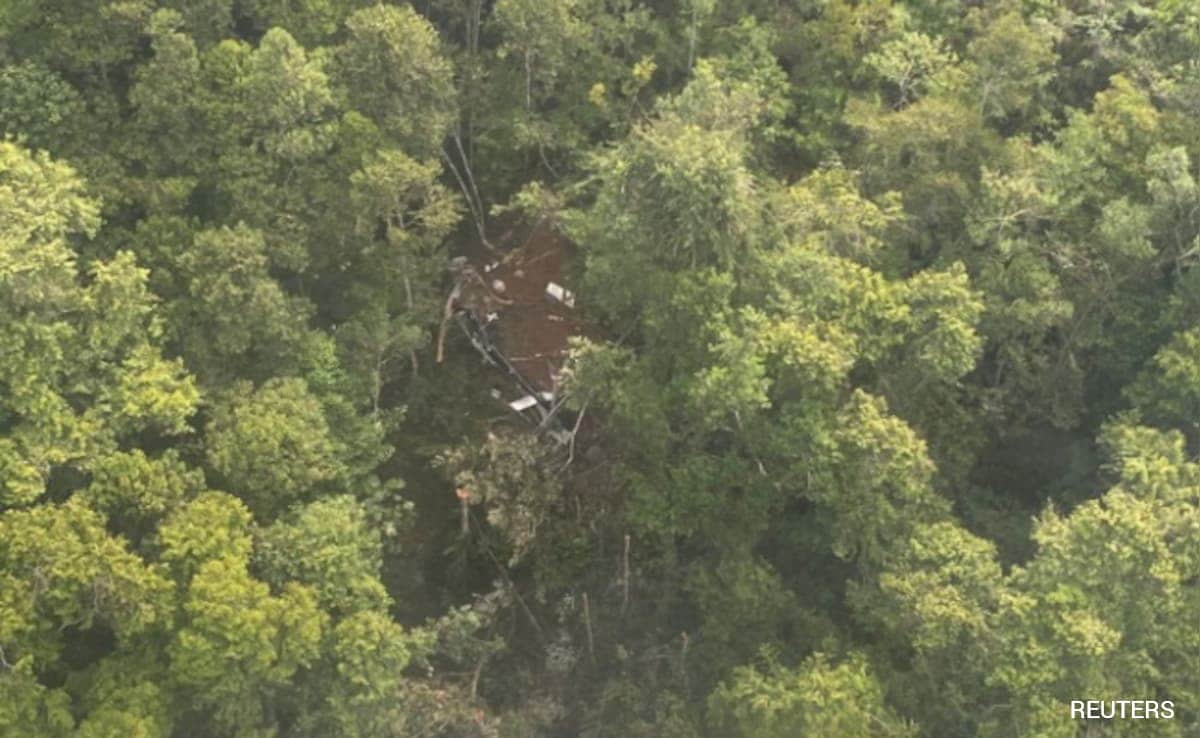
On a remote stretch of Indonesian terrain, the sudden disappearance of a Bell 412 helicopter from radar screens marked yet another grim entry in the nation's history of aviation disasters. Eight lives were lost in an instant. While early reports point toward the standard culprits of unpredictable weather and rugged geography, these explanations often serve as a convenient shroud for deeper, systemic failures. The tragedy is not just the crash itself, but the predictable nature of the circumstances leading up to it.
Indonesia remains one of the most challenging environments on earth for rotary-wing aviation. The combination of rapid urbanization, an archipelago spanning thousands of islands, and a tropical climate that can turn from clear to catastrophic in minutes creates a high-stakes arena. Yet, the frequency of these incidents suggests that the margin for error has been stretched thin by aging fleets and a regulatory framework that struggles to keep pace with operational demands.
The Geography of Risk
Flying in Indonesia is a battle against the elements. The archipelago’s volcanic topography creates microclimates that are notoriously difficult to forecast with precision. A pilot may take off in bright sunshine only to encounter a wall of cumulonimbus clouds or dense mountain fog within twenty miles. In the recent crash, the helicopter was navigating terrain where sudden downdrafts and "whiteout" conditions are common.
Most of these flights are essential. They carry engineers to mining sites, medical supplies to remote villages, and government officials to provinces inaccessible by road. This utility creates a pressure to fly. When the mission is deemed critical, the "go/no-go" decision often leans toward the former, sometimes at the expense of safety buffers. Veteran pilots in the region speak of a culture where "pushing the weather" is a badge of honor rather than a red flag. This mindset, while brave, is lethal.
Hardware Under Pressure
The Bell 412 is a workhorse, a twin-engine utility helicopter known for its reliability in harsh conditions. However, even the most legendary airframes have limits. In Indonesia, many of these aircraft are part of aging fleets that require intensive, expensive maintenance. The tropical humidity and salt air accelerate corrosion, demanding a level of mechanical vigilance that is difficult to sustain under tight commercial or departmental budgets.
Maintenance logs often tell a different story than the official press releases. Investigating such crashes frequently reveals deferred maintenance or the use of "gray market" spare parts. While there is no direct evidence yet of mechanical failure in this specific eight-person tragedy, the pattern across the Indonesian aviation sector shows a recurring theme of technical oversight. The investigation must look beyond the pilot’s last maneuvers and examine the hangar records from the preceding six months.
Training Gaps and Human Factors
Modern aviation relies on Crew Resource Management (CRM). It is a system designed to ensure that every person on the flight deck has the authority to speak up if they sense danger. In many Southeast Asian aviation cultures, hierarchical structures can inadvertently silence junior co-pilots or technicians. If a senior captain decides to descend through a cloud layer without visual reference to the ground, a subordinate might hesitate to challenge that decision until it is too late.
Controlled Flight Into Terrain (CFIT) remains the leading cause of helicopter fatalities globally. This occurs when a perfectly functional aircraft is flown into the ground, water, or an obstacle because the pilot loses situational awareness. In the Indonesian interior, the lack of advanced ground proximity warning systems (GPWS) in older helicopter models means that by the time a pilot realizes they are too low, the mountain is already in the cockpit.
The Regulatory Shadow
The Indonesian National Transportation Safety Committee (NTSC) is tasked with finding the truth behind these disasters. However, their recommendations are often stymied by a lack of enforcement power. Following a crash, there is a flurry of inspections and public statements, but the fundamental underlying issues—infrastructure, pilot training, and fleet modernization—require capital and political will that often evaporate once the headlines fade.
The airspace over Papua and Kalimantan is particularly vulnerable. These areas lack the sophisticated radar coverage found in Java or Bali, forcing pilots to rely on "procedural separation." They essentially tell the tower where they think they are and where they are going. If the onboard GPS fails or the pilot becomes disoriented, there is no safety net on the ground to pull them back from the brink.
Economic Costs of Cheap Flight
Aviation safety is a commodity. It is bought with simulator hours, updated avionics, and high-quality fuel. When companies or government agencies bid for helicopter contracts, the lowest price often wins. This "race to the bottom" forces operators to cut corners. They might reduce the number of rest hours for pilots or skip a non-essential sensor upgrade.
When eight people die in a single event, the cost of that "cheap" contract becomes immeasurable. The loss of expertise, the trauma to the families, and the damage to the nation's reputation far outweigh the savings of a trimmed maintenance budget. The industry needs to shift its focus from the cost per flight hour to the cost of a catastrophic loss.
The Data Black Hole
One of the biggest hurdles in reconstructing these accidents is the lack of flight data recorders in smaller or older helicopters. Unlike commercial jetliners, many utility helicopters are not required to carry "black boxes" that record every parameter of the engine and the pilot’s inputs. Investigators are left to piece together the puzzle from charred wreckage and erratic radar pings.
This lack of data prevents the industry from learning. Without knowing exactly what the torque levels were or what the pitch of the blades was in the final seconds, other pilots cannot be trained on how to avoid the same fate. Implementing mandatory lightweight data recorders across all commercial helicopter operations is a logical, necessary step that has been delayed for far too long.
Survival in the Golden Hour
In the rugged terrain where this Bell 412 went down, the "Golden Hour"—the window where medical intervention can save a life—is almost always missed. Search and rescue teams often take hours or even days to reach a crash site due to the density of the jungle and the steepness of the slopes. Even if a passenger survives the initial impact, the environment is hostile.
Improving the emergency locator transmitter (ELT) infrastructure is critical. Modern 406 MHz ELTs can provide a precise location via satellite, but many older aircraft still use 121.5 MHz systems that are prone to interference and have a much wider search radius. Replacing these units is a minor expense that could mean the difference between a rescue mission and a body recovery operation.
Institutional Inertia
The recurring nature of these crashes points to a deeper malaise. There is a sense of fatalism that surrounds aviation in Indonesia, as if these deaths are an inevitable tax on progress and geography. They are not. Countries with similar terrain, such as Switzerland or parts of the United States, have achieved significantly lower accident rates through a combination of strict regulatory oversight and the adoption of modern technology.
The focus must move away from blaming "bad luck" or "the will of God." These are engineering and management problems. They have solutions. The eight people lost in this crash were victims of a system that has become too comfortable with a high level of risk. Until the aviation authority mandates a complete overhaul of how weather data is communicated and how old airframes are vetted, the radar screens will continue to go dark over the mountains.
The investigation into the Bell 412 crash should not end with the recovery of the remains. It should begin with a hard look at the boardrooms and government offices where the decisions on funding and safety standards are made. Every flight that takes off in Indonesia today is operating on a margin of safety that is thinner than it needs to be. The burden of proof is no longer on the investigators to explain why a crash happened, but on the operators to prove why the next one won't.
Stop looking at the wreckage and start looking at the logs. The answers aren't in the twisted metal; they are in the years of ignored warnings and bypassed protocols that made the metal twist in the first place.