The glow of a television screen is a peculiar kind of hearth. It doesn't crackle with wood smoke, yet it warms our living rooms just the same. For decades, one man has been the architect of that light, ensuring that the stories we crave find their way to our homes, our commutes, and our late-night cravings.
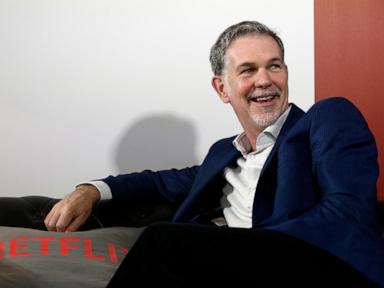
Reed Hastings.
The name is synonymous with the death of the video store—that dusty, fluorescent-lit purgatory where you stood in line, hoping someone had returned The Matrix so you didn't have to settle for a direct-to-VHS sequel. Hastings didn't just kill the video store; he murdered the very concept of waiting. He turned the act of consuming media into a reflex. You think it. You watch it.
Now, he is walking away.
The board of directors is a quiet, wood-paneled room where the real gravity of a company resides. It is where strategy is forged and legacies are polished. When a founder leaves that room, it is not merely a bureaucratic shift in personnel. It is a fundamental alteration of a company’s DNA. The person who built the machine is no longer adjusting the gears.
Think of a pilot who has spent twenty-five years flying a plane through turbulent weather, suddenly handing the yoke to the co-pilot, unbuckling their harness, and stepping into the galley to watch the horizon from a passenger window. The plane continues to fly. The engines still hum. But the hand that guided it through the storm is gone.
This transition marks a strange, liminal space for Netflix. Hastings leaves behind a company that has successfully navigated the shift from mailing red envelopes to streaming gigabytes of data into our pockets. But the horizon is darkening. The golden age of streaming—a period defined by unchecked expansion, massive content budgets, and the assumption that subscribers would grow until the end of time—has hit a ceiling. The math has changed. The era of "growth at any cost" has been replaced by the brutal reality of profitability.
Consider the ordinary subscriber. Let’s call him Marcus. Marcus sits on his couch, scrolling through the interface. He pays his monthly fee because it feels like a utility, like electricity or water. But lately, he’s been pausing. He looks at the "New Releases" row and feels a strange, gnawing dissatisfaction. He has three other services competing for his attention. He is tired of password-sharing crackdowns. He is tired of price hikes.
This friction is the new reality that the board must manage. Hastings understood the psychology of convenience better than anyone, but the challenge today isn't about convenience. It’s about value. It’s about whether a service that once felt like a revolution has started to feel like just another cable bundle.
When a founder departs, there is always a whisper of anxiety in the marketplace. Investors, those skittish creatures who live for the next quarterly report, react to the loss of a founder as if the ship has lost its compass. But history suggests a different outcome.
Look at Microsoft after Bill Gates, or Apple after the departure of Steve Jobs. The initial shock gives way to a period of institutionalization. The company, once a reflection of a single brilliant mind, must transform into a living, breathing entity that can survive without its progenitor. It is the corporate version of a parent watching a child leave for college. You hope you taught them enough to handle the world, but you know you can no longer catch them when they stumble.
Hastings’ exit is a quiet, deliberate act. There was no public explosion. There was no boardroom brawl. Just a transition, orchestrated with the clinical efficiency that defined his tenure. He recognized that the version of Netflix needed for the next decade is not the same version that conquered the last one.
The strategy is shifting. Advertising tiers. Gaming. Live events. These are not the natural habitat of the man who obsessed over the simplicity of a red envelope. These are the tools of a different trade, one where the goal is no longer just to eliminate friction, but to extract maximum value from every second of attention.
Some might call this a decline. It is more accurate to call it an evolution. The romantic age of the "founder-led" miracle is giving way to the pragmatic age of the "public-traded" utility.
We are moving into an era where the platform we once loved—the one that felt like a curated selection of great cinema—is becoming something else entirely. It is becoming a landscape of algorithmic optimization. Every decision is measured against the cold, hard metric of subscriber retention. Does this show keep them for another month? Does this move push them to a higher tier?
This is not a criticism; it is the inevitable destination of scale. You cannot feed millions of hungry users without turning your kitchen into a factory.
But as the factory floor continues to churn, we must acknowledge the loss of the human element. The idiosyncratic taste of a creator, the wild bets on experimental storytelling—these things are harder to justify when the priority is the bottom line. The algorithms are magnificent, but they are not artists. They can predict what we are likely to click on next, but they cannot surprise us with something we didn't know we needed.
Hastings leaves with a fortune, a legacy, and a company that has fundamentally altered the way humanity shares stories. He transformed the cultural fabric of a generation. He made the world smaller and the library of human imagination accessible with a single tap.
Perhaps the most compelling part of this story is not that he is leaving, but that he stayed long enough to ensure the transition could happen at all. He didn't abandon the ship while it was taking on water. He handed over the wheel only when the course was set, even if the seas ahead are rougher than anything the company has faced before.
The screen goes dark for a moment before the next selection begins to play. We are entering a new season of this show. The protagonist of the first act has exited the frame, but the camera is still rolling, the light is still humming, and we are still watching, waiting to see what happens next. The house is quiet now, the architect is gone, and the theater is open to whatever the new management decides to play.