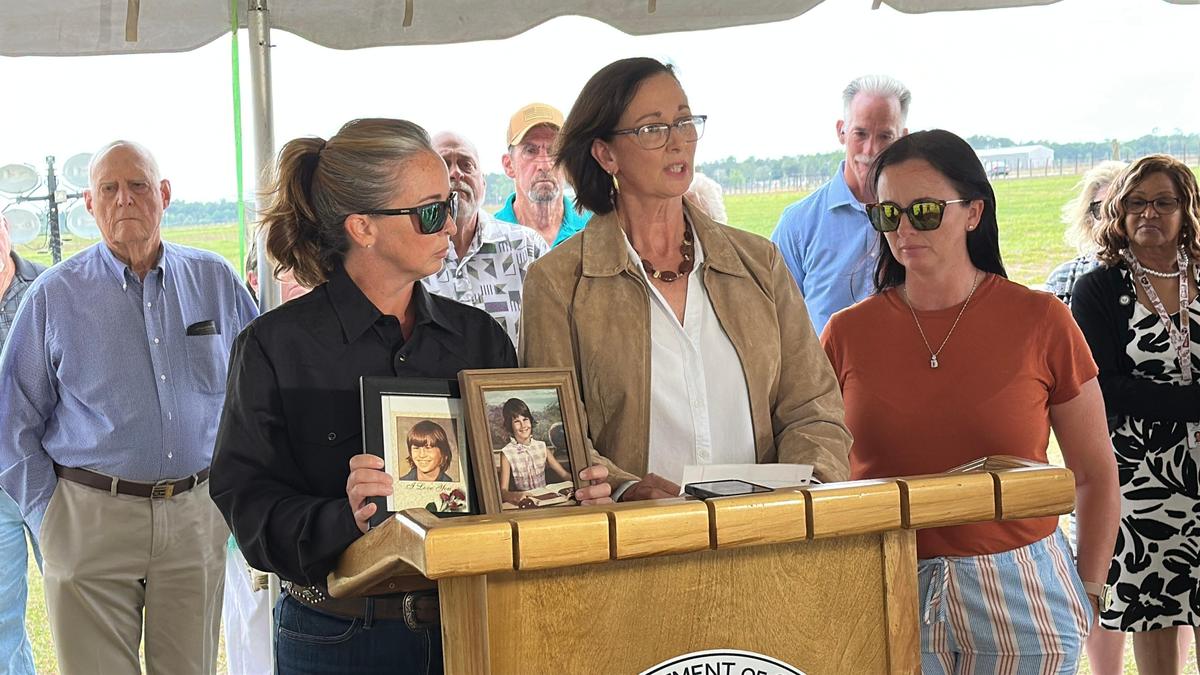
Florida has finally closed the book on a case that defined the limitations of mid-century forensics and the agonizing persistence of grief. On Thursday evening, the state executed Richard Townley for the 1977 murder of his brother’s teenage stepdaughter, ending a decades-long legal marathon that tested the boundaries of the death penalty. It took nearly half a century to bring Townley to the gashouse, a timeline that highlights the grinding, often glacial pace of the American justice system when faced with crimes that predated modern DNA profiling.
The case was never just about a single act of violence. It was a window into a different era of criminal investigation, where convictions were built on the sweat of detectives and the shaky reliability of circumstantial evidence.
The Vanishing of a Florida Teenager
In late 1977, the disappearance of a teenage girl in Florida didn't trigger the immediate, high-decibel media frenzy it would today. There were no Amber Alerts. No social media feeds to saturate with her likeness. Instead, there was a quiet, creeping dread that settled over a family.
Richard Townley was not an immediate suspect in the eyes of everyone, but the investigative trail eventually circled back to him with a grim inevitability. The victim was his own brother’s stepdaughter. This betrayal of the familial bond added a layer of psychological horror to the proceedings that never quite dissipated, even as the years turned into decades.
The evidence presented during the original trial painted a picture of a man who exploited his proximity to the victim. He had access. He had opportunity. Most importantly, he lacked a credible account of his whereabouts during the window when the girl disappeared. While the defense fought to characterize the state’s case as a patchwork of assumptions, the jury saw a clear pattern of predatory behavior.
The Long Road to Lethal Injection
Florida’s death row is a place where time seems to fold in on itself. Townley spent more time behind bars awaiting execution than the victim spent alive on this earth. This disparity is often cited by critics of the capital punishment system as a form of "double punishment," yet for the advocates of the victim’s family, it represented a necessary, if agonizing, vetting process to ensure no mistake was being made.
The appeals process for Townley was exhaustive. Over forty-eight years, his legal team challenged everything from the jury selection process to the scientific validity of the original evidence. In the late 1970s, forensic science was in its infancy. There was no genetic mapping to provide a "smoking gun." The conviction relied heavily on witness testimony and the physical evidence found at the scene—evidence that Townley’s lawyers argued had degraded over time.
The Evolution of Forensic Accountability
As the 1980s and 90s introduced DNA testing, many cold cases from the 70s were overturned. Townley’s was not one of them. Instead, as the technology improved, the state’s position only seemed to harden. Every time a new legal avenue opened, the courts found that the original verdict held weight.
The longevity of this case forced the Florida Department of Corrections to manage an aging inmate whose health was failing long before the state decided to end his life. This is the hidden reality of modern executions. We are often executing the elderly for the crimes of their youth. Townley was no longer the man he was in 1977, but the law does not recognize the passage of time as a form of absolution.
The Weight of the 1970s Cold Case Era
Florida has a dark history with unsolved or long-delayed cases from the 1970s. The state’s rapid growth during that decade, combined with a transient population and vast stretches of undeveloped land, made it a fertile ground for violent crime. The Townley case is a survivor of that era.
The "why" behind the delay is multifaceted.
- Case Overload: Florida's dockets have historically been some of the most congested in the nation.
- Procedural Shifts: Changes in how death penalty cases are handled at the federal level forced multiple reconsiderations of Townley's status.
- Evidence Preservation: Maintaining a chain of custody for fifty years is a logistical nightmare that frequently leads to dismissed charges. In this instance, the state managed to keep its ducks in a row.
The persistence of the prosecution suggests a specific brand of institutional memory. Detectives who worked the original case retired, and in some cases passed away, but the files remained active. It became a point of professional pride for the local sheriff’s office to see this through to the end.
The Ethical Quagmire of Delayed Justice
There is a point where justice begins to look like something else. To the family of the victim, this execution provides a finality that has been denied to them for their entire adult lives. They have carried the weight of this murder through marriages, births, and deaths. For them, forty-eight years is not a delay; it is a lifetime of theft.
On the other side, the cost of maintaining a prisoner on death row for nearly half a century is astronomical. Estimates suggest that Florida spends millions more on capital cases than it does on life-without-parole sentences. The Townley execution is a stark reminder of the financial and bureaucratic toll required to uphold the ultimate sanction.
The Final Hours
The protocol for an execution in Florida is a sterile, highly regulated affair. There is a specific meal, a specific time for the final visit, and a specific sequence of chemicals used to stop the heart. For Richard Townley, these final moments were the culmination of a life defined by a single, horrific choice made in his youth.
He didn't make a sprawling final statement. He didn't offer a grand confession that would clear the air. He simply ceased to be, leaving behind a trail of legal documents that could fill a small library.
The Reality of the "Florida Man" Narrative
The term "Florida Man" has become a punchline in the modern era, a shorthand for bizarre or erratic behavior. But the Richard Townley case strips away the irony. This was the original version of the Florida nightmare—a family member turning into a predator in a state that was still finding its footing in the world of modern law enforcement.
The execution doesn't bring the victim back. It doesn't heal the rift in a family that was torn apart before most of the current population of Florida was even born. It simply stops the clock.
The state’s insistence on carrying out this sentence after such a staggering delay sends a clear message about its stance on "finality." In the eyes of the Florida executive branch, there is no expiration date on a death warrant. Whether it takes five years or fifty, the state intends to collect its debt.
Beyond the Gurney
As the witnesses filed out of the viewing room at the Florida State Prison, the conversation naturally turned to the next names on the list. There are still dozens of inmates on Florida's death row who have been there since the 80s and 90s. The Townley execution serves as a precedent for these aging residents of the row. It proves that the state is willing to push through the logistical and ethical hurdles of executing the elderly to satisfy a decades-old verdict.
This isn't about rehabilitation. It isn't even about deterrence at this point, as the world of 1977 is unrecognizable to the criminals of 2026. This is about the raw, unfiltered application of the law.
Richard Townley’s name will now move from the active dockets to the historical archives. The detectives are gone, the original judge is gone, and the world has moved on. The only thing that remained was the state's memory of a crime and its refusal to let it go unpunished.
The machinery of death in Florida is often criticized for its inefficiency, but as Townley’s final day proved, it is nothing if not patient. The silence that follows an execution like this is heavy. It is the silence of a case file finally being closed and a ghost finally being laid to rest by the cold hand of the law.