The Grid Independence Experiment
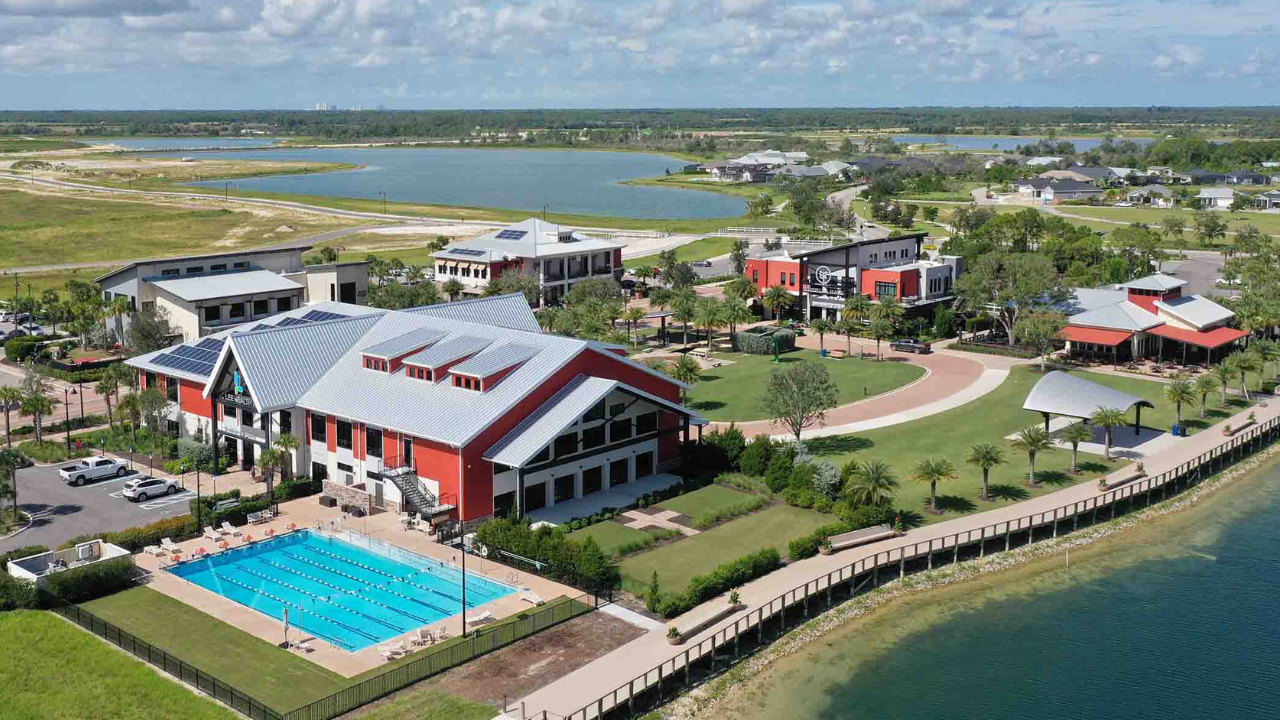
Babcock Ranch is not a typical Florida development. While most suburban sprawls in the Sunshine State are defined by manicured golf courses and heavy reliance on an aging electrical grid, this 18,000-acre tract north of Fort Myers operates on a different fundamental logic. It is the first town in America powered by a massive onsite solar facility, designed to generate more electricity than its residents can consume. This isn't a theoretical pilot program or a marketing gimmick tucked away in a corner of a traditional neighborhood. It is a massive, functional infrastructure project that has already survived the ultimate stress test.
When Hurricane Ian tore through Southwest Florida in 2022, it left millions in the dark and caused billions in damages. Babcock Ranch kept the lights on. Not a single house lost power. The storm served as a brutal validation of a premise that skeptics had dismissed for years as a billionaire’s vanity project. By integrating 700,000 solar panels with a hardened, underground distribution system, the town proved that renewable energy isn't just about carbon footprints. It is about survival.
The Engineering of an Absolute Surplus
The backbone of this operation is the Babcock Ranch Solar Energy Center. Spread across 440 acres, the field is a partnership between the town’s developers and Florida Power & Light (FPL). On a clear day, the array pumps 75 megawatts of power into the system. This creates a net-positive energy balance where the town exports its excess juice back to the regional grid, essentially acting as a giant battery for the surrounding county.
Most "green" developments fail because they treat solar as an aesthetic add-on. They slap a few panels on a roof and call it progress. Babcock Ranch inverted the hierarchy. They built the utility first. The solar field was operational before the first resident moved in. This allowed the engineers to design the entire community’s internal circuitry around the source.
By burying all power lines, they eliminated the primary point of failure during Florida’s frequent summer squalls and seasonal hurricanes. Most people assume the solar panels themselves are the most innovative part of the equation. They aren't. The real achievement is the integrated distribution architecture. The town functions as a microgrid that can technically isolate itself from the mainland if the broader infrastructure collapses.
The Economics of the 150 Megawatt Expansion
Sustainability is usually expensive. At Babcock Ranch, the math is shifting. Because the town produces such a massive surplus, the long-term cost of energy for residents is insulated from the volatility of natural gas prices, which dictate the rates for the rest of the state. FPL recently added a second 75-megawatt solar field, doubling the capacity to 150 megawatts.
This expansion isn't just about scaling up for the planned 19,000 homes. It is about a concept called grid firming. Solar power is notoriously intermittent—it doesn't work at night. To bridge the gap, the town utilizes a massive battery storage system. This 10-megawatt/40-megawatt-hour battery array captures the peak midday sun and discharges it during the evening surge. It is a closed-loop system that demonstrates how to solve the "duck curve" problem that plagues California and other high-solar regions.
Land Use and the Developer’s Gamble
Syd Kitson, the developer behind the project, didn't start with a clean slate. He purchased 91,000 acres, then immediately sold 73,000 of it back to the state of Florida for permanent preservation. This was a tactical retreat that ensured the town would always be surrounded by wilderness, preventing the kind of "urban heat island" effect that drives up cooling costs in nearby cities like Cape Coral.
The remaining land was used for the town and the solar farm. By sacrificing total buildable acreage for environmental stability, the developers created a micro-climate that is naturally several degrees cooler than a standard asphalt-heavy suburb. This reduces the base load demand on the solar grid. Every tree planted and every wetland restored acts as a passive cooling mechanism, making the active solar generation go much further.
The Hurricane Ian Proof of Concept
In September 2022, Ian hit as a Category 4 monster. It was a direct hit. In the aftermath, images of the town went viral not because of what was destroyed, but because of what remained. Streetlights stayed on. Air conditioners kept humming. The internet stayed up.
Critics often argue that solar farms are fragile—that a field of glass panels is a liability in a windstorm. The Babcock Ranch panels are rated to withstand 145 mph winds. During Ian, the array suffered almost no damage. The design utilized heavy-duty racking systems anchored deep into the Floridan aquifer's limestone layer.
The resilience of the town forced the insurance industry to take notice. In a state where homeowners' insurance is currently in a death spiral, the performance of Babcock Ranch homes suggests a path forward. Houses here are built to a higher standard than the Florida Building Code requires. They are elevated to account for rising sea levels and intense inland flooding. When you combine solar independence with hardened construction, you create an asset that is significantly less risky to underwrite.
The Counter-Argument of Scale
It is easy to look at a bespoke, planned community and say, "Why can't we just do this everywhere?" The reality is more complicated. Babcock Ranch was built on a massive, contiguous piece of private land. Retrofitting a city like Miami or Orlando with this level of solar integration is an infrastructure nightmare.
The town also relies on the existing FPL grid as a backstop. It is not truly "off-grid" in the survivalist sense; it is a grid-interactive community. If the sun doesn't shine for a week and the batteries run dry, the town still pulls power from the state's traditional gas and nuclear plants. The "net-zero" claim is an annual average, not a literal second-by-second reality.
Furthermore, the price of entry is a barrier. While there are homes at various price points, the average cost remains higher than a standard production home. You are paying a premium for the peace of mind that your refrigerator will still be running when the next hurricane flattens the local power lines. Whether the mass market is willing or able to pay that premium remains the biggest hurdle for the "Babcock Model."
Water Management as the Secret Weapon
Energy gets the headlines, but the town’s water system is what actually keeps the solar farm viable. The community uses a greywater irrigation system that prevents runoff from contaminating the local ecosystem. By managing water through a series of interconnected ponds and wetlands, the town prevents the ground from becoming oversaturated.
This is critical because solar farms need stable ground. If the land beneath the 700,000 panels becomes a swamp, the foundations shift, and the panels crack. The hydrological engineering at Babcock Ranch is just as sophisticated as the electrical engineering. They have turned the entire town into a sponge that absorbs tropical downpours, filters the water through native vegetation, and then uses that same water to maintain the landscapes that cool the homes.
The Psychological Shift of the Resident
Living in a town that runs on sunlight changes how people behave. Most Americans have a "flip the switch and forget" relationship with energy. At Babcock Ranch, many residents track the town’s energy production via real-time apps. There is a collective awareness of the weather and the battery levels.
The town features EV charging stations in nearly every garage. Because the electricity is generated on-site, the "fuel" for these cars is effectively free once the infrastructure is paid off. This creates a feedback loop. Solar power encourages EV adoption, and EVs provide another potential source of mobile battery storage for the home. It is a glimpse into a decentralized future where the home is no longer just a consumer of energy, but a node in a much larger, smarter network.
The Hard Reality of the Future
Babcock Ranch is currently a success story, but it is a young one. The true test will be the aging of the components. Solar panels degrade over time. In 25 years, those 700,000 panels will need to be recycled or replaced. The batteries will need to be swapped long before that. The town’s management must ensure that the "solar surplus" of today isn't eaten up by the maintenance costs of tomorrow.
The project proves that we have the technology to build towns that survive the climate they inhabit. It proves that renewable energy can be the primary driver of a modern economy. But it also proves that this level of resilience requires a total rejection of the "build it cheap, sell it fast" mentality that has dominated Florida real estate for a century. To replicate this, developers and lawmakers have to stop thinking about solar as an optional upgrade and start treating it as the foundation of the build.
The next step for the industry isn't building another Babcock Ranch. It is figuring out how to take these lessons—the underground lines, the battery buffers, and the wetland sponges—and applying them to the crumbling urban cores that were never designed for a world of Category 4 storms and 100-degree weeks.
Build for the storm, or get swept away by it.