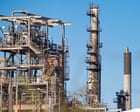
The fragility of the Victorian fuel supply chain is exposed when a single point of failure—the Viva Energy refinery at Geelong—undergoes an unscheduled outage. While initial reports focus on a 20-cent-per-litre price spike, this figure is merely a symptom of a rigid infrastructure struggling with supply-side inelasticity. The real story lies in the convergence of inventory depletion, the logistical lag of regional imports, and the opportunistic pricing behaviors of retail networks during periods of perceived scarcity.
The Triad of Victorian Supply Vulnerability
The Victorian fuel market operates on a razor-thin margin of error. The Geelong refinery provides approximately 50% of the state’s fuel requirements. When a fire or mechanical failure halts production, the state transitions from a domestic production model to a total import dependency model. This shift triggers three distinct economic levers.
- The Infrastructure Bottleneck: Victoria possesses limited terminal storage capacity. Unlike the United States’ Strategic Petroleum Reserve, Australian fuel security relies on "industry-held stocks." When production stops, the clock begins ticking on a 20-to-30-day window of available inventory.
- The Import Logistics Lag: Replacing Geelong’s output requires redirected shipments from Singapore or South Korea. The transit time for an aframax tanker from the Port of Singapore to the Port of Melbourne is roughly 12 to 14 days, excluding loading and discharge windows. This creates a two-week "blind spot" where supply cannot be physically replenished.
- The Refinery Margin Differential: Refineries profit on the "crack spread"—the difference between the price of crude oil and the price of refined products. An outage forces Viva Energy and its competitors to source refined product on the spot market, where prices are inherently more volatile than long-term supply contracts.
[Image of a petroleum refinery process flow diagram]
Quantifying the 20-Cent Premium
The projected 20-cent increase is not a random number; it represents the sum of specific cost drivers and psychological pricing thresholds. To understand the math, we must deconstruct the components of the retail fuel price.
Terminal Gate Price (TGP) Adjustments
The TGP is the price at which wholesalers sell fuel to distributors. In a supply shock, the TGP rises to reflect the higher cost of landed imports. If the Singapore Mogas 95 benchmark increases due to regional demand, and the Australian dollar weakens, the TGP absorbs these hits before the consumer even sees the price at the pump. The outage adds a "scarcity premium" to the TGP as wholesalers compete for limited local volumes.
The Retail Cycle Distortion
Melbourne’s fuel market follows a highly predictable, though often misunderstood, price cycle. Retailers move from a "undercutting phase" to a "reset phase." A refinery fire provides the perfect catalyst for an accelerated reset. Retailers who were previously selling at near-cost or loss-leading prices use the news of the fire to justify a jump to the top of the cycle. This "jump" often exceeds the actual increase in wholesale costs, as retailers look to recoup margins lost during the low point of the cycle.
Freight and Distribution Premiums
Trucking fuel from interstate terminals (such as Sydney or Adelaide) to fill the Victorian gap adds significant logistical costs. High-intensity trucking operations require specialized tankers and drivers licensed for dangerous goods. The cost of "bridging" fuel via road can add 3 to 5 cents per litre to the landed cost in regional Victoria.
The Mechanism of "Price Gouging" vs. Economic Reality
Critics often label sudden price spikes as price gouging, yet from an analytical perspective, it is a manifestation of Inventory Replacement Cost Pricing. A service station owner does not price fuel based on what they paid for the liquid currently in their tanks; they price it based on what it will cost to buy the next delivery.
If a station owner knows the next tanker load will cost 15 cents more per litre due to the refinery outage, they must raise prices immediately to ensure they have enough cash flow to purchase that replacement stock. Failure to do so would lead to a capital shortfall, effectively bankrupting the site's ability to maintain inventory.
Strategic Vulnerabilities in the Australian Fuel Security Act
The Geelong incident highlights the limitations of the Fuel Security Act 2021. While the federal government provides a Minimum Stock Holding (MSH) obligation, this is a macro-level safety net. It does not account for localized distribution failures.
- Regional Imbalance: Even if Australia has 90 days of fuel on the water or in various ports, the physical infrastructure to move that fuel into the Victorian retail network is finite.
- Refining Complexity: Geelong is not a simple "on/off" switch. Restarting a catalytic cracking unit after a fire requires weeks of safety inspections, pressure testing, and recalibration. The market reacts not to the fire itself, but to the duration of the subsequent downtime.
- Secondary Market Contagion: As Victoria pulls fuel from neighboring states, prices in New South Wales and South Australia often rise in sympathy. This is not due to a physical shortage in those states, but because the "opportunity cost" of selling fuel in Sydney decreases if it can be sold at a premium in Melbourne.
The Logical Path of Recovery
The stabilization of Victorian fuel prices follows a predictable sequence of events:
- Immediate Shock (Days 1–3): Prices spike at the most sensitive retail sites (high-volume highway stations).
- Information Gathering (Days 3–7): Engineers assess the damage at Geelong. If the damage is superficial, prices begin to soften. If it is structural (e.g., involving the atmospheric distillation unit), the 20-cent premium becomes the new floor.
- The Import Wave (Days 14–21): The first "emergency" tankers from regional hubs arrive in Port Phillip Bay. Physical supply eases, and the TGP begins to decouple from the "scarcity premium."
- Competitive Normalization (Days 21–45): As inventory levels return to 80% capacity, the retail cycle resumes its standard volatility, eventually erasing the outage-specific premium.
Operational Risk Assessment for Commercial Fleets
For businesses operating heavy vehicle fleets or significant logistics networks in Victoria, the Geelong outage necessitates a shift in procurement strategy. Relying on "spot" retail pricing during an infrastructure failure is a failure of risk management.
The primary defense against refinery-driven volatility is a diversified supply contract that includes "Force Majeure" clauses and tiered pricing. However, these contracts often link back to the TGP, meaning that while supply is guaranteed, price protection is not.
The secondary defense is technical: On-site Storage Optimization. Organizations with the capacity to store 14 days of fuel can "bridge" the logistical lag of sea-borne imports, allowing them to bypass the initial 72-hour price shock and wait for TGP stabilization.
The Geelong refinery fire is a reminder that the "just-in-time" delivery model for liquid fuels is incompatible with the physical realities of global energy logistics. Victoria’s 20-cent price hike is the market’s way of pricing in the risk of a single-source dependency that has no immediate redundancy. Until the state invests in significantly larger localized storage or diversifies its primary input pipelines, every mechanical failure at Geelong will result in an immediate transfer of wealth from the Victorian consumer to the global energy supply chain.
Strategic positioning requires treating fuel not as a utility, but as a volatile commodity with a 14-day lead time. Organizations must audit their fuel spend and shift toward volume-based hedging or fixed-margin distributor agreements to insulate their bottom line from the inevitable next failure of aging domestic refining infrastructure.