The Strategic Architecture of Iranian Non-Negotiation
Tehran’s refusal to engage in direct diplomatic parity with the United States is not a byproduct of ideological stubbornness, but a calculated survival mechanism designed to offset asymmetrical power dynamics. For the Iranian leadership, the act of negotiation is viewed through a lens of structural vulnerability. Entering a bilateral dialogue without established leverage—often referred to in internal circles as "negotiating under pressure"—is perceived as a surrender of the state’s primary deterrent assets.
The Iranian strategic framework rests on three primary pillars of resistance that dictate when and how the state will engage with Western powers. Also making news recently: Ukraine and Israel Are Not Fighting the Same War and Neither Are You.
The Asymmetry of Commitment and the Credibility Gap
The central bottleneck in any US-Iran negotiation is the divergent nature of political cycles. The Iranian executive branch and the Supreme Leader operate on a timeline of decades, whereas the US executive branch is subject to four-to-eight-year shifts. The 2018 withdrawal from the Joint Comprehensive Plan of Action (JCPOA) served as a definitive proof of concept for Iranian hardliners: international agreements with Washington lack structural permanence.
This creates a "Compliance Deficit" where the costs of Iranian concessions (dismantling nuclear infrastructure, reducing regional proxy support) are immediate and irreversible, while the benefits (sanctions relief, normalized trade) are reversible and contingent on the whim of a subsequent US administration. More insights regarding the matter are covered by The Washington Post.
To bridge this gap, Iran has shifted its requirements from "agreements" to "guarantees." These guarantees involve:
- Economic Verification Periods: Requiring a period of several months of active, unhindered oil exports and banking access before decommissioning nuclear hardware.
- Legal Insulation: Demanding mechanisms that would penalize the US for future unilateral withdrawals, a requirement that clashes with the constitutional limits of the US Executive Branch to bind future Presidents without a two-thirds Senate majority for a formal treaty.
The Regional Influence Function
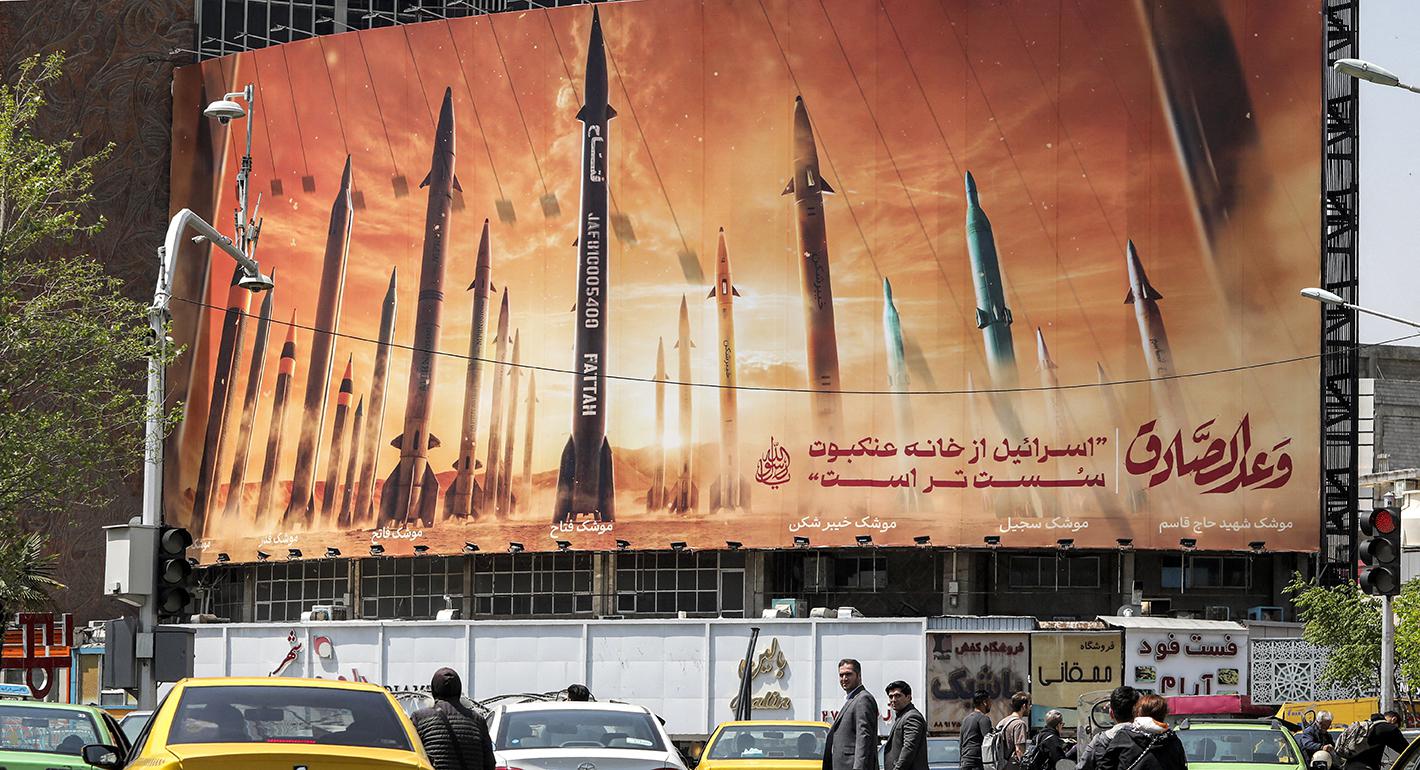
Iran’s "Forward Defense" doctrine utilizes non-state actors across the Levant and the Arabian Peninsula to ensure that any conflict remains outside Iranian borders. This network—often termed the Axis of Resistance—functions as a cost-extension tool.
If Iran were to negotiate its regional influence as demanded by the US, it would effectively be trading a kinetic security asset for a promise of economic stability. Within the internal security apparatus of the Islamic Revolutionary Guard Corps (IRGC), this is a losing trade. The utility of these regional proxies is measured by their ability to threaten global energy corridors and Israeli security, creating a "Mutual Assured Destruction" (MAD) Lite.
The strategic logic here follows a simple equation:
- Cost of Regional Abandonment = Loss of strategic depth + Increased probability of domestic subversion.
- Benefit of Regional Abandonment = Potential (but not guaranteed) integration into the global financial system.
Because the cost is a certain security risk and the benefit is an uncertain economic gain, the status quo remains the rational choice for the regime.
Economic Resilience and the "Neutralization of Sanctions"
The shift from "lifting" sanctions to "neutralizing" them represents a fundamental change in Iranian economic policy. The "Economy of Resistance" seeks to decouple the Iranian domestic market from Western-controlled financial nodes by pivoting toward the BRICS+ bloc and the Shanghai Cooperation Organization (SCO).
The Pivot to the East as a Negotiation Buffer
The increasing integration with China and Russia provides Iran with a floor for its oil exports, primarily through the "shadow fleet" and non-dollar denominated trade. This reduces the efficacy of US "Maximum Pressure" campaigns. When the pain threshold of sanctions is lowered, the urgency to negotiate decreases.
The current economic strategy focuses on:
- Infrastructure Bartering: Trading energy resources for Chinese infrastructure development, bypassing the SWIFT banking system entirely.
- Regional Trade Clusters: Enhancing trade with Iraq, Afghanistan, and Central Asian republics where the US has limited oversight.
- Refinery Capacity Expansion: Shifting from exporting crude oil (vulnerable to maritime interdiction) to refined products (easier to move overland to neighboring markets).
By achieving a baseline of economic survival, the Iranian leadership removes the "Economic Gun" from the negotiation table. They argue that if the US cannot crash the Iranian economy, the US has no leverage to demand non-nuclear concessions.
The Nuclear Threshold as a Bargaining Chip
Iran has strategically advanced its enrichment levels to 60%, a hair’s breadth from weapons-grade 90%. This is not necessarily a dash for a bomb, but the creation of "Nuclear Latency." Latency is the state of being a "threshold power"—having the technical capability to assemble a weapon within weeks without actually doing so.
This status provides Iran with a permanent seat at the table. Every percentage point of enrichment acts as a counter-sanction. If the US adds a layer of economic pressure, Iran adds a layer of technical advancement. This creates a reflexive relationship where the nuclear program is used to balance the economic warfare waged by the West.
Domestic Constraints and the Legitimacy Loop
The internal political landscape in Tehran is often misunderstood as a monolith. In reality, it is a competitive ecosystem where the "costs of compromise" are high.
The Hardliner Veto
The Supreme Leader, Ali Khamenei, maintains a balancing act between the "Pragmatists" (who seek economic reintegration) and the "Principlists" (who prioritize revolutionary identity). Following the failure of the JCPOA, the Pragmatist faction lost significant credibility.
The current domestic logic dictates that:
- Compromise is weakness: In a revolutionary state, perceived weakness can embolden domestic dissent.
- The 2022 Protests: Domestic unrest has hardened the regime's stance. The leadership believes that any concession to the US would be interpreted by the protest movement as a sign of imminent collapse, potentially triggering more intense internal pressure.
Consequently, the Iranian stance is dictated by a "Security First" paradigm. The survival of the political system is prioritized over the growth of the GDP.
The Stalemate of Strategic Patience
The US and Iran are currently locked in a cycle of "Strategic Patience." Both sides are waiting for a shift in the other’s internal stability or external alliances.
The US strategy relies on:
- Attrition: Waiting for the Iranian economy to reach a breaking point where the cost of the nuclear program becomes unsustainable.
- Diplomatic Isolation: Attempting to keep European and Asian allies aligned with the sanctions regime.
The Iranian counter-strategy relies on:
- Multi-Polarity: Betting that the rise of China and Russia will create a world where US sanctions are no longer a global death sentence.
- Attrition of Will: Waiting for the US to become preoccupied with other theaters (Ukraine, Taiwan) or for domestic American fatigue with Middle Eastern involvement to lead to a withdrawal.
Tactical De-escalation vs. Strategic Resolution
What is often mistaken for a breakthrough is usually just "Tactical De-escalation." This includes temporary "understandings" such as the release of frozen assets in exchange for the release of prisoners or a slowing (but not stopping) of enrichment. These are not steps toward a grand bargain; they are safety valves designed to prevent an all-out kinetic war that neither side currently wants or can afford.
The structural reality is that the US seeks a "longer and stronger" deal that includes ballistic missiles and regional behavior, while Iran seeks a "narrow and verified" deal that focuses exclusively on the nuclear issue and immediate sanctions removal. These two objectives are mathematically incompatible within the current geopolitical framework.
The Forecast for Regional Conflict and Diplomacy
The probability of a comprehensive diplomatic reset in the near term is near zero. The "Sanctions-for-Security" trade is broken because both sides have lost faith in the currency of the exchange.
The path forward will likely involve:
- The Institutionalization of the Shadow Economy: Iran will continue to build parallel financial structures, making it increasingly immune to traditional banking sanctions.
- The "Grey Zone" Conflict: Both parties will continue to use cyberwarfare, maritime harassment, and proxy skirmishes to signal intent without triggering a full-scale military confrontation.
- The Erosion of the NPT: Iran’s stay within the Non-Proliferation Treaty (NPT) will remain conditional. If the US or Israel moves toward a "Kinetic Solution" (bombing facilities), Iran will likely withdraw from the NPT and move to 90% enrichment immediately as a survival measure.
The strategic play for Western observers is to stop viewing Iranian behavior as "irrational" or "defiant" and start viewing it as a sophisticated exercise in risk management. Tehran is not avoiding the table; it is waiting for a table where the house doesn't own the cards. Until the US can provide a mechanism for long-term commitment that survives a change in the White House, or until Iran’s pivot to the East fails to provide an economic floor, the stalemate is the most stable outcome.