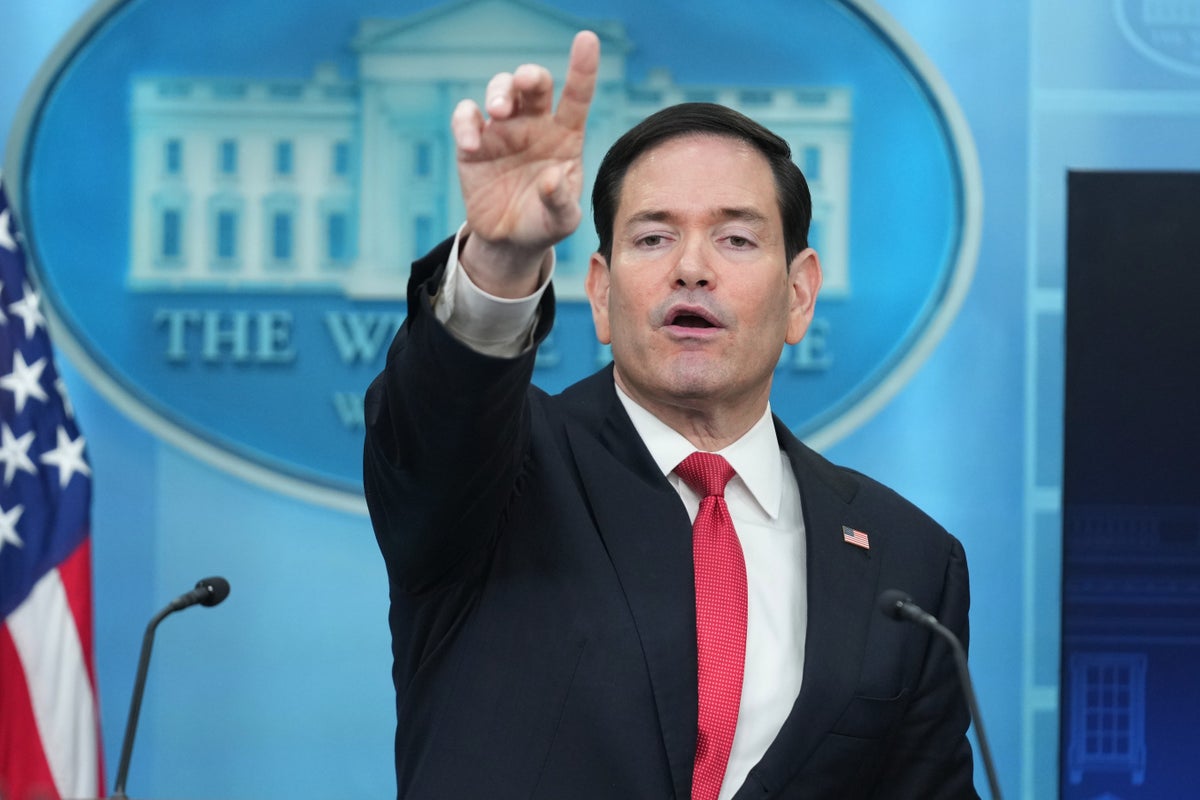
The appointment of Marco Rubio as Secretary of State signals a transition from passive containment to an active friction strategy regarding the Cuban administration. For decades, US-Cuba relations fluctuated between the "thaw" of the Obama era and the "maximum pressure" campaign of the first Trump term. The current shift is not merely a change in rhetoric; it is an alignment of executive intent with the legislative architecture of the Helms-Burton Act. By analyzing the structural incentives of the Rubio appointment, it becomes clear that Havana faces a coordinated economic decoupling designed to accelerate internal systemic failure.
The Triad of Strategic Friction
Washington’s leverage over Havana rests on three distinct pillars of pressure. These levers are being recalibrated to maximize the domestic cost of governance for the Cuban Communist Party (PCC).
- State Sponsor of Terrorism (SSOT) Designation Enforcement: This is the primary bottleneck for Cuban international finance. The designation triggers automatic sanctions that discourage third-country banks from processing transactions involving Cuban entities. Rubio’s priority is to close the "loopholes of convenience" where European or Canadian banks facilitate trade through nested accounts.
- Remittance Interdiction and Military Divestment: The US Treasury targets the GAESA conglomerate—the military-run holding company that controls the majority of Cuba's retail, tourism, and financial sectors. The strategy involves redirecting the flow of capital away from military-controlled entities and toward the nascent private sector (MSMEs). This creates a zero-sum game for the PCC: allow the private sector to grow and lose social control, or crush the private sector and lose the only remaining engine of economic activity.
- Diplomatic De-legitimization: The State Department is shifting toward a policy of regional isolation. This involves pressuring Latin American and Caribbean partners to reduce dependency on Cuban medical missions, which Havana uses as a primary source of hard currency.
The Economic Death Spiral of the Cuban State
The Cuban economy is currently operating under a "triple deficit" model: a fiscal deficit, a trade deficit, and a deficit of essential infrastructure. The PCC’s inability to provide basic services—electricity, food, and medicine—is the direct result of a collapsed centralized planning mechanism that can no longer be subsidized by external actors like Venezuela or Russia.
The Energy Infrastructure Bottleneck
The Cuban power grid (SEN) is a case study in capital depreciation. The reliance on aging Soviet-era thermoelectric plants, which have exceeded their 30-year operational lifespan by decades, creates a constant state of energy insecurity. The US strategy exploits this by tightening fuel shipping sanctions. Without the hard currency to purchase fuel on the spot market or the credit to repair turbines, the Cuban government faces a permanent energy crisis. This is not a temporary fluctuation; it is the physical expiration of the nation’s industrial base.
Monetary Duality and Inflationary Pressure
The elimination of the CUC (convertible peso) and the botched implementation of the "Tarea Ordenamiento" (Ordering Task) led to an informal exchange rate that devalued the CUP (Cuban Peso) by over 500% in certain sectors. Rubio’s policy objective is to restrict the flow of dollars further, driving the informal exchange rate higher and effectively stripping the Cuban state of its purchasing power for imported staples.
The Migration-Stability Tradeoff
Havana has historically used mass migration as a pressure release valve to export domestic dissent and force the US into negotiations. The 1980 Mariel boatlift and the 1994 Rafter Crisis are the primary precedents. However, the Rubio-led State Department is likely to treat migration not as a humanitarian issue to be managed through bilateral talks, but as a deliberate act of unconventional warfare.
The current administration views the record-breaking influx of Cuban migrants through the Southern Border not as a reason for engagement, but as a reason for further isolation. The logic is that providing concessions to stop the flow only incentivizes Havana to weaponize its population again in the future. Instead, the US is moving toward a policy of strict repatriation and third-country processing to neutralize the "migration valve" strategy.
The China-Russia Counterweight Limitation
A common hypothesis suggests that increased US pressure will simply drive Cuba deeper into the orbits of Beijing and Moscow. Data-driven analysis of these relationships reveals significant limitations.
- Russia's Constraint: While Moscow provides symbolic oil shipments and debt forgiveness, it lacks the surplus capital to rebuild the Cuban economy. Russia is currently prioritizing its domestic defense industrial base. Its interest in Cuba is primarily intelligence gathering (the Lourdes facility) and symbolic geopolitical signaling.
- China's Risk Aversion: Beijing is interested in Cuba's nickel reserves and strategic location, but it has proven unwilling to provide the massive, non-performing loans required to stabilize the PCC. Chinese state-owned enterprises (SOEs) demand a level of fiscal transparency and market-oriented reform that the PCC refuses to implement for fear of losing political monopoly.
The Internal Power Dynamics of the PCC
The transition from the Castro brothers to Miguel Díaz-Canel has resulted in a fragmented leadership structure. There is a growing divide between the "Ideologues"—who favor North Korean-style isolation and repression—and the "Technocrats"—who advocate for a Vietnamese or Chinese model of state-capitalism.
Rubio’s strategy targets this rift. By sanctioning the military elites (GAESA) while theoretically allowing for certain "pro-private sector" exceptions, the US creates an environment where the military’s interests are directly at odds with the survival of the broader economy. The goal is to force a "tipping point" where the cost of maintaining the current system exceeds the cost of a managed transition.
The Structural Constraints of US Law
It is a common misconception that the President can unilaterally lift the embargo. The Cuban Liberty and Democratic Solidarity (Libertad) Act of 1996 (Helms-Burton) codified the embargo into law. Lifting it requires the President to certify to Congress that a transition government is in place that does not include the Castros and has made progress on returning confiscated property.
The presence of Marco Rubio—the primary architect of contemporary Cuba policy in the Senate—at the head of the State Department ensures that "strict constructionism" will be applied to these legal requirements. Any attempt by Havana to offer minor "reforms" will be met with a demand for the full dismantling of the one-party system.
Strategic Forecast: The Acceleration of Decoupling
The trajectory for the next 24 months is one of maximum friction. The US will likely move to:
- Expand the Cuba Restricted List: Adding more subsidiaries of GAESA to prevent any US-origin dollar from touching military hands.
- Pressure Caribbean Logistics Hubs: Discouraging ports in the Bahamas or Panama from serving as transshipment points for Cuban goods.
- Target "Shadow Fleets": Utilizing satellite intelligence to identify and sanction tankers transporting Venezuelan crude to the Port of Mariel in violation of existing sanctions.
The Cuban state is currently in a race against its own physical decay. The Rubio Doctrine is designed to ensure that the US does not provide the "oxygen" of tourism or remittances that would allow the PCC to outlast its current infrastructure collapse. The strategic play is no longer about "winning hearts and minds" or hoping for incremental change; it is about the clinical application of economic pressure to force a systemic liquidation of the 1959 revolutionary model.
Havana's primary defense—threatening a migration crisis—has lost its efficacy as US domestic politics has shifted toward border closure. Deprived of its release valve and its subsidies, the Cuban administration is entering its most volatile period since the "Special Period" of the 1990s, but this time without the prospect of a future Venezuelan savior. The US policy is now a waiting game, predicated on the belief that the Cuban state's internal cost of operation is no longer sustainable.