The failure of recent U.S.-Iran negotiations is not a result of diplomatic friction or personality clashes; it is the logical outcome of a structural misalignment in strategic objectives where the cost of agreement exceeds the cost of stalemate for both regimes. The current deadlock functions as a stable equilibrium. For the United States, the objective is the permanent containment of nuclear breakout capacity and regional revisionism. For the Islamic Republic, the preservation of the "Axis of Resistance" and a latent nuclear capability are existential requirements for regime survival. When these two fundamental axioms collide, the resulting policy space is a zero-sum game that renders traditional diplomacy obsolete.
The Triad of Iranian Strategic Persistence
To understand why negotiations have reached a terminal velocity of failure, one must categorize Iranian behavior through three distinct pillars of strategic necessity. Recently making news in this space: How Trump’s Attack on the Pope Backfired in Italy.
- The Deterrence Threshold: Iran views its nuclear program not as a bargaining chip to be traded for economic relief, but as a survival insurance policy. The logic is simple: a country with high enrichment capabilities is immune to the "Libya Scenario" of regime change.
- Regional Kinetic Leverage: The IRGC-Quds Force manages a network of proxies—from Hezbollah in Lebanon to the Houthis in Yemen—that serves as Iran’s primary defense layer. Dismantling this network, a frequent U.S. demand, would leave Tehran without its most effective tool for asymmetric warfare.
- Ideological Continuity: The revolutionary identity of the state requires a permanent antagonist. Total normalization with the United States would undermine the internal legitimacy of the hardline factions that control the security apparatus.
These pillars create a rigid framework that prevents the Iranian negotiating team from offering the "transformative" concessions the U.S. Congress and executive branch require for a permanent treaty.
The U.S. Political Cost Function
American foreign policy toward Iran is constrained by a domestic cost function that penalizes compromise and rewards maximalist pressure. The structural limitations on the U.S. side include: Additional insights on this are covered by The New York Times.
Treaty Inelasticity
The 2015 Joint Comprehensive Plan of Action (JCPOA) demonstrated that executive agreements are temporary. Without a 67-vote Senate majority to ratify a formal treaty, any deal signed by one administration is viewed as a four-year lease by Iranian leadership. This lack of "commitment credibility" means Iran demands upfront, irreversible benefits in exchange for reversible nuclear concessions—a trade the U.S. cannot justify.
The Regional Security Veto
U.S. allies in the Middle East, specifically Israel and the Gulf monarchies, exercise a de facto veto over the scope of negotiations. Any agreement that ignores "non-nuclear" issues—such as ballistic missile development or regional proxy funding—is viewed as a security threat by these partners. The U.S. cannot pivot to Asia or reduce its Middle Eastern footprint if its regional allies feel abandoned, forcing Washington to maintain a maximalist list of demands that Iran will never meet.
Mechanics of the Failed Negotiation Loop
The "Snapback" mechanism and the "Sunsets" of the previous nuclear deal created a chronological friction that neither side can resolve. The logic of the JCPOA was built on a timeline: Iran would limit its program for 10 to 15 years in exchange for a gradual reintegration into the global economy. However, we are now entering the period where those original constraints expire.
From the U.S. perspective, returning to an agreement where the most critical restrictions are set to expire shortly is a losing proposition. From the Iranian perspective, the "maximum pressure" campaign initiated in 2018 proved that the U.S. can re-impose sanctions at will, even if Iran is in compliance. This creates a feedback loop of distrust:
- Iran's Logic: "The U.S. will eventually break the deal, so we must maximize our nuclear leverage now to have a stronger hand later."
- U.S. Logic: "Iran is using the negotiation period to advance its enrichment tech, so we must increase sanctions to force a better deal."
This cycle transforms diplomacy from a problem-solving exercise into a tool for time-management. Both sides use the appearance of negotiating to satisfy domestic and international audiences while preparing for an inevitable escalation.
The Cost of the Status Quo vs. The Cost of Conflict
Strategic analysts often assume that a "No Deal" scenario is the worst possible outcome. Data suggests otherwise for the current actors.
The Iranian economy has adapted to a "Resistance Economy" model. While sanctions cause significant suffering for the populace, the ruling elite has consolidated control over the black market and shadow banking networks. By controlling the scarcity, the regime has actually strengthened its grip on internal distribution power.
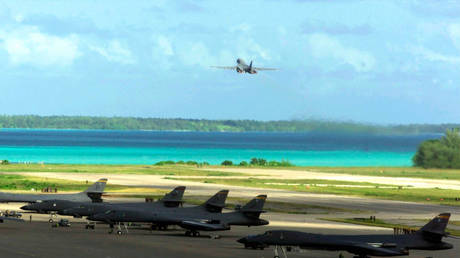
Conversely, the U.S. finds the status quo of "contained hostility" preferable to the political fallout of a "weak deal" or the catastrophic costs of a regional war. The U.S. military footprint in the region acts as a pressure valve; it is just enough to prevent a total collapse of the regional order but not enough to force a regime change in Tehran.
The Nuclear Breakout Calculation
The most dangerous variable in this equation is the "breakout time"—the duration required to produce enough weapons-grade uranium for a single nuclear device.
In 2015, the breakout time was estimated at 12 months. Current estimates suggest it has shrunk to weeks or even days. This technical reality changes the nature of diplomacy. When breakout time is measured in days, the "verification and monitoring" regime required to ensure compliance becomes physically impossible to execute. No inspector can be in all places at all times to prevent a sudden sprint to a weapon.
This creates a "Verification Gap." If the U.S. cannot verify compliance with 100% certainty, the domestic political cost of signing a deal becomes infinite.
The Strategic Shift: From Diplomacy to Managed Friction
Since traditional negotiations have failed to reach a "Grand Bargain," the strategy has shifted toward "The Informal Arrangement." This is not a signed document but a series of unwritten understandings intended to prevent a total kinetic explosion.
The components of this managed friction include:
- Nuclear Ceilings: Iran agrees not to enrich uranium to 90% (weapons grade) in exchange for the U.S. not enforcing certain oil sanctions with maximum rigor.
- De-escalation Pockets: Occasional prisoner swaps or the release of frozen assets in third-party countries (like Qatar or South Korea) act as temporary relief valves.
- Proxy Boundaries: A tacit agreement on the level of violence allowed in theaters like Iraq or Syria to prevent a direct U.S.-Iran confrontation.
This is not a path to peace; it is a framework for managing a permanent state of cold war. It acknowledges that the underlying issues—sovereignty, ideology, and regional hegemony—are currently irreconcilable.
The Economic Integration Fallacy
A major flaw in previous diplomatic attempts was the belief that economic integration would moderate Iranian behavior. The theory suggested that if Iran became wealthy through global trade, it would have more to lose by being a pariah state.
This failed to account for the "Dual Economy" of Iran. The most profitable sectors (energy, construction, telecommunications) are owned by the IRGC and religious foundations (Bonyads). Increasing trade with Iran directly enriches the very institutions responsible for regional destabilization. Therefore, the "carrots" offered by the West—lifting sanctions—actually provide the "sticks" Iran uses against Western interests. This paradox makes any economic-based negotiation fundamentally flawed.
The Shift Toward a Post-U.S. Middle East
Tehran’s current strategy relies heavily on the "Look to the East" policy. By strengthening ties with China and Russia, Iran seeks to build a sanctions-immune bloc.
- The China Factor: China’s demand for discounted Iranian oil provides a steady stream of hard currency that bypasses the SWIFT banking system.
- The Russia Factor: Military cooperation, specifically the provision of Iranian drones for the conflict in Ukraine, has given Tehran a new level of diplomatic cover at the UN Security Council.
As Iran integrates into the BRICS and the Shanghai Cooperation Organization (SCO), the U.S. loses its primary lever of power: economic isolation. If Iran can achieve a "sufficient" level of economic stability without Western approval, the incentive to negotiate away its nuclear or regional assets drops to zero.
Strategic Forecast: The Architecture of Containment
The failure of negotiations marks the end of the JCPOA era and the beginning of a "Containment 2.0" framework. This new reality is defined by three unavoidable constraints.
First, the nuclear issue can no longer be solved through enrichment limits alone. The knowledge Iran has gained during the post-2018 escalation—specifically regarding advanced centrifuges and metal casting—cannot be "un-learned." Any future agreement will have to focus on "intent" and "access" rather than just "kilograms of material."
Second, the U.S. must transition from a policy of "solving" the Iran problem to "managing" it. This requires a permanent, high-readiness military posture in the Middle East, integrated with a regional air defense network involving Israel and Arab partners. The goal is to make the cost of Iranian aggression higher than the benefit, indefinitely.
Third, the internal stability of the Iranian regime is the only true "wildcard." While the state has proven remarkably resilient against protests, the upcoming leadership succession (following the eventual passing of the Supreme Leader) represents the only period where the structural axioms of the state might shift.
The optimal U.S. strategy is to maintain maximum economic and military pressure to prevent a nuclear breakout while waiting for a domestic political opening in Tehran that allows for a fundamental reassessment of the Iranian national interest. Diplomacy, in its current form, is merely a tool for tactical delay. The strategic resolution will not happen at a negotiating table in Vienna; it will happen through the slow attrition of the Iranian regime's ability to fund its regional ambitions or through a catastrophic miscalculation that leads to direct kinetic intervention. For now, the "failed negotiation" is not a mistake—it is the most stable state the system can currently achieve.